When hunger strikes but you’re trying to stay mindful of calories, choosing the right foods can feel tricky. That’s where almost zero calories foods come in. These foods are naturally low in energy density, meaning you can eat satisfying portions without quickly overshooting your daily intake. They’re not about restriction—they’re about smart volume, hydration, and nutrients.
The foods shown here are staples that support fullness, digestion, and long-term balance while fitting easily into everyday meals. Let’s break them down and explore how to use them effectively.
What Does “Almost Zero Calories” Really Mean?
No food is truly calorie-free, but some foods provide:
-
Very low calories per serving
-
High water and fiber content
-
Strong satiety with minimal energy load
Almost zero calories foods work best as:
-
Meal volume boosters
-
Snack replacements
-
Bases for salads, bowls, and smoothies
Think of them as nutritional fillers—not empty calories.
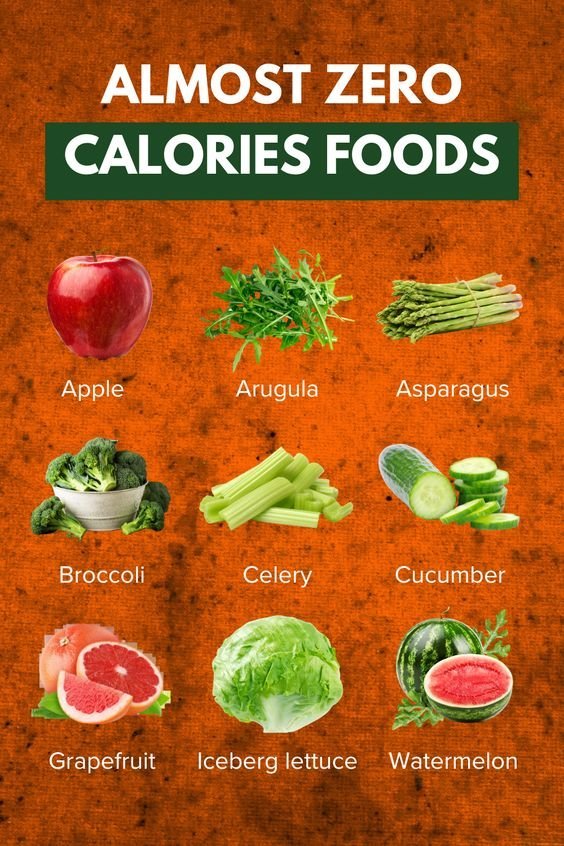
Apple: Light Sweetness With Fiber
While slightly higher than vegetables, apples are still considered one of the smarter low-calorie fruits.
Why apples help:
-
High water and fiber content
-
Naturally sweet without added sugar
-
Promotes fullness between meals
Eating an apple slowly can satisfy cravings while keeping calories reasonable.
Arugula: Flavor Without the Load
Arugula is one of the most underrated almost zero calories foods.
Key benefits:
-
Peppery flavor adds interest to meals
-
Very low calorie per cup
-
Rich in phytonutrients
It’s perfect for salads, wraps, and sandwiches where flavor matters more than bulk.
Asparagus: Filling and Digestive-Friendly
Asparagus provides volume without heaviness.
Why it works:
-
High fiber for gut support
-
Helps reduce bloating for many people
-
Naturally low in calories
Roasted, steamed, or grilled, asparagus fits easily into balanced meals.
Broccoli: Nutrient Density Meets Low Calories
Broccoli consistently ranks among top almost zero calories foods.
Benefits include:
-
Fiber-rich and filling
-
Loaded with vitamins and antioxidants
-
Supports digestion and metabolism
Light cooking improves digestibility while preserving nutrients.
Celery: Mostly Water, Surprisingly Satisfying
Celery is often cited in low-calorie eating plans for a reason.
Why celery stands out:
-
Extremely low calorie per stalk
-
High water content aids hydration
-
Crunchy texture slows eating
It works well as a snack base with dips or added to soups and stir-fries.
Cucumber: Cooling, Crisp, and Ultra-Light
Cucumber is nearly all water, making it one of the lightest foods available.
Why cucumbers help:
-
Supports hydration
-
Minimal calorie impact
-
Refreshing texture and taste
They’re ideal for snacks, salads, or infused water.
Grapefruit: Light Fruit With Appetite Appeal
Grapefruit is often included in discussions about almost zero calories foods due to its low energy density.
Notable qualities:
-
High water content
-
Bright, tangy flavor
-
Slower eating due to segmentation
It works best when enjoyed whole rather than juiced.
Iceberg Lettuce: Volume Without the Weight
While not the most nutrient-dense lettuce, iceberg shines in volume.
Why it’s useful:
-
Very low calorie
-
Adds crunch and bulk
-
Easy base for larger salads
Pairing it with nutrient-rich toppings creates balance.
Watermelon: Sweet, Juicy, and Surprisingly Light
Watermelon feels indulgent but remains relatively low calorie per serving.
Why watermelon fits:
-
More than 90% water
-
Naturally hydrating
-
Helps satisfy sweet cravings
Portion awareness still matters, but it’s far lighter than many desserts.
How to Use Almost Zero Calories Foods Smartly
These foods work best when:
-
Combined with protein and healthy fats
-
Used to increase meal volume
-
Replacing high-calorie fillers
For example:
-
Salad greens + lean protein
-
Cucumber with yogurt-based dips
-
Watermelon after meals instead of sweets
Balance is the goal—not extremes.
Common Mistake to Avoid
Relying only on almost zero calories foods can backfire.
Why?
-
You still need protein and fats
-
Too little energy may increase cravings
-
Sustainability matters more than numbers
Use these foods as support tools, not the entire plan.
Final Thoughts
Almost zero calories foods make smart eating easier—not restrictive. Foods like cucumber, broccoli, arugula, celery, and watermelon help increase fullness, hydration, and meal satisfaction with minimal calorie impact. When used wisely, they support consistency and balance rather than short-term fixes.
Save this list for later and try adding one or two of these foods to your next meal. Which one do you already enjoy the most?