If you’ve been eating better, exercising more, and still not seeing fat loss, you’re not alone. This is one of the most frustrating experiences in any health journey. Many people assume they’re failing—but in reality, they’re often overlooking a few key fundamentals.
Fat loss isn’t about extreme restriction or endless workouts. It’s about consistency, awareness, and understanding how everyday habits quietly add up. Let’s break down the most common reasons fat loss stalls—and what’s really going on behind the scenes.
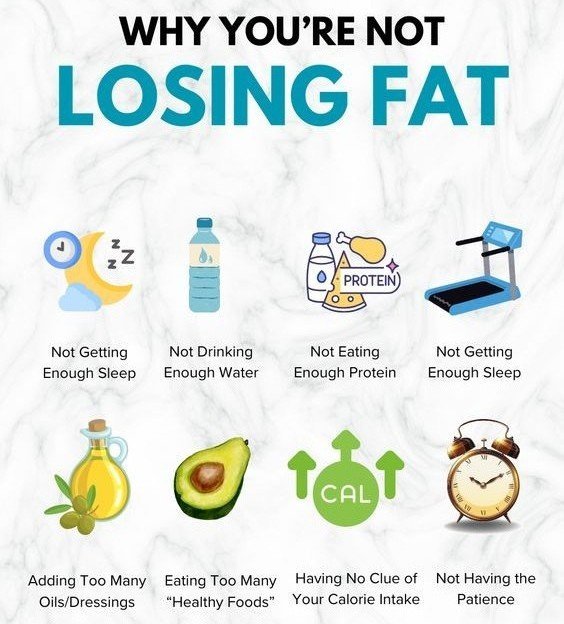
1. You’re Not Getting Enough Sleep
Sleep is one of the most underestimated factors in fat loss. When sleep is short or inconsistent, hormones that regulate hunger and fullness can become imbalanced.
Poor sleep often leads to:
-
Increased cravings
-
Lower energy for movement
-
Reduced motivation
-
Slower recovery
Even the most perfect diet can struggle to work if your body isn’t well-rested.
2. You’re Not Drinking Enough Water
Hydration affects far more than thirst. When water intake is low, the body may confuse thirst with hunger, leading to unnecessary snacking.
Water also plays a role in:
-
Digestion
-
Energy levels
-
Workout performance
-
Appetite awareness
Many people unknowingly eat more simply because they’re under-hydrated.
3. You’re Not Eating Enough Protein
Protein helps with satiety, muscle maintenance, and overall calorie control. When meals lack protein, hunger tends to return quickly—even if calories seem reasonable.
Low protein intake can lead to:
-
Constant snacking
-
Difficulty feeling full
-
Loss of muscle instead of fat
Fat loss isn’t just about eating less—it’s about eating smart.
4. You’re Overdoing Oils and Dressings
Healthy fats are important, but they’re also calorie-dense. Oils, sauces, and dressings can quietly add hundreds of calories to otherwise balanced meals.
Common examples include:
-
Generous salad dressings
-
Cooking oils added without measuring
-
“Healthy” spreads used freely
These calories count—even when the food feels nutritious.
5. You’re Eating Too Many “Healthy” Foods
Foods like nuts, avocados, smoothies, and granola are nutritious—but they’re easy to overconsume. The label “healthy” doesn’t mean unlimited.
Fat loss depends on overall intake, not food labels. Eating large portions of calorie-dense foods can stall progress just as easily as eating processed snacks.
6. You Don’t Really Know Your Calorie Intake
Many people underestimate how much they eat—without realizing it. Small extras throughout the day add up faster than expected.
This doesn’t mean obsessing over numbers forever, but developing awareness helps you:
-
Identify hidden calories
-
Adjust portions realistically
-
Make informed choices
Without awareness, it’s hard to correct what you can’t see.
7. You’re Expecting Results Too Quickly
Fat loss is gradual by nature. Expecting visible changes in days or weeks often leads to frustration and quitting too soon.
What slows progress emotionally:
-
Comparing yourself to others
-
Expecting linear results
-
Giving up when the scale stalls
Real progress often shows up quietly—before it becomes obvious.
8. You’re Moving, But Not Consistently
Exercise helps, but consistency matters more than intensity. Short bursts followed by long breaks don’t produce reliable results.
Fat loss responds better to:
-
Regular movement
-
Sustainable routines
-
Activities you can maintain long-term
Consistency beats perfection every time.
How These Factors Work Together
Fat loss rarely stalls because of one single mistake. It’s usually a combination of:
-
Slight overeating
-
Inadequate sleep
-
Low hydration
-
Impatience
When these stack up, progress slows—even with good intentions.
Small Adjustments That Actually Help
Instead of drastic changes, focus on simple habits:
-
Sleep 7–8 hours consistently
-
Drink water before meals
-
Include protein at each meal
-
Measure oils occasionally
-
Be patient with the process
These small shifts create momentum over time.
Final Thoughts
If you’re not losing fat, it doesn’t mean you’re failing. It usually means something small—but important—is being overlooked.
Fat loss is a long-term process shaped by daily habits, not extreme actions. When sleep, hydration, nutrition, and patience align, progress becomes far more sustainable.