If you feel like you’re “doing everything right” but the scale won’t budge, you’re not alone. Fat loss isn’t just about eating less or exercising more—it’s about how your daily habits work together behind the scenes.
Many people struggle to lose fat not because they lack effort, but because a few overlooked factors quietly stall progress. The good news? Once you understand these roadblocks, you can make small, realistic changes that actually move things forward.
Let’s walk through the most common reasons why you’re not losing fat—and what you can do about them.
1. Not Getting Enough Sleep
Sleep plays a bigger role in fat loss than most people realize.
When you’re sleep-deprived:
-
Hunger hormones increase
-
Cravings become stronger
-
Fat-burning hormones drop
Even if your diet looks good on paper, poor sleep can make fat loss feel impossible.
What helps: Aim for consistent sleep schedules and prioritize rest just like workouts.
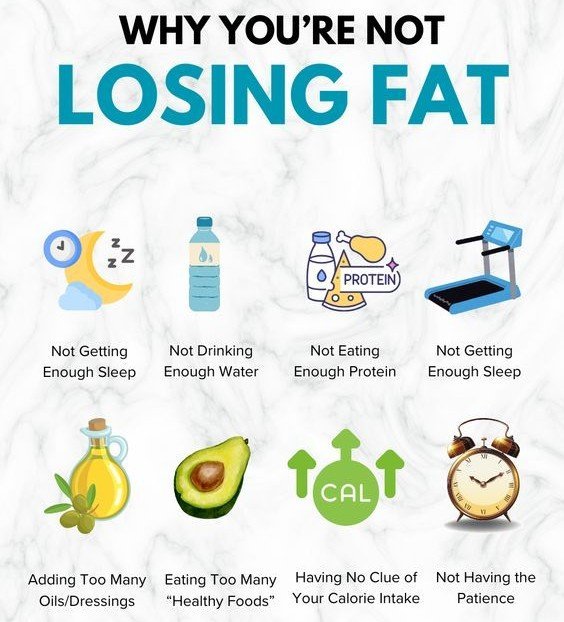
2. Not Drinking Enough Water
Hydration affects energy, digestion, and appetite regulation.
When you’re not drinking enough water:
-
Hunger signals can be confused with thirst
-
Digestion slows
-
Workouts feel harder than they should
What helps: Drinking water regularly throughout the day—especially before meals—can support appetite control naturally.
3. Not Eating Enough Protein
Protein is essential for fat loss, not just muscle building.
Low protein intake can lead to:
-
Increased hunger
-
Muscle loss during weight loss
-
Slower metabolism
What helps: Including protein at every meal helps you stay full and supports lean body mass.
4. Adding Too Many Oils and Dressings
Healthy fats are important—but they’re also calorie-dense.
Even “clean” foods can stall fat loss if:
-
Oils are poured instead of measured
-
Dressings are added without awareness
A little extra oil here and there adds up quickly.
What helps: Use fats intentionally rather than automatically. A small amount goes a long way.
5. Eating Too Many “Healthy” Foods
This one surprises a lot of people.
Foods like nuts, avocado, granola, and smoothies are nutritious—but they can still slow fat loss if portions are too large.
What helps: Healthy foods still count toward total intake. Balance matters more than food labels.
6. Having No Clear Idea of Your Calorie Intake
You don’t need to track forever—but having no awareness at all can be a problem.
Without a rough idea of intake:
-
Portion sizes creep up
-
Progress stalls without explanation
What helps: Short-term tracking or mindful portion awareness can reveal hidden calorie sources.
7. Not Having the Patience to Let It Work
Fat loss is rarely linear.
Daily weight changes don’t always reflect:
-
Fat loss
-
Muscle retention
-
Water balance
Many people quit right before results start showing.
What helps: Focus on trends over weeks, not daily fluctuations. Consistency beats intensity.
How These Mistakes Work Together
The biggest issue usually isn’t one mistake—it’s a combination.
For example:
-
Poor sleep leads to cravings
-
Low protein increases hunger
-
Extra oils add hidden calories
Individually they seem small, but together they can completely stall fat loss.
What to Do Instead (Simple Reset)
Instead of doing more, try simplifying:
-
Prioritize sleep
-
Drink water consistently
-
Eat protein at every meal
-
Be mindful with calorie-dense foods
-
Stay patient for at least a few weeks
Fat loss works best when habits are sustainable, not extreme.
Final Thoughts
If you’re not losing fat, it doesn’t mean you’re failing—it means something needs adjusting. Most plateaus come from small, fixable habits rather than lack of discipline.
Once you align sleep, hydration, protein, portions, and patience, fat loss often starts to feel easier—not harder.
👉 Save this for later, and tell me—which one of these do you think is affecting you the most right now?