For many people, tinnitus starts as a mild ringing or buzzing that’s easy to brush off. It may not seem serious at first, especially if it comes and goes. But ignoring tinnitus can lead to bigger problems over time.
While tinnitus itself isn’t a disease, it’s often a sign that something in the body—particularly the ears or nervous system—needs attention. Left unmanaged, tinnitus can worsen, affect sleep and focus, and quietly take a toll on emotional health. Understanding why early awareness matters can help prevent long-term challenges.
Untreated Tinnitus Can Worsen Over Time
One of the most common misconceptions is that tinnitus will simply fade away if ignored. In reality, this isn’t always the case. For some people, the sound becomes more noticeable over time as the brain adapts to it.
When tinnitus is left unmanaged:
-
Sounds may feel louder or more constant
-
Awareness of the noise increases
-
The brain becomes less able to filter it out
What begins as a minor annoyance can slowly become more disruptive to daily life.
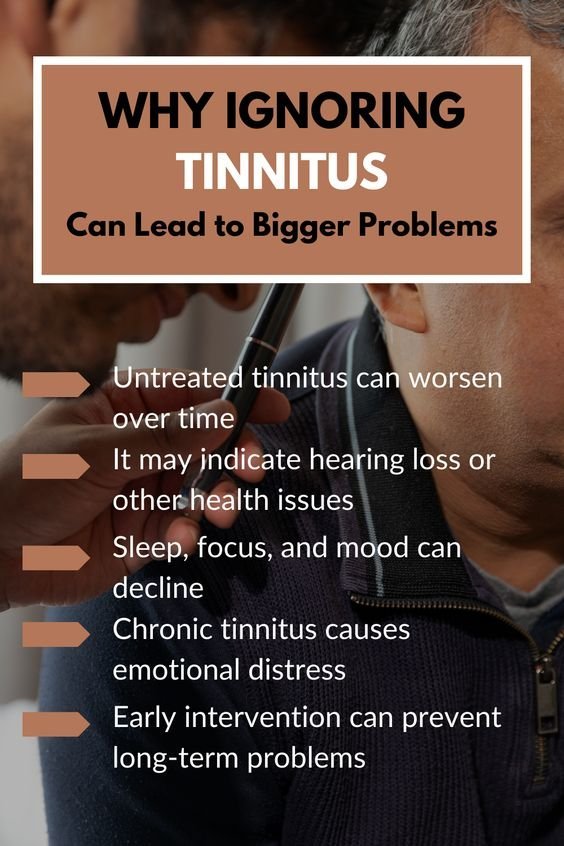
Tinnitus May Indicate Hearing Loss or Other Issues
Tinnitus is often connected to underlying conditions. Ignoring it may delay identifying issues that are easier to manage when addressed early.
Possible underlying factors include:
-
Noise-related hearing damage
-
Age-related hearing changes
-
Inner ear problems
-
Circulation or blood flow concerns
-
Earwax buildup or infections
Tinnitus acts as a signal, not a diagnosis. Paying attention to it helps ensure nothing important is missed.
Sleep, Focus, and Mood Can Decline
Many people find tinnitus most noticeable at night, when surroundings are quiet. This can interfere with sleep and lead to a cascade of daytime problems.
Common effects include:
-
Trouble falling or staying asleep
-
Mental fatigue and reduced focus
-
Irritability or low energy
Over time, poor sleep can make tinnitus feel even louder, creating a difficult cycle.
Chronic Tinnitus Can Cause Emotional Distress
Living with persistent sound can be emotionally draining, especially when it’s ignored instead of acknowledged.
Long-term tinnitus may contribute to:
-
Ongoing stress or anxiety
-
Emotional exhaustion
-
Feeling overwhelmed or discouraged
This doesn’t mean tinnitus directly causes emotional disorders—but unmanaged symptoms can gradually affect mental well-being.
Why Early Intervention Matters
Early attention doesn’t always mean eliminating tinnitus completely. Instead, it focuses on reducing its impact and preventing progression.
Early steps may include:
-
Hearing evaluations
-
Sound management strategies
-
Lifestyle and sleep improvements
-
Protecting ears from further damage
The sooner tinnitus is addressed, the easier it is to keep it from dominating daily life.
Ignoring vs. Managing Tinnitus Proactively
Ignoring tinnitus doesn’t make it disappear—it often allows it to quietly grow into a larger problem. Proactive management, even in small ways, helps restore a sense of control.
Helpful proactive habits include:
-
Monitoring symptoms instead of dismissing them
-
Reducing exposure to loud environments
-
Supporting overall health and sleep
-
Seeking professional advice when symptoms persist
When to Consider Professional Support
If tinnitus lasts for weeks, worsens, or starts affecting sleep, concentration, or mood, professional guidance is important. Audiologists or healthcare professionals can help explore possible causes and suggest appropriate next steps.
Seeking help early is about prevention, not panic.
Final Thoughts
Ignoring tinnitus can lead to bigger problems, not because the sound itself is dangerous, but because of what it may signal and how it affects overall quality of life. From worsening symptoms to sleep disruption and emotional strain, tinnitus deserves attention rather than dismissal. Taking small, thoughtful steps early can make symptoms easier to manage and prevent long-term challenges.
If tinnitus has been in the background for a while, now may be the right time to listen—both to your ears and to what they’re trying to tell you.