One of the most frustrating parts of trying to lose fat isn’t the workouts or food choices—it’s the waiting. Many people start with excitement and big expectations, only to feel discouraged when results don’t show up quickly. This is where most fat loss journeys quietly fall apart.
Understanding why fat loss takes time can completely change how you approach it. The issue isn’t lack of effort—it’s impatience versus strategy. Let’s explore how these two paths look over time and why the slower route almost always wins.
The Impatient Way: What Usually Happens
The impatient approach often starts with high motivation and unrealistic expectations.
Month 1: Motivation Is High
You feel excited. New goals. New routines. Everything feels possible.
But motivation alone isn’t a system—it’s just energy.
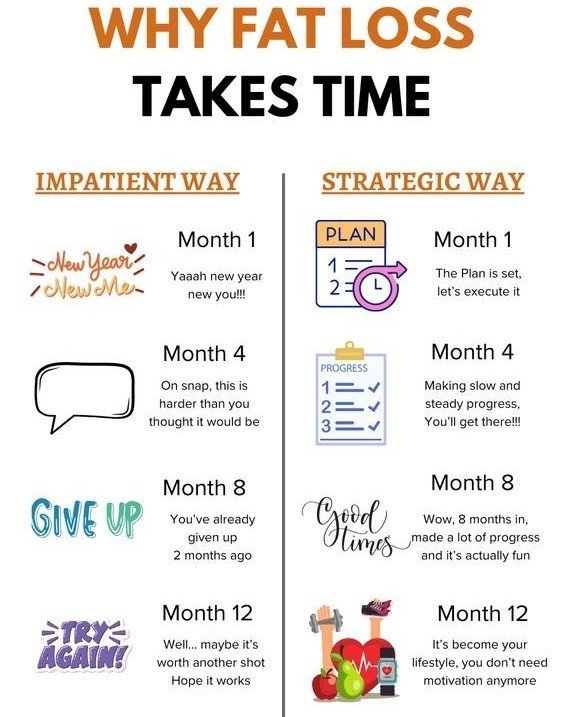
Month 4: Reality Sets In
Progress feels slower than expected. The effort feels harder. Doubt starts creeping in.
This is where many people begin questioning the plan instead of adjusting expectations.
Month 8: Giving Up Feels Easier
By now, frustration has replaced motivation. Progress feels invisible. Many people quit—even though they were closer than they realized.
Month 12: Starting Over
After months of inconsistency, the cycle often repeats. Another fresh start. Another attempt. Another reset.
The issue wasn’t effort—it was expecting fast results from a slow biological process.
The Strategic Way: What Actually Works
The strategic approach looks less exciting at first—but far more rewarding over time.
Month 1: The Plan Is Set
Instead of chasing quick fixes, the focus is on building a realistic plan. Nothing extreme. Nothing dramatic. Just consistency.
This phase feels calm, not exciting—and that’s a good thing.
Month 4: Slow and Steady Progress
Changes are happening, even if they’re subtle. Clothes fit better. Energy improves. Habits feel more natural.
Progress isn’t fast—but it’s real.
Month 8: Momentum Builds
By this point, consistency pays off. Results are visible. Confidence grows. The process feels less like a struggle and more like a routine.
Fat loss starts feeling sustainable.
Month 12: It Becomes a Lifestyle
At this stage, motivation isn’t required anymore. Healthy choices feel normal. Progress compounds.
You’re no longer “trying” to lose fat—you’re living in a way that supports it.
Why Fat Loss Is Naturally Slow
Fat loss takes time because:
-
The body adapts gradually
-
Hormones respond slowly
-
Sustainable habits require repetition
-
Muscle preservation matters
Fast weight loss often comes from water loss, muscle loss, or extreme restriction—not real fat reduction.
Your body prioritizes survival, not speed.
The Biggest Mindset Shift You Can Make
Fat loss works best when you stop asking:
“How fast can I lose this?”
And start asking:
“How long can I stay consistent?”
Consistency beats intensity every time.
Common Mistake That Slows Progress
The most common mistake is changing strategies too often. Jumping from plan to plan resets progress repeatedly.
Fat loss improves when:
-
You stick with a plan long enough
-
Adjust slowly, not emotionally
-
Measure progress beyond the scale
Patience isn’t passive—it’s strategic.
What Progress Actually Looks Like
Real fat loss often shows up as:
-
Improved energy
-
Better digestion
-
Fewer cravings
-
Gradual body changes
-
Increased confidence
These changes build quietly before they become obvious.
Final Thoughts
Fat loss takes time because your body isn’t broken—it’s cautious. The impatient path feels exciting at first but rarely lasts. The strategic path feels slow at the beginning but leads to lasting results.
When you stop fighting the timeline and start respecting it, everything changes.
👉 Save this guide for days when progress feels slow.