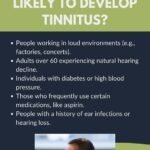
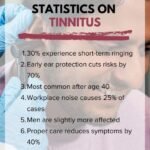
Tinnitus — the internal perception of ringing, buzzing, or hissing in the ears — can affect anyone, but some groups of people are at much higher risk than others. Understanding these risk factors helps with early awareness, prevention, and long-term ear health.
While tinnitus is often associated with age or loud noise exposure, there are several lesser-known contributors that may surprise you. Below are the most common groups and conditions linked to higher tinnitus development.
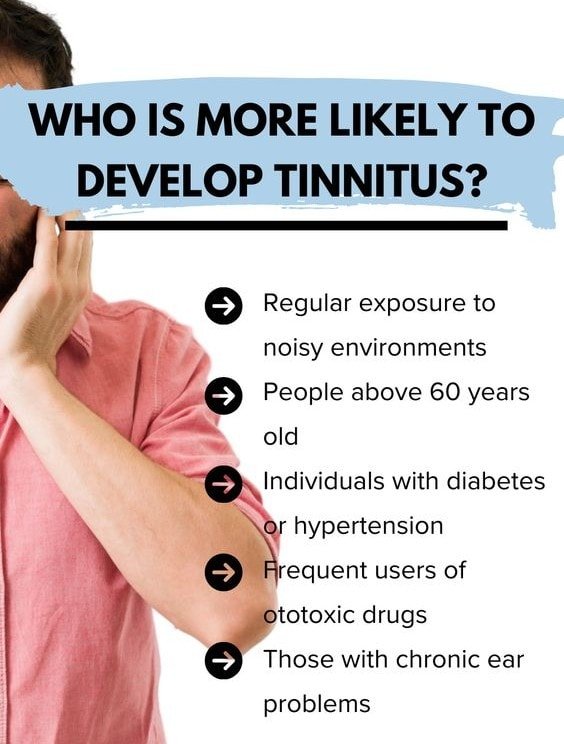
1. Regular Exposure to Noisy Environments
People who frequently work or spend time in loud environments are more prone to tinnitus. Noise can damage tiny inner ear cells responsible for sound transmission, and once harmed, they do not regenerate.
Higher-risk occupations include:
-
Construction workers
-
Factory & machinery operators
-
Musicians or DJs
-
Military personnel
-
Airport and traffic workers
Ear protection and volume control are key to prevention.
2. Individuals Over Age 60
Hearing naturally declines as we age, and tinnitus becomes more common beyond 60. Even mild age-related hearing loss can make internal sounds more noticeable.
Regular hearing checks in later years can help track changes early.
3. People With Diabetes or Hypertension
Circulation plays a major role in ear function. Conditions like diabetes and high blood pressure can reduce blood flow to the auditory system, increasing tinnitus risk.
Supporting cardiovascular health may also support hearing wellness.
4. Frequent Users of Ototoxic Medications
Some medications are known as ototoxic, meaning they can affect hearing. These may include certain antibiotics, painkillers, chemotherapy drugs, and diuretics.
Not everyone experiences tinnitus from medication, but awareness is helpful — especially for long-term use.
Never stop a prescribed medication without medical guidance.
5. Individuals With Chronic Ear Problems
Recurring infections, fluid buildup, eardrum injuries, or untreated ear inflammation can disrupt hearing pathways. Over time, this irritation may evolve into persistent tinnitus.
Ear health maintenance matters just as much as eye or dental care.
⭐ Final Thoughts
Tinnitus doesn’t affect everyone equally. People exposed to loud noise, older adults, those with cardiovascular or metabolic issues, frequent users of ototoxic drugs, and individuals with recurring ear problems are statistically more likely to develop symptoms.
Understanding your risk empowers you to take preventive steps — whether it’s protecting your ears, monitoring medications, or seeking support for chronic ear issues.
Would you like a follow-up article on how to reduce tinnitus symptoms naturally or foods that may support hearing health?