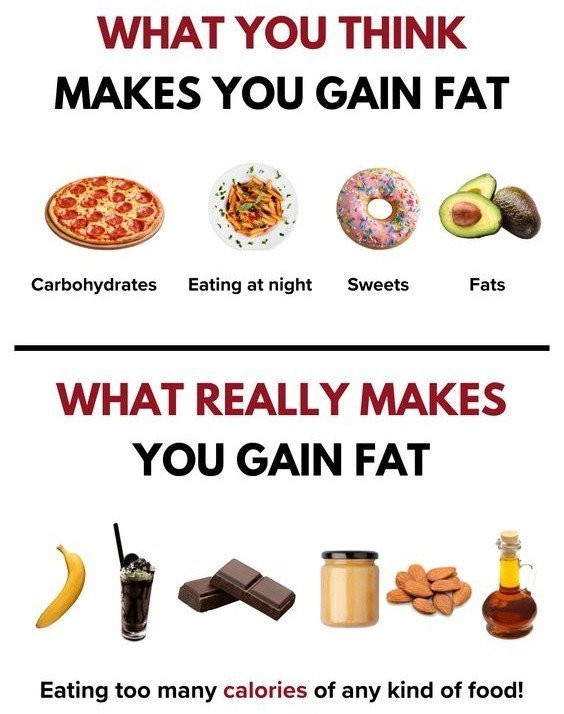
For years, we’ve been told certain foods are the reason we gain weight. Carbs are “bad.” Eating at night is a problem. Sweets and fats should be avoided at all costs.
But here’s the truth: most of what people blame for fat gain isn’t the real cause. Understanding what really makes you gain fat can completely change how you approach food — and relieve a lot of unnecessary guilt.
Let’s clear up the confusion and break it down in a simple, honest way.
The Common Myths About Fat Gain
A lot of weight gain advice is built on fear, not facts. Here are some of the biggest myths people believe.
Carbohydrates Make You Gain Fat
Carbs often get blamed first. Bread, rice, pasta, pizza — they’re labeled as fattening. But carbohydrates themselves don’t cause fat gain.
Carbs are simply a fuel source, just like protein and fat. Your body uses them for energy. The problem isn’t carbs — it’s how many total calories you eat.
Eating at Night Causes Weight Gain
Many people believe eating after a certain hour automatically turns food into fat. In reality, your body doesn’t suddenly switch to “fat storage mode” at night.
What matters most is:
-
Total calorie intake over the day
-
Portion sizes
-
Consistency over time
Eating late only becomes an issue if it pushes you into overeating overall.
Sweets Automatically Lead to Fat Gain
Sweets are easy to overeat, but they’re not magical fat creators. Chocolate, donuts, desserts — they only contribute to fat gain if they regularly push your calorie intake beyond what your body needs.
The same principle applies here: moderation matters more than avoidance.
Dietary Fat Makes You Fat
This one sounds logical, but it’s misleading. Healthy fats like avocado, nuts, olive oil, and seeds support hormones, fullness, and nutrient absorption.
Fat doesn’t make you fat — excess calories do.
What Actually Makes You Gain Fat
Now, here’s the part many people don’t want to hear but need to understand.
Eating Too Many Calories — From Any Food
The real answer to what makes you gain fat is simple:
consistently eating more calories than your body uses.
It doesn’t matter if the calories come from:
-
Fruit
-
Chocolate
-
Nuts
-
Oils
-
Smoothies
-
“Healthy” snacks
Calories don’t carry moral value. Your body responds to totals over time.
If you regularly eat more energy than you burn, the excess gets stored — often as fat.
Why “Healthy Foods” Can Still Lead to Fat Gain
This is where many people feel confused or frustrated.
Foods like nuts, peanut butter, smoothies, and oils are nutritious — but they’re also calorie-dense. It’s easy to eat large amounts without realizing it.
For example:
-
A handful of nuts can be 150–200 calories
-
A smoothie can quietly exceed 500 calories
-
Drizzling oil adds up faster than expected
Again, these foods aren’t bad. But portion awareness matters.
Calories Aren’t the Enemy — Awareness Is Key
Talking about calories doesn’t mean counting every bite or obsessing over numbers. It simply means having awareness.
Helpful habits include:
-
Noticing portion sizes
-
Eating mindfully instead of distracted
-
Paying attention to fullness cues
-
Understanding which foods are easy to overeat
This awareness helps you enjoy food without accidentally overeating.
So Why Do Certain Foods Get Blamed?
Foods like carbs, sugar, and fats are often blamed because they’re:
-
Easy to overeat
-
Highly palatable
-
Convenient
That doesn’t make them fattening on their own. It makes them easier to overconsume — especially in modern diets where portions are larger than ever.
The food isn’t the villain. The pattern matters more.
A Better Way to Think About Fat Gain
Instead of asking, “Is this food fattening?”
Try asking:
-
“Does this fit my overall intake today?”
-
“Am I actually hungry, or just eating out of habit?”
-
“Does this food help or hurt my energy and recovery?”
This mindset reduces guilt and encourages balance.
Final Thoughts
If you’ve been confused about what really makes you gain fat, here’s the simplest truth: no single food causes weight gain by itself. Fat gain comes from consistent calorie surplus over time — regardless of whether the food is considered “healthy” or not.
You don’t need to fear carbs, avoid eating at night, or cut out foods you enjoy. Awareness, balance, and consistency matter far more than food rules.
Save this for later if it helped clear things up — or share it with someone who’s tired of diet myths. And ask yourself: which food myth have you been blaming unfairly?