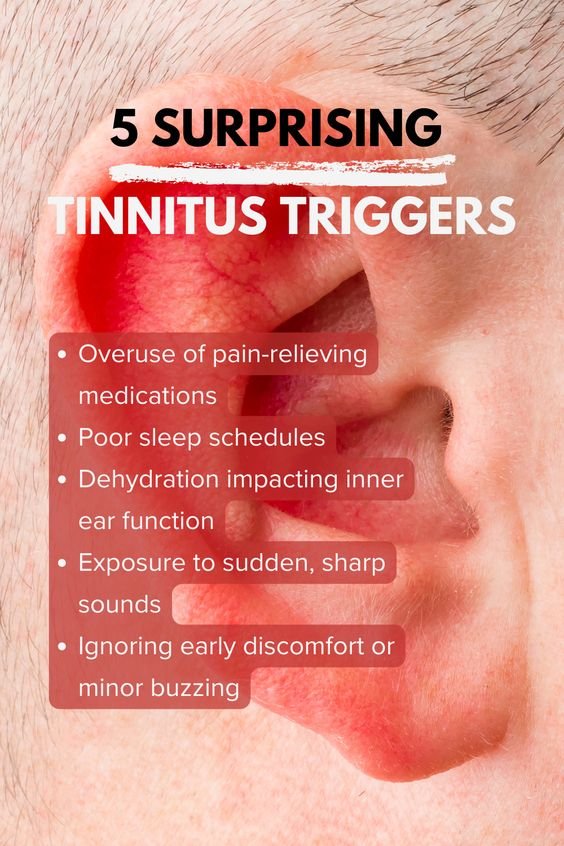
Tinnitus — the ringing, buzzing or humming sound in the ears — can range from mildly distracting to deeply disruptive. For some, it comes and goes quietly. For others, it feels constant and exhausting. While there is no universal cure, understanding what triggers and worsens tinnitus is one of the most powerful steps toward relief.
Below are four common factors that can intensify tinnitus, along with simple explanations to help you manage symptoms more effectively.
1. Sudden Changes in Blood Pressure
Blood flow plays a big role in how the inner ear functions. When blood pressure rises or falls quickly, the auditory system may become more sensitive, causing tinnitus to spike.
Common causes include:
-
Stress or anxiety
-
High-sodium meals
-
Intense exercise surges
-
Alcohol or caffeine intake
Keeping blood pressure stable through hydration, balanced meals, and stress-management practices may help reduce flare-ups.

2. Poor Neck and Jaw Alignment
Tinnitus often connects to the musculoskeletal system. Misalignment in the jaw or tension in the neck can irritate nerves and circulation affecting the ear.
Possible signs this is your trigger:
✔ Ringing increases when you clench your jaw
✔ Symptoms change with neck movement
✔ You have known TMJ or posture issues
Gentle posture correction, massage therapy, or dental/TMJ evaluation may provide relief if this is a contributing factor.
3. Chronic Sinus Problems
Blocked sinuses affect pressure around the ear. When mucus builds up or inflammation is persistent, sound perception becomes distorted — often increasing tinnitus intensity.
Triggers may include:
-
Seasonal allergies
-
Chronic sinusitis
-
Frequent colds
-
Nasal congestion
Treating nasal inflammation, clearing mucus and reducing allergens can make a noticeable difference.
4. Vitamin & Mineral Deficiencies
Tinnitus can worsen when the nervous system lacks proper nutrients — especially those connected to nerve signaling, circulation, and inflammation control.
Deficiencies sometimes linked include:
-
Magnesium
-
Zinc
-
Vitamin B12
-
Vitamin D
A balanced diet with whole foods, leafy vegetables, nuts, seeds and lean proteins supports ear-nerve health. A professional blood test can identify what’s missing.
Other Triggers Worth Noticing
While the list above highlights major contributors, tinnitus may also worsen due to:
⚠ Lack of sleep
⚠ High caffeine intake
⚠ Loud sound exposure
⚠ Emotional stress
⚠ Certain medications
Often, improvements come from reducing multiple triggers rather than searching for one cause.
Final Thoughts
Tinnitus may be unpredictable, but it becomes easier to manage once you recognize what makes it worse. Sudden blood pressure changes, jaw/neck misalignment, sinus problems, and nutrient deficiencies are common aggravators — and addressing them can meaningfully improve daily comfort.
Every ear responds differently, so observe your patterns, adjust habits gently, and seek medical guidance when symptoms persist or suddenly intensify. Relief is often found through awareness, patience, and small supportive changes.