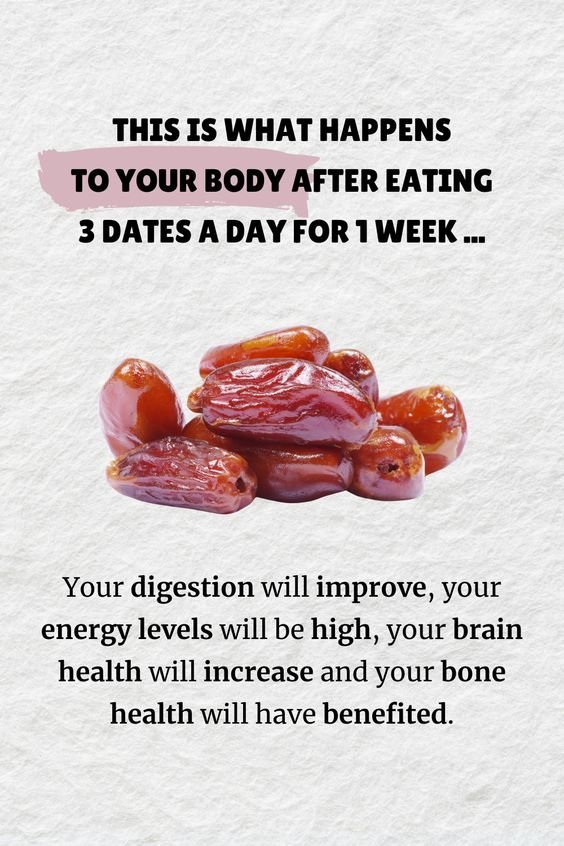
Dates are often called “nature’s candy,” but they’re more than just a sweet treat. When eaten in moderation, dates provide fiber, natural sugars, and minerals that support several systems in the body. That’s why many people are curious about what happens when they eat three dates a day for a week.
While dates aren’t a miracle food, adding a small, consistent amount to your daily routine can support digestion, energy levels, and overall nutritional balance—especially when paired with a healthy diet.
Let’s explore what your body may experience.
Improved Digestion Support
Dates are naturally high in fiber, which plays an important role in digestive health.
Eating a few dates daily may help:
-
Support regular bowel movements
-
Feed beneficial gut bacteria
-
Reduce feelings of digestive sluggishness
Fiber works best when combined with proper hydration, so drinking enough water is important when adding dates to your diet.
Steadier Energy Levels
Dates contain natural sugars like glucose and fructose, along with small amounts of minerals.
This combination may:
-
Provide a gentle energy boost
-
Reduce sudden energy crashes
-
Support physical and mental activity
Unlike highly processed sweets, dates offer energy along with fiber, which slows sugar absorption and helps keep energy more stable.
Brain Health Support Through Nutrients
Dates contain small amounts of nutrients that support brain function, including antioxidants and minerals.
Including dates regularly may help:
-
Support normal brain function
-
Reduce oxidative stress
-
Complement a nutrient-rich diet
This doesn’t mean dates directly “improve” brain health on their own, but they can contribute positively as part of a balanced eating pattern.
Bone Health Contribution
Dates provide minerals such as magnesium, potassium, and small amounts of calcium.
Over time, these nutrients:
-
Support bone strength
-
Aid normal muscle function
-
Contribute to overall skeletal health
While dates alone won’t transform bone health, they can support it when combined with other mineral-rich foods.
What Dates Do Not Do
It’s important to stay realistic. Eating three dates a day for a week will not:
-
Cure digestive problems
-
Replace medical treatment
-
Instantly improve bone density
-
Cause dramatic body changes
Dates support the body—they don’t override lifestyle, sleep, or overall nutrition.
Best Way to Eat Dates Daily
To get the most benefit:
-
Stick to 2–3 dates per day
-
Pair them with protein or nuts
-
Eat them earlier in the day for energy
-
Avoid replacing balanced meals
Portion awareness matters, as dates are calorie-dense.
Who Should Be Careful
You may want to moderate intake if you:
-
Have blood sugar concerns
-
Are managing calorie intake strictly
-
Have digestive sensitivity to dried fruits
In these cases, pairing dates with protein or fiber-rich foods helps slow sugar absorption.
Common Mistake to Avoid
A common mistake is treating dates as “free” food because they’re natural. Even healthy foods can slow progress if eaten in excess.
Balance—not elimination—is what matters most.
Final Thoughts
Eating three dates a day for one week may support digestion, provide steady energy, and contribute helpful nutrients for brain and bone health. The effects are subtle—not dramatic—but meaningful when combined with good hydration, balanced meals, and consistency.
Small habits, repeated daily, often have the greatest long-term impact.
👉 Save this guide if you’re looking for simple, natural additions to your routine.