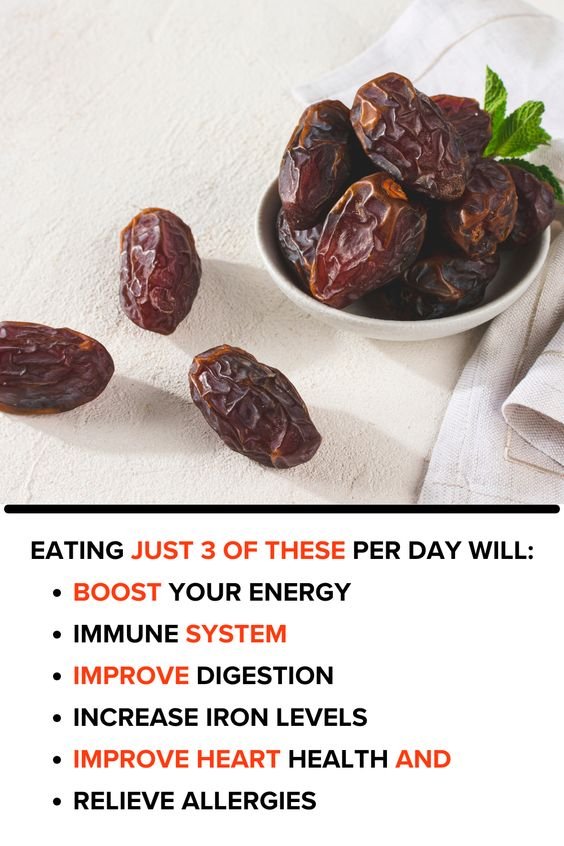
Small food habits can have a surprisingly big impact on how your body feels day to day. One simple example is eating 3 dates a day for one week. It may sound too easy to matter, but dates are nutrient-dense, naturally sweet, and packed with compounds that support multiple systems in the body.
Dates have been used for centuries as a natural energy source and digestive aid. When eaten consistently—even in a small amount—they can gently support digestion, energy, brain function, and bone health without drastic changes to your diet.
Here’s what typically happens when you add three dates a day to your routine for one week.
1. Your Digestion May Feel Smoother and More Regular
One of the first changes many people notice is improved digestion. Dates are naturally rich in dietary fiber, which helps support healthy bowel movements and feeds beneficial gut bacteria.
Eating three dates a day can:
-
Support smoother digestion
-
Reduce feelings of heaviness or bloating
-
Help regulate bowel movements naturally
Fiber works best when consumed consistently, so even a short one-week habit can help your digestive system feel more balanced.
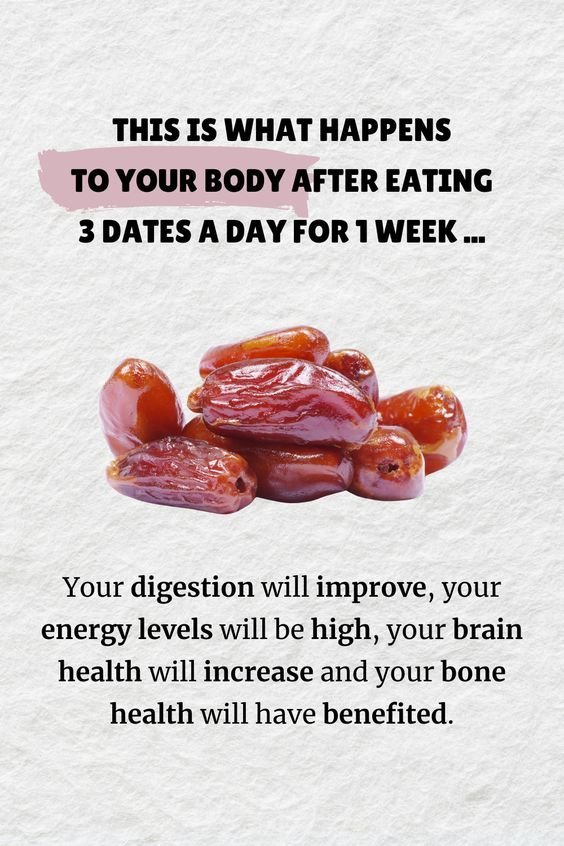
2. Your Energy Levels May Feel More Stable
Dates contain natural sugars like glucose and fructose, but they’re paired with fiber, which slows absorption. This means you’re less likely to experience sharp energy spikes and crashes compared to refined sweets.
Over a week, you may notice:
-
More sustained energy during the day
-
Less reliance on sugary snacks
-
Better energy between meals
This makes dates a smart option for mid-morning or afternoon energy instead of processed snacks.
3. Your Brain Health Gets Nutritional Support
Dates provide nutrients such as potassium, antioxidants, and small amounts of B-vitamins, all of which play a role in brain and nervous system function.
While dates aren’t a “brain booster” on their own, consistent intake may help support:
-
Mental clarity
-
Focus and alertness
-
Overall nervous system health
The antioxidants in dates also help reduce oxidative stress, which is important for long-term brain health.
4. Your Bone Health Benefits Quietly
Dates contain minerals like magnesium, potassium, phosphorus, and small amounts of calcium. These minerals support bone strength and density when consumed as part of a balanced diet.
Eating three dates a day contributes to:
-
Mineral intake that supports bones
-
Better nutrient balance for skeletal health
-
Long-term bone maintenance rather than quick fixes
Bone health is cumulative, so small, consistent habits matter more than occasional large changes.
5. You May Experience Fewer Sweet Cravings
Because dates are naturally sweet, they can satisfy sugar cravings without added sugars or artificial ingredients. Over a week, this can help retrain your palate.
Many people find that:
-
Dessert cravings decrease
-
Snacking becomes more intentional
-
Portion control feels easier
Replacing processed sweets with dates can be a gentle step toward healthier eating patterns.
How to Eat 3 Dates a Day for Best Results
To get the most benefit:
-
Eat them plain as a snack
-
Pair them with nuts or yogurt for balance
-
Spread them throughout the day instead of all at once
-
Drink enough water to support fiber digestion
There’s no need to overdo it—three dates are enough to support benefits without excess sugar intake.
Important Things to Keep in Mind
-
Dates are calorie-dense, so moderation matters
-
People managing blood sugar should monitor portions
-
Results vary depending on overall diet and lifestyle
Eating dates supports health best when combined with balanced meals, hydration, and movement.
Final Thoughts: Small Habit, Meaningful Support
Eating 3 dates a day for one week won’t transform your body overnight—but it can gently support digestion, energy levels, brain health, and bone health in a realistic, sustainable way.
Sometimes the most effective health habits aren’t complicated. They’re simple actions repeated consistently.
Save this idea for later if you’re looking for an easy nutrition habit to try.
Would you eat dates as a snack or with a meal?