We often take our hearing for granted—until a buzzing blender, loud concert, or construction noise reminds us how sensitive our ears really are. Protecting your hearing doesn’t have to be complicated. With a few simple daily habits, you can keep your ears healthy and your hearing sharp for years to come.
Here are five easy and practical ways to safeguard your hearing, whether you’re at home, at work, or out and about.
1. Limit Exposure to Loud Household Tools
You’d be surprised how much noise your everyday appliances can make. Tools like vacuum cleaners, hair dryers, or blenders often exceed safe decibel levels when used frequently.
Try using them in short bursts or step back while they’re running. If you use power tools for DIY projects, consider noise-reducing earmuffs or earplugs. Even small breaks between loud sounds give your ears time to recover.
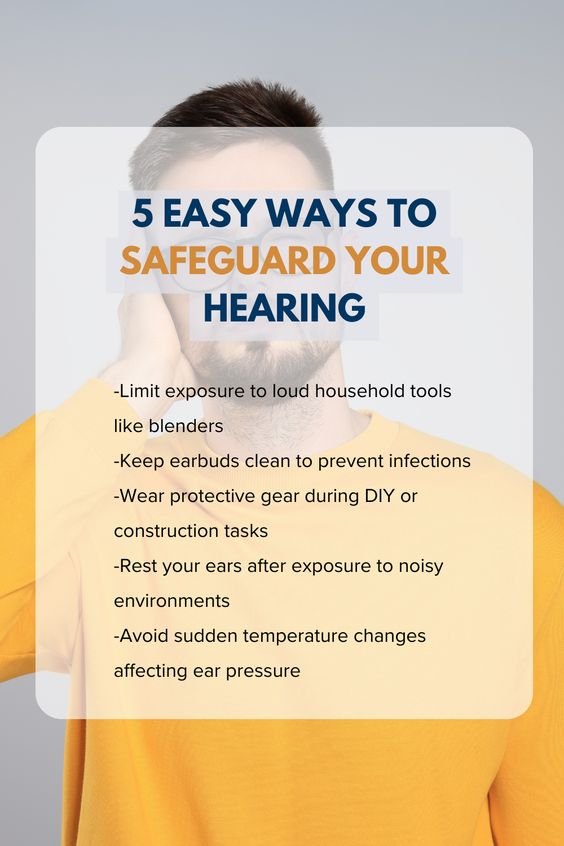
2. Keep Your Earbuds Clean
If you wear earbuds daily — whether for calls, podcasts, or music — keeping them clean is essential. Dirty earbuds can trap bacteria and lead to ear infections, which may affect hearing over time.
Use a soft, dry cloth or alcohol wipes to gently clean them every few days. Avoid sharing earbuds and don’t push them too deep into your ears. Clean habits mean clearer sound and healthier ears.
3. Wear Protective Gear During Noisy Tasks
If you enjoy DIY or work in loud environments, hearing protection isn’t optional — it’s a must. Ear defenders or foam plugs can reduce noise exposure dramatically.
When using drills, lawnmowers, or construction tools, always protect your ears before you start. Just like safety goggles protect your eyes, ear protection shields one of your most delicate senses.
4. Give Your Ears Time to Rest
After a noisy day — maybe from traffic, concerts, or power tools — your ears need downtime. Step into a quiet space and let your hearing recover naturally.
Experts recommend giving your ears at least 16 hours of quiet after a single loud event to fully recover. Silence, in this case, really is golden.
5. Avoid Sudden Temperature Changes
Rapid shifts in temperature, like moving from a heated room into cold outdoor air, can affect ear pressure and lead to discomfort or even mild pain.
Wearing a hat or ear warmers during winter and avoiding direct air-conditioning flow helps protect your inner ear from pressure stress. Small adjustments like these keep your ears comfortable and your hearing stable.
Final Thoughts
Safeguarding your hearing isn’t about drastic changes — it’s about everyday mindfulness. By reducing noise exposure, cleaning your earbuds, and giving your ears rest, you’re investing in one of your most vital senses.
Start applying one or two of these tips today — your future self will thank you for hearing the world clearly and comfortably. 👂💛
If you found these tips useful, save this post on Pinterest so you can revisit it anytime!