Knee pain can interrupt daily movement, limit activity, and reduce comfort — whether it comes from strain, overuse, aging, or a temporary injury. While professional evaluation is important for persistent or severe cases, many people find relief through simple home practices that reduce inflammation, support mobility, and encourage healing.
The tips below are gentle, practical, and easy to apply using items found at home. They aren’t quick cures, but when used consistently, they may help ease discomfort and restore natural movement. If knee pain is new or worsening, professional advice is always wise, but home care can support recovery along the way.
1. Use a Cold Pack to Reduce Inflammation
Cold therapy is commonly used for swelling, soreness, or knee pain after activity. Ice helps minimize inflammation and numbs the area gently, making discomfort more manageable.
How to use it safely:
-
Apply a cold pack for 10–15 minutes
-
Place a cloth between skin and ice to avoid irritation
-
Repeat a few times per day as needed
This method may be especially helpful after walking, exercise, or long periods of standing.
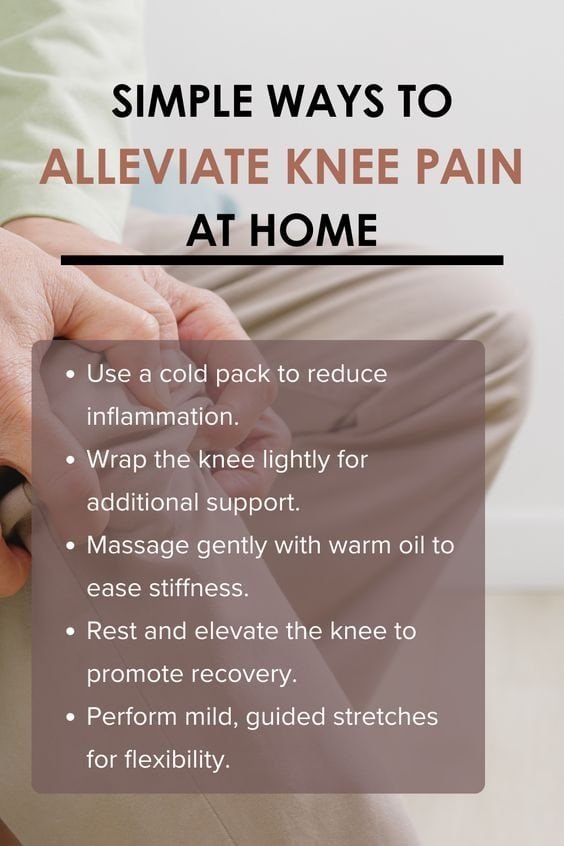
2. Wrap the Knee for Light Support
A soft compression wrap can help stabilize the joint and reduce strain during daily movement. It doesn’t need to be tight — just enough to feel supported.
Compression support may:
-
Reduce swelling
-
Increase circulation
-
Provide joint steadiness while walking
If mobility feels unstable, wrapping the knee can offer extra reassurance during activity.
3. Massage with Warm Oil to Ease Stiffness
Warm oil massage may help loosen tight tissue and increase blood flow. Oils like olive, coconut, or mustard oil glide smoothly and add gentle heat to the skin.
Tips for a soothing massage:
-
Warm the oil slightly — not hot
-
Massage in slow, circular motions
-
Focus on surrounding muscles as well as the knee
-
Stop immediately if pain increases
This technique is especially comforting during colder weather or after long inactivity.
4. Rest and Elevate the Knee
Rest gives irritated tissues time to recover. Elevation also helps reduce swelling by promoting circulation away from the joint.
To apply elevation effectively:
-
Lie back and raise the leg above heart level
-
Use a pillow or rolled towel for support
-
Relax for 15–20 minutes and repeat when needed
-
Avoid prolonged standing while healing
Simple rest often makes a noticeable difference when pain is linked to overuse.
5. Perform Mild, Guided Stretching
Stiffness around the knee often increases discomfort. Light stretching can help improve flexibility and joint range of motion, but movements should be slow and controlled.
Helpful low-impact stretches may include:
-
Hamstring stretch
-
Calf stretch
-
Quadriceps stretch
-
Gentle knee bends
Stretch only to a comfortable limit — no sharp pain, no forcing. Guidance from a physiotherapist or exercise expert is ideal for form and safety.
Additional Tips for Stronger Knee Health
Along with active care, long-term habits support knee comfort:
| Habit | Benefit |
|---|---|
| Maintain a healthy weight | Less pressure on joints |
| Stay active with low-impact exercise | Strengthens muscles around the knee |
| Choose supportive footwear | Reduces walking strain |
| Warm up before workouts | Prevents tendon and muscle stress |
Balanced strength around the knee — especially in the hips, quads, and calves — often supports smoother movement.
When to Seek Professional Help
While home practices may relieve mild discomfort, medical attention is recommended if:
-
Pain is severe or persistent
-
Swelling doesn’t improve
-
The knee feels unstable or locks
-
There is a recent injury or fall
-
Movement becomes increasingly limited
A specialist can provide diagnosis, imaging, or personalized rehabilitation if needed.
Final Thoughts
Knee pain can slow you down, but simple home care can make everyday movement more manageable. Ice for inflammation, gentle support wrapping, warm oil massage for stiffness, elevation for relief, and mild stretching for flexibility work together to support comfort and mobility. These practices are easy to apply and can be repeated throughout the day as needed. Remember — progress comes gradually, and listening to your body is essential. With patience, rest, and mindful care, knee comfort often improves one step at a time.