Tinnitus is commonly described as ringing in the ears, but for many people it shows up in ways that are far less obvious. These symptoms can be subtle at first — easy to dismiss, easy to blame on tiredness, stress or a noisy day. But recognizing the early signs is important because the sooner you understand what’s happening, the sooner you can manage it, reduce triggers and protect your long-term hearing health.
Below are lesser-known indicators of tinnitus that often go unnoticed or misunderstood.
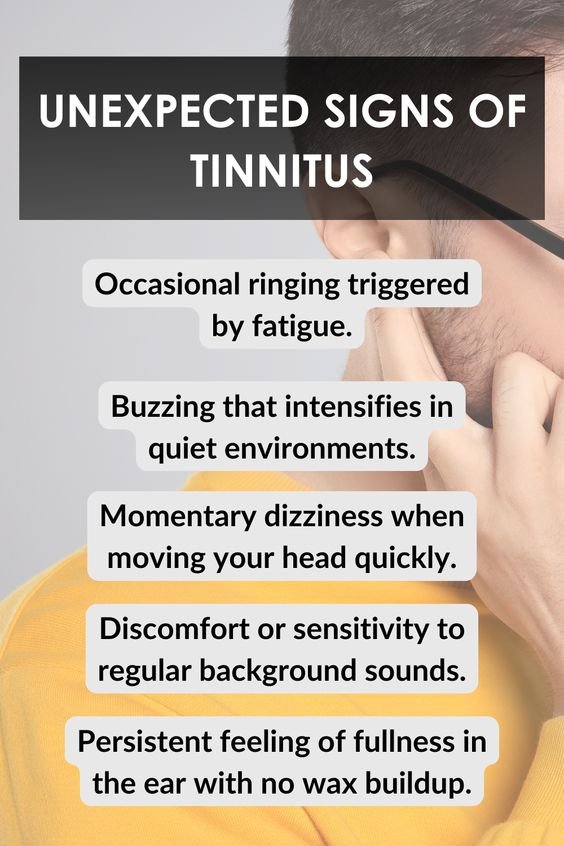
1. Occasional Ringing Triggered by Fatigue
If the ringing comes and goes — especially on days when you’re exhausted or mentally drained — it may still be tinnitus. Fatigue can lower the brain’s ability to filter internal sound, making ear noise more noticeable.
Resting well and pacing tasks often helps reduce these flare-ups.
2. Buzzing That Gets Louder in Quiet Spaces
Tinnitus tends to hide behind everyday noise. When the world gets quiet — bedtime, reading, sitting alone — the buzzing becomes more obvious. This doesn’t mean it’s worsening; it just means there’s nothing masking it.
White noise, soft music or fan sounds can help balance the silence.
3. Momentary Dizziness When Moving Quickly
Not everyone experiences dizziness with tinnitus, but some do. Quick head movements, standing up fast, or turning too suddenly may briefly affect balance.
This can happen when the inner ear — which controls both hearing and balance — is under stress or inflammation.
4. Sensitivity or Discomfort Around Normal Sound
Sudden sharp sounds, clattering dishes, loud conversations or even background noise may feel uncomfortable or overwhelming. This sensitivity is known as hyperacusis and can appear alongside tinnitus.
Managing volume and taking breaks from noise can create relief.
5. Feeling of Fullness in the Ear With No Wax Present
Some people describe tinnitus as pressure rather than ringing. It may feel like blocked ears after a flight, but with no actual blockage. This sensation might come and go, or linger as a dull fullness.
Hydration, jaw relaxation and lowering stress can sometimes ease the tightness.
✨ Final Thoughts
Tinnitus isn’t only a ringing sound — it can show itself through buzzing, sound sensitivity, ear pressure, fatigue-triggered noise or brief dizziness. These symptoms don’t always mean something serious, but recognizing them allows you to respond early, track patterns and make lifestyle changes that support your ear health.
If these signs feel familiar, consider monitoring when they appear — during stress, after loud environments, with caffeine, or at bedtime. Awareness is the first step toward management and relief.