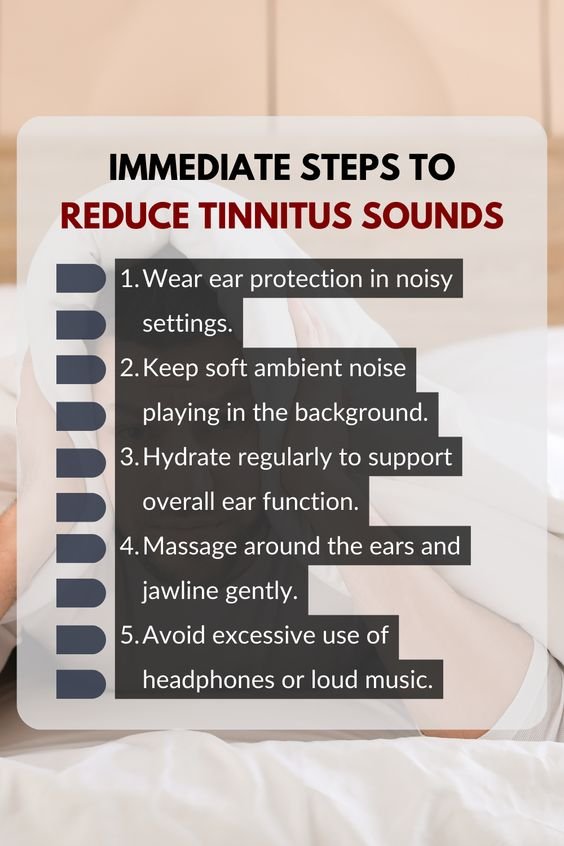
If you’ve ever felt that constant ringing, buzzing, or hissing sound in your ears, you know how frustrating tinnitus can be. The good news? You can take simple, effective steps to calm the noise and protect your hearing. Let’s explore practical treatments and everyday habits that make a real difference for tinnitus relief.
1. Use Hearing Aids to Improve Sound Clarity
Hearing aids can do more than amplify sound — they can help mask tinnitus by improving overall hearing clarity. Many modern hearing aids include built-in tinnitus-masking features that play soft, soothing background sounds to reduce your perception of ringing. If you struggle to follow conversations or hear faint sounds, getting tested for hearing loss is a smart first step.
2. Boost Nerve Health with Vitamin B12
Vitamin B12 supports nerve health, which is essential for the auditory system. A deficiency can sometimes worsen tinnitus symptoms. Include foods like eggs, fish, and fortified cereals in your diet, or ask your doctor whether supplements might help. Think of B12 as gentle nourishment for your ear nerves — it won’t cure tinnitus overnight, but it supports long-term ear health.
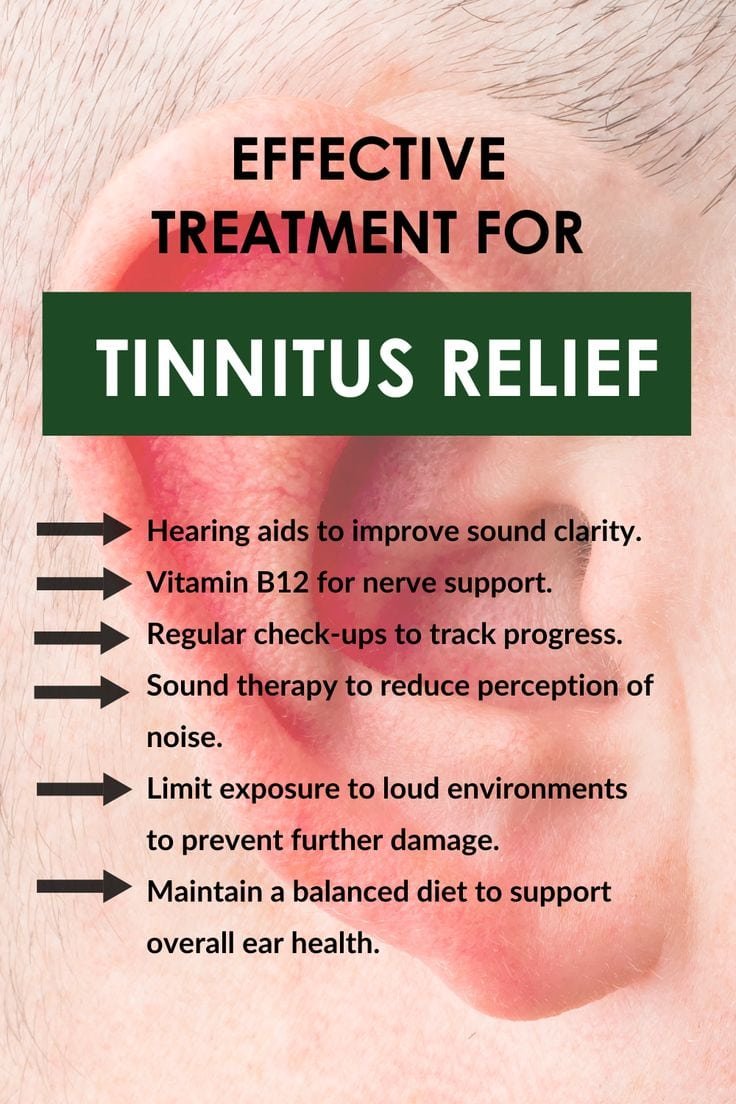
3. Schedule Regular Check-Ups to Track Progress
Consistency is key. Regular audiologist visits allow professionals to monitor your hearing and adjust treatments when needed. They can help rule out infections, wax buildup, or underlying conditions that might worsen tinnitus. Tracking progress over time helps you identify what’s working — and what’s not — in your relief plan.
4. Try Sound Therapy to Reduce the Perception of Noise
Sound therapy works by training your brain to focus less on the tinnitus signal. This can include:
-
White noise machines or apps
-
Soft nature sounds or instrumental music
-
Specialized tinnitus retraining therapy (TRT)
The goal isn’t silence — it’s comfort. Gradually, your brain learns to tune out the unwanted ringing, helping you feel calmer and more in control.
5. Limit Exposure to Loud Environments
Prevention plays a huge role. Concerts, heavy machinery, and even long headphone sessions can aggravate tinnitus. Always carry ear protection — small foam earplugs can make a big difference. Think of them as “seatbelts” for your ears; you’ll rarely regret using them.
6. Maintain a Balanced Diet for Overall Ear Health
Your diet affects everything, including your ears. A balanced, anti-inflammatory diet supports blood flow and nerve function. Add:
-
Leafy greens rich in folate
-
Omega-3-rich fish like salmon
-
Fresh fruits and whole grains
Avoid excess caffeine, salt, and alcohol, as they can trigger flare-ups for some people. A healthy body creates a healthier hearing system.
7. Manage Stress and Sleep Well
Stress and sleep deprivation can intensify tinnitus. Try breathing exercises, yoga, or guided meditation before bed. Even simple deep-breathing moments throughout the day can lower tension and reduce the intensity of the ringing. Sleep is your body’s natural repair cycle — protect it like gold.
8. Explore Complementary Treatments
Many people find relief through acupuncture, mindfulness therapy, or cognitive behavioral therapy (CBT). These don’t “cure” tinnitus but can help your mind react less to the sound. The key is exploring what calms your body and quiets your thoughts.
Final Thoughts
Tinnitus relief doesn’t happen overnight, but progress is absolutely possible with the right habits. From using sound therapy to protecting your hearing and nourishing your body, every step you take adds up. 🌿
Pin this post for later and start implementing one small change today — your ears will thank you.