If tinnitus has been part of your daily life, you’ve probably noticed that symptoms can feel better on some days and worse on others. While food isn’t a cure, what you eat can influence inflammation, circulation, and nerve health—all of which play a role in how tinnitus feels. That’s why learning about top foods for tinnitus relief can be a helpful step toward managing symptoms naturally.
A balanced, nutrient-rich diet supports the body systems connected to hearing and nerve signaling. In this guide, we’ll explore specific foods often recommended for tinnitus support and explain why they matter, so you can make informed, practical choices.
Why Diet Matters for Tinnitus
Tinnitus is a symptom, not a disease. It’s often influenced by factors like circulation, inflammation, stress, and nutrient balance. Certain foods support healthy blood flow to the inner ear, while others help regulate nerve signals and reduce oxidative stress.
What does that mean for you? Eating strategically may help:
-
Support nerve function
-
Improve circulation to auditory structures
-
Reduce inflammation that may aggravate symptoms
Consistency matters more than quick fixes.
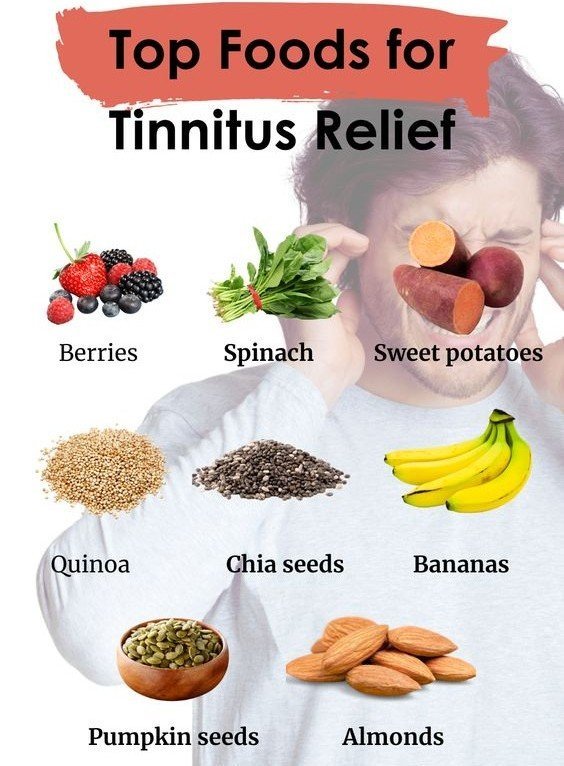
1. Berries: Antioxidant Support for Ear Health
Berries such as blueberries, strawberries, and blackberries are packed with antioxidants. These compounds help combat oxidative stress, which is believed to affect delicate structures in the inner ear.
Benefits of berries include:
-
Supporting healthy blood vessels
-
Protecting cells from damage
-
Promoting overall brain and nerve health
Adding a small handful to breakfast or snacks is a simple way to boost daily antioxidant intake.
2. Spinach: Magnesium and Circulation Support
Spinach is rich in magnesium, a mineral often associated with nerve function and blood flow. Magnesium helps regulate nerve signaling and may support circulation within the auditory system.
Why spinach stands out:
-
High in magnesium
-
Contains iron and folate
-
Supports oxygen delivery to tissues
Lightly cooked or added to smoothies, spinach can be an easy addition to meals.
3. Sweet Potatoes: Nerve-Friendly Nutrients
Sweet potatoes are a great source of potassium and vitamin A. Potassium supports fluid balance in the body, which plays a role in inner-ear function.
Potential benefits include:
-
Supporting nerve communication
-
Helping regulate inner-ear fluid levels
-
Providing steady energy without blood sugar spikes
They’re versatile, filling, and easy to incorporate into balanced meals.
4. Quinoa: Complete Protein for Nerve Support
Quinoa provides complete protein along with magnesium and B vitamins, which support nerve health and energy production.
Helpful qualities:
-
Stabilizes blood sugar levels
-
Provides amino acids for tissue repair
-
Supports overall nervous system balance
Using quinoa instead of refined grains may help maintain more stable energy and focus throughout the day.
5. Chia Seeds: Anti-Inflammatory Power
Chia seeds are small but nutrient-dense. They contain omega-3 fatty acids, which are known for their anti-inflammatory properties.
Why they’re helpful:
-
Support healthy circulation
-
Help manage inflammation
-
Promote overall cardiovascular health
Sprinkled into yogurt, oatmeal, or smoothies, chia seeds are easy to use regularly.
6. Bananas: Potassium for Fluid Balance
Bananas are well-known for potassium, which helps regulate fluid levels in the body. Inner-ear balance relies on precise fluid control, making potassium an important nutrient.
Bananas may help by:
-
Supporting nerve transmission
-
Reducing risk of fluid imbalance
-
Being gentle on digestion
They’re a convenient, everyday option for tinnitus-friendly eating.
7. Pumpkin Seeds: Zinc for Auditory Support
Pumpkin seeds provide zinc, a mineral linked to immune function and sensory health. Some research suggests low zinc levels may be associated with hearing issues.
Benefits include:
-
Supporting nerve signaling
-
Contributing to inner-ear function
-
Providing healthy fats and antioxidants
A small serving goes a long way.
8. Almonds: Vitamin E and Magnesium Combo
Almonds contain vitamin E and magnesium—both important for protecting nerve cells and supporting circulation.
Key advantages:
-
Supports blood vessel health
-
Helps maintain nerve stability
-
Provides healthy fats for brain function
Raw or lightly roasted almonds make an easy snack.
How to Use These Foods Effectively
Rather than focusing on one “superfood,” aim for a variety. Mixing these foods into meals throughout the week provides consistent support.
Helpful tips:
-
Rotate foods instead of overdoing one
-
Pair with hydration and balanced meals
-
Avoid excessive salt and highly processed foods
Diet works best as part of an overall lifestyle approach.
Final Thoughts
Exploring top foods for tinnitus relief is about supporting your body— not promising instant results. Nutrient-rich foods like berries, leafy greens, seeds, and whole grains can help create an environment that supports nerve health and circulation.
If tinnitus feels unpredictable, dietary consistency may offer a sense of control and long-term support.
✅ Start by adding one or two foods this week rather than changing everything at once.
✅ Save this guide and revisit it as you build tinnitus-friendly habits.
Small, steady choices can make a meaningful difference over time.