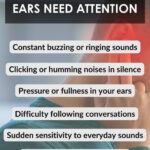
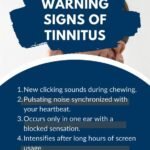
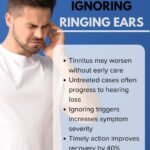
Most people experience brief ringing in the ears at least once in their life — after loud music, stress, or even lack of sleep. In many cases, it fades on its own. But sometimes tinnitus can signal something more serious. The body uses symptoms to communicate, and persistent or unusual ear ringing can be a sign worth paying attention to.
Understanding when tinnitus shifts from harmless irritation to a red-flag symptom can help ensure early diagnosis and improve long-term outcomes. Below are situations where tinnitus should never be ignored, along with why they matter and when to seek professional support.
1. Pulsatile Tinnitus — Ringing in Sync with Your Pulse
If the sound in your ear matches your heartbeat or feels like a rhythmic pulsing, it may indicate an issue with blood flow. This could be related to vascular pressure, circulation imbalance, or structural changes around the ear.
This type of tinnitus should be assessed by a healthcare professional, especially if it is persistent or one-sided.
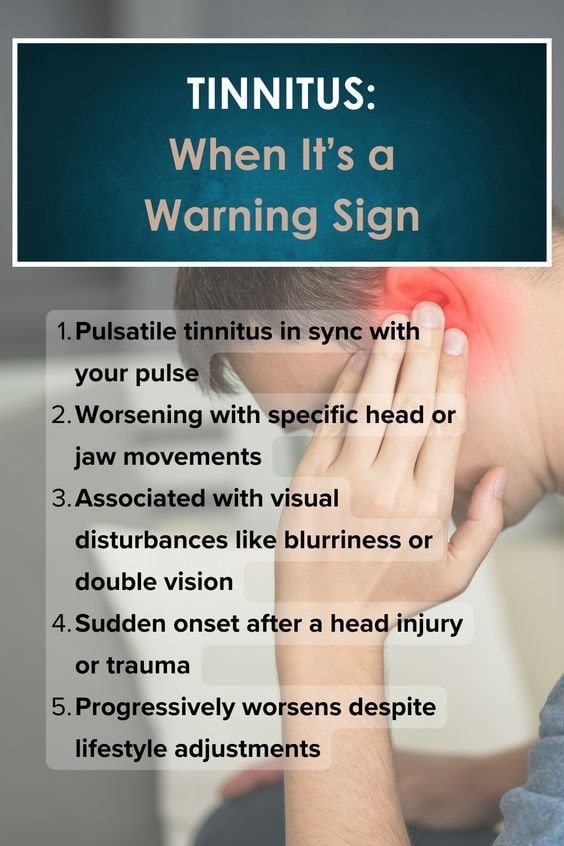
2. Tinnitus That Worsens with Jaw or Head Movement
When ringing increases while chewing, clenching your jaw, turning your head, or pressing around the jaw joint, it may be related to TMJ dysfunction or musculoskeletal tension.
Possible causes may include:
-
Teeth grinding (bruxism)
-
Jaw misalignment
-
Neck muscle tension
-
Posture imbalance
Treating the jaw or neck issue often reduces the ringing.
3. Associated Visual Disturbances — Blurriness or Double Vision
Tinnitus paired with visual changes should never be ignored. Blurred or double vision can suggest neurological or pressure-related problems within the head or inner ear systems.
This combination warrants medical evaluation to rule out conditions affecting the optic nerve, inner ear fluid pressure, or central nervous system.
4. Sudden Onset After Head Trauma or Injury
A noticeable spike in ear ringing after falls, whiplash, sports impact or accident could indicate damage to the auditory nerve, middle ear, or blood vessels surrounding it.
Seek medical attention right away if tinnitus appears unexpectedly after trauma — early treatment may protect hearing or prevent worsening.
5. Worsening Over Time Despite Healthy Changes
If you’ve already reduced noise exposure, improved sleep, cut caffeine, stayed hydrated, or removed common triggers — yet tinnitus persists or intensifies — underlying pathology may be present.
Progressive symptoms are the body’s way of pushing for investigation.
When to Seek Medical Help
You should speak with a doctor, audiologist or ENT specialist if:
✔ The ringing is persistent, loud or one-sided
✔ It interferes with sleep, concentration or daily life
✔ You experience dizziness, hearing loss or pressure
✔ You notice the warning signs listed above
Not all tinnitus is dangerous, but when symptoms escalate or appear alongside neurological or vascular changes, evaluation becomes essential.
Final Thoughts
Tinnitus is often harmless, but it’s also a symptom that should never be dismissed when it behaves unusually, worsens over time, or comes with neurological or trauma-related indicators. Understanding these warning signs helps protect long-term hearing and overall health.
If you notice pulsatile ringing, visual changes, movement-triggered tinnitus or symptoms following injury, seeking professional assessment is a responsible next step. Early attention brings clarity — and peace of mind.