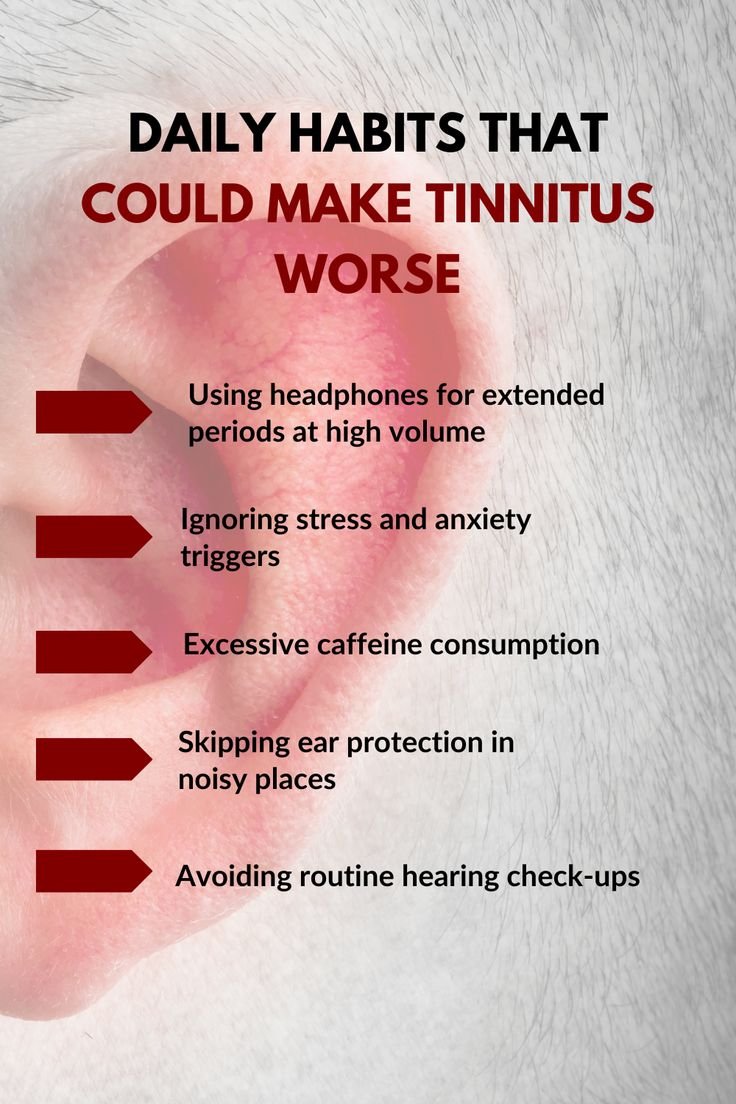
Tinnitus can feel unpredictable — some days it’s quiet, other days it’s impossible to ignore. What many people don’t realize is that everyday habits often play a major role in making tinnitus louder or more noticeable.
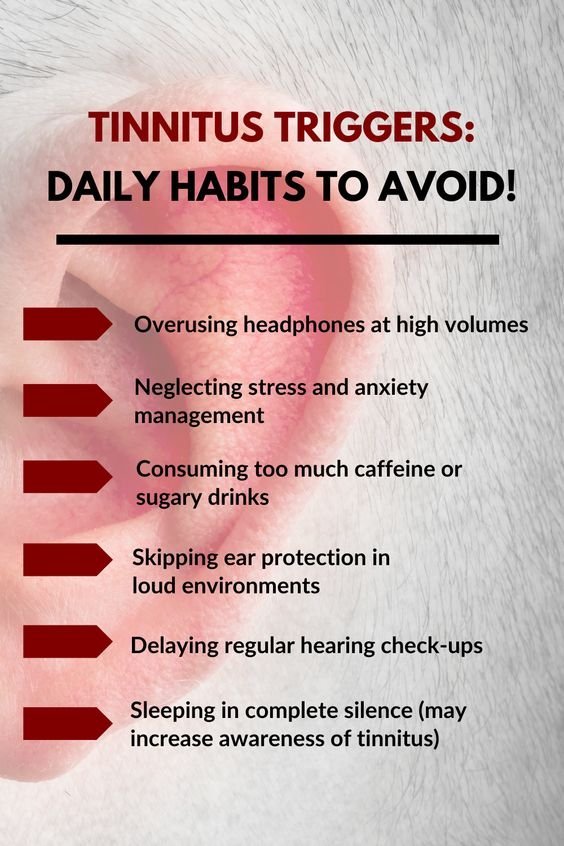
Understanding tinnitus triggers helps you regain a sense of control. While not every trigger affects everyone the same way, avoiding certain daily habits may reduce flare-ups and improve overall comfort over time. Let’s break down the most common ones shown in the image and what they mean for real life.
Why Daily Habits Matter With Tinnitus
Tinnitus is highly sensitive to lifestyle factors. Hearing strain, stress, diet, and sleep patterns all influence how intensely the sound is perceived.
Think of tinnitus like a volume dial — daily habits don’t usually cause tinnitus, but they can quietly turn the volume up or down. Small adjustments often make a noticeable difference.
1. Overusing Headphones at High Volume
One of the most common tinnitus triggers is prolonged headphone use, especially at high volumes.
Why this matters:
-
Loud sound strains the auditory system
-
Inner ear hair cells don’t regenerate once damaged
-
Constant exposure prevents recovery time
A safer approach includes:
-
Lowering volume (especially with earbuds)
-
Taking listening breaks
-
Using over-ear headphones at moderate levels
Protecting your ears daily can prevent tinnitus from worsening.
2. Ignoring Stress and Anxiety Management
Stress doesn’t just live in the mind — it affects the nervous system, which is closely linked to tinnitus perception.
When stress is high:
-
Tinnitus often feels louder
-
Focus shifts toward internal sounds
-
Recovery becomes harder
Helpful habits include deep breathing, gentle movement, journaling, or simply slowing down. Managing stress won’t cure tinnitus, but it can reduce how overwhelming it feels.
3. Consuming Too Much Caffeine or Sugary Drinks
For some people, caffeine and sugar can act as tinnitus triggers by overstimulating the nervous system or affecting blood flow.
This doesn’t mean you must eliminate them completely. Instead:
-
Pay attention to how your body reacts
-
Reduce intake if symptoms spike
-
Avoid consuming them late in the day
Awareness is more effective than strict restriction.
4. Skipping Ear Protection in Loud Environments
Concerts, traffic, power tools, gyms, or noisy workplaces all contribute to sound overload.
Skipping ear protection:
-
Increases tinnitus flare-ups
-
Adds cumulative hearing stress
-
Raises long-term hearing risk
Keeping earplugs handy is one of the simplest protective habits you can build — especially if tinnitus is already present.
5. Delaying Regular Hearing Check-Ups
Tinnitus is often linked to changes in hearing, even mild ones. Delaying hearing check-ups means missing information that could guide better management.
Regular hearing evaluations can:
-
Identify hearing changes early
-
Help rule out treatable causes
-
Open doors to supportive strategies (like sound therapy)
Early awareness gives you more options.
6. Sleeping in Complete Silence
This one surprises many people. Sleeping in total silence can actually make tinnitus feel louder because there’s nothing else for the brain to focus on.
Helpful alternatives include:
-
Soft white noise
-
Nature sounds
-
A low-volume fan or sound machine
Gentle background sound can reduce nighttime awareness and support better sleep.
How to Identify Your Tinnitus Triggers
Not all triggers affect everyone equally. The most helpful approach is observation.
Try:
-
Noting when tinnitus feels worse
-
Tracking sleep, stress, and sound exposure
-
Making small changes one at a time
Patterns usually become clearer within a few weeks.
What to Focus on Instead of Avoiding Everything
Living in fear of every trigger creates more stress — which, ironically, can worsen tinnitus.
Focus on:
-
Reducing the biggest triggers first
-
Building protective habits slowly
-
Supporting overall nervous system health
Progress comes from consistency, not perfection.
Final Thoughts
Tinnitus can’t always be controlled — but tinnitus triggers often can. By adjusting a few daily habits, many people notice fewer flare-ups and improved comfort over time.
Start small. Protect your hearing, manage stress, sleep with gentle sound, and stay curious about what affects your body.
Save this for later or share it with someone navigating tinnitus. And ask yourself: which daily habit might be quietly turning your tinnitus volume up?