Tinnitus — the perception of ringing, buzzing, or hissing in the ears — affects millions of people worldwide. For some, the sound comes and goes. For others, it’s constant enough to interfere with sleep, concentration, and daily comfort. Understanding how widespread tinnitus is, what causes it, and who is most at risk can make the condition feel less mysterious and more manageable.
Below are key statistics that paint a clear picture of how tinnitus shows up in everyday life, along with insights that may guide smarter prevention and treatment choices.
📊 1. Around 15% of People Experience Constant Ringing
A significant portion of the population deals with tinnitus on a regular basis. While not everyone experiences severe symptoms, many people live with background noise that doesn’t completely fade.
This statistic highlights something important — tinnitus is common, and no one dealing with it is alone.
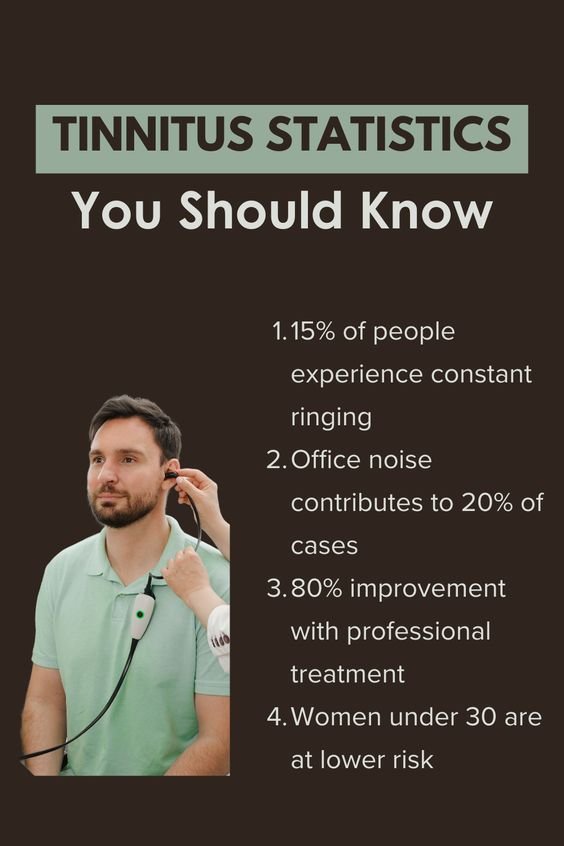
📊 2. Office Noise Contributes to About 20% of Cases
Noise exposure is one of the leading contributors to tinnitus. Loud work environments, constant headphone use, machinery, and even open-office chatter can strain the auditory system over time.
Simple prevention measures that may help:
-
Taking listening breaks
-
Using noise-reducing headphones
-
Lowering volume during long work hours
-
Wearing ear protection around machinery
Protecting hearing early reduces long-term risk.
📊 3. About 80% of People See Improvement With Professional Treatment
While tinnitus isn’t always curable, many individuals experience meaningful relief through targeted care. Treatment may involve auditory therapy, lifestyle adjustments, cognitive support, sound therapy, or addressing underlying medical factors.
Professional guidance can explore:
| Treatment Approach | Purpose |
|---|---|
| Hearing therapy | Improves sound tolerance |
| Sound maskers | Reduces noise awareness |
| Stress management | Lowers nervous system sensitivity |
| Medical evaluation | Identifies root causes |
Support = clearer direction + more control.
📊 4. Women Under 30 Tend to Be at Lower Risk
Tinnitus appears more commonly in older adults and individuals exposed to loud noise over time. Younger women statistically fall into a lower-risk category, but this doesn’t remove the importance of ear protection and healthy listening habits.
Everyone benefits from guarding their hearing — early care is easier than long-term recovery.
⭐ Final Thoughts
Tinnitus may feel isolating, but these statistics show just how widespread — and treatable — it really is. From noise exposure to age patterns and treatment success rates, understanding the numbers helps guide smarter decisions about hearing health.
If ringing or buzzing is something you notice regularly, consider seeking evaluation, reducing sound strain, and building habits that protect your ears long-term.
Save this breakdown for reference — small awareness creates big prevention. 👇