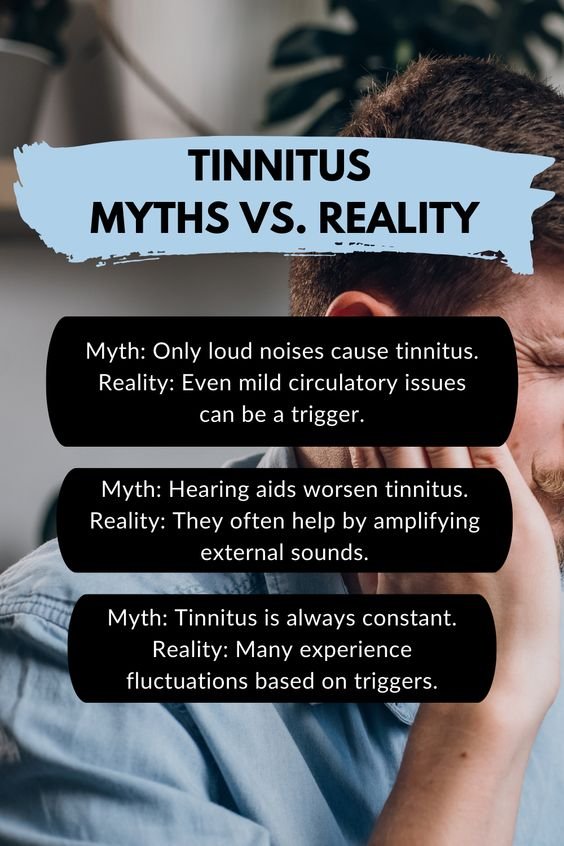
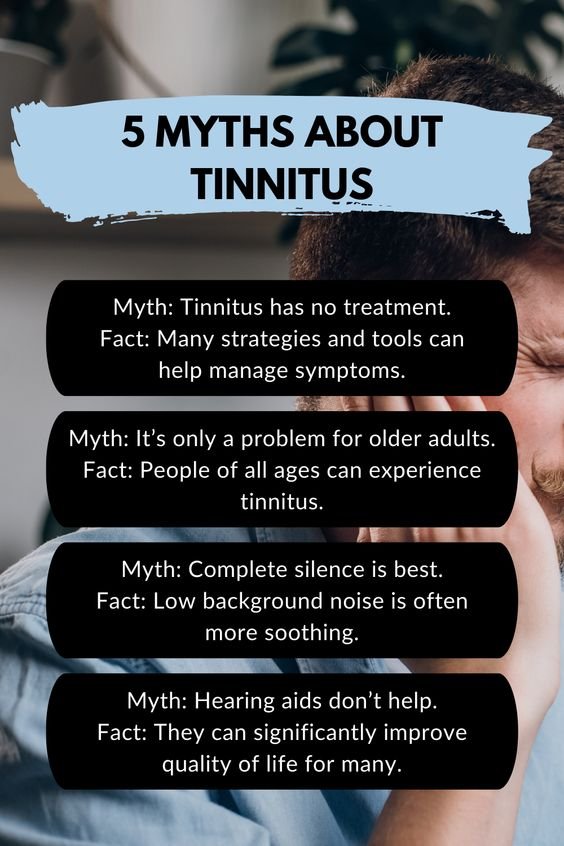
If you’ve ever experienced ringing, buzzing, or hissing in your ears, you’ve probably heard a few confusing things about tinnitus. Some say it’s permanent, others call it rare, and many believe it only happens to people with hearing loss. But here’s the truth — tinnitus is far more common and manageable than most realize.
In this post, we’ll break down five popular myths about tinnitus and uncover the real facts that can bring clarity, comfort, and hope. Let’s dive in. 👇
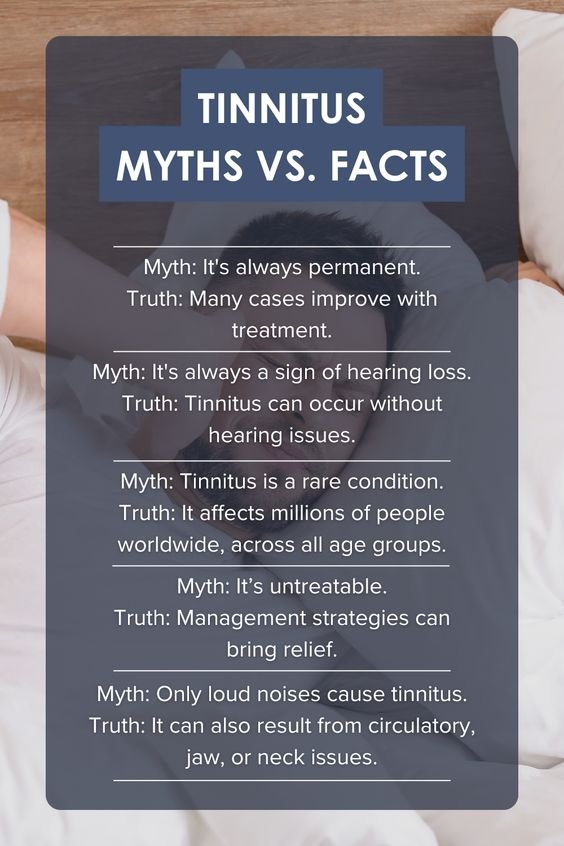
1. Myth: Tinnitus Is Always Permanent
Fact: Many cases improve with treatment.
While some people experience long-term tinnitus, many find relief through targeted treatments such as sound therapy, stress reduction, and hearing aids. Even simple lifestyle changes like improving sleep, reducing caffeine, or managing anxiety can make a big difference.
Think of tinnitus as a signal — not a sentence. Addressing the root cause, whether stress or ear damage, can help your ears and brain rebalance over time.
2. Myth: Tinnitus Always Means Hearing Loss
Fact: Tinnitus can occur without hearing issues.
Although tinnitus and hearing loss often occur together, one doesn’t always cause the other. People with completely normal hearing can still experience tinnitus, especially when it’s related to circulation, medications, or jaw tension (TMJ).
If your ears are ringing, it doesn’t automatically mean you’re losing your hearing — but it’s still smart to get a professional check-up to rule out underlying causes.
3. Myth: Tinnitus Is Rare
Fact: It affects millions worldwide.
Tinnitus is incredibly common, impacting an estimated 15–20% of adults globally. It can appear after loud concerts, ear infections, or even prolonged stress. From musicians to office workers, people across all ages and lifestyles experience it.
So if you have tinnitus, you’re far from alone — and that’s good news. It means there are many proven ways and supportive communities that can help you cope better.
4. Myth: Tinnitus Is Untreatable
Fact: Management strategies can bring real relief.
While there’s no universal “cure,” modern tinnitus management is far from hopeless. Treatments like Cognitive Behavioral Therapy (CBT), tinnitus retraining therapy, and white-noise devices have shown strong results in reducing both perception and distress.
Some people also explore natural options like magnesium, zinc, or mindfulness meditation to reduce anxiety — all of which can lessen the ringing’s intensity.
💡 Tip: Always discuss new supplements or therapies with a hearing specialist before starting them.
5. Myth: Only Loud Noises Cause Tinnitus
Fact: It can result from circulatory, jaw, or neck issues.
Exposure to loud sounds — concerts, headphones, machinery — is a leading cause, but not the only one. Neck tension, jaw misalignment (TMJ), high blood pressure, or even certain medications can all trigger tinnitus.
If you notice your tinnitus changes when you move your jaw or neck, it might be somatic tinnitus, which can often improve with posture work, stretching, or physical therapy.
Small daily actions like gentle neck stretches and reducing screen time can go a long way.
How to Cope with Tinnitus Day-to-Day
Even when tinnitus doesn’t fully disappear, these strategies can make life much easier:
-
Use soft background sounds like rainfall or gentle music.
-
Avoid silence — it can make ringing more noticeable.
-
Reduce stress through yoga, breathing, or short walks.
-
Limit caffeine and alcohol, which can heighten symptoms.
-
Join tinnitus support groups for shared tips and motivation.
Remember, tinnitus management is about balance — calming both your body and mind while finding what personally helps you most.
Final Thoughts: Don’t Let Tinnitus Myths Hold You Back
The biggest takeaway? Tinnitus is common, manageable, and often temporary. By separating myths from facts, you give yourself the best chance to find relief and peace.
Save this post for later, share it with someone who might need it, and remember — you’re not alone, and help is always available. 🌿