If you’ve ever heard a constant ringing, buzzing, or humming in your ears, you’re not alone. Tinnitus affects millions worldwide, yet many people still don’t understand what causes it or how to manage it effectively.
In this post, we’ll uncover important tinnitus insights that can help you make informed choices, recognize early signs, and discover lifestyle changes that bring real relief.
1. 15% of People Globally Experience Tinnitus
Tinnitus isn’t rare — it affects roughly one in seven people worldwide. This means it’s more common than you might think. The causes range from prolonged exposure to loud sounds to age-related hearing loss or even circulatory issues.
Understanding that you’re not alone is the first step toward managing it better and seeking the right kind of support.
2. Post-Menopausal Women Are More Prone
Studies show that post-menopausal women have a higher likelihood of developing tinnitus, possibly due to hormonal changes that affect blood flow and nerve sensitivity.
If you’re noticing new ear ringing during midlife, it’s worth discussing with a healthcare provider — early attention can prevent it from worsening.
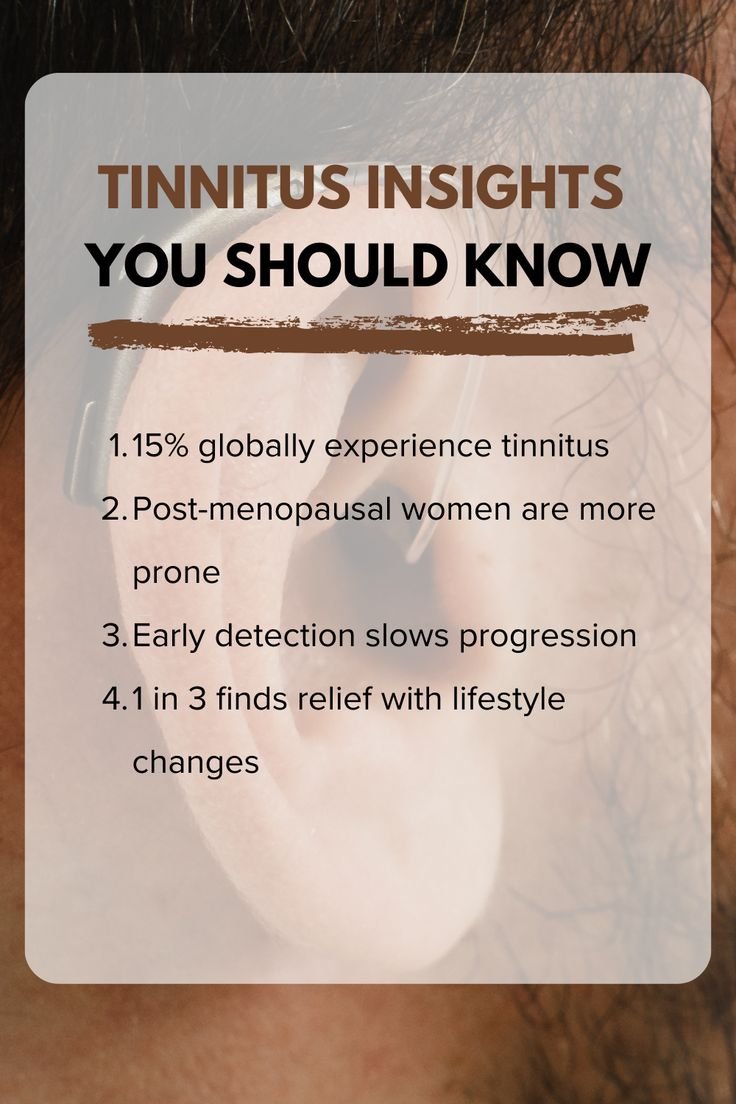
3. Early Detection Slows Progression
Tinnitus can start subtly — like faint ringing after a concert or a stressful week. But the earlier it’s identified, the easier it is to manage.
Scheduling regular hearing checkups and addressing potential causes early can prevent the condition from becoming chronic or more disruptive over time.
4. 1 in 3 Finds Relief with Lifestyle Changes
The encouraging news? Many people find significant relief without medication. Reducing caffeine, managing stress, staying hydrated, and protecting your ears from loud noise can make a huge difference.
Combining these daily habits with mindfulness or relaxation therapy can lower your tinnitus intensity and improve your quality of life.
5. Raising Awareness Helps Everyone
Because tinnitus is often invisible, people may feel isolated or misunderstood. Sharing awareness — whether through online communities or friendly conversations — helps normalize the experience and fosters support for those living with it.
Conclusion
Tinnitus may not have a universal cure, but awareness and lifestyle management can make life much easier. By understanding these key insights — from early detection to daily self-care — you’re taking control of your ear health one step at a time.
If this post helped you, save it on Pinterest and share it with someone who might need to hear that relief is possible.