Tinnitus can feel incredibly frustrating—especially when the ringing, buzzing, or humming seems to appear out of nowhere. What many people don’t realize is that everyday habits and small lifestyle choices can quietly trigger or worsen symptoms. The good news? Once you know what to look for, you can make gentle changes that help your ears stay calmer and healthier.
In this guide, we’ll break down 5 surprising tinnitus triggers and explore simple, practical ways to avoid them. If you’ve been wondering why certain days feel “louder” than others, this list may hold the answers.
Let’s dive into it.
1. Overuse of Pain-Relieving Medications
Reaching for pain relievers is common—headaches, back pain, period cramps, muscle soreness. But frequent use of certain medications can irritate the inner ear or affect circulation, making tinnitus symptoms more noticeable.
Why It Happens
Some pain-relief medications (like aspirin or NSAIDs) may temporarily affect:
-
Blood flow to the inner ear
-
Nerve sensitivity
-
Cochlea function
This doesn’t mean you must avoid them entirely—just be mindful of frequency.
What You Can Do
-
Talk to your doctor if you’re using these medications daily or weekly.
-
Explore alternative pain relief: heat packs, stretching, gentle massage.
-
Use the lowest effective dose when possible.
Think of medication balance like volume control—you want effective relief without overwhelming your ears.
2. Poor Sleep Schedules
You might not link sleep to ear health, but the connection is stronger than you think. Tinnitus often feels louder when you’re exhausted, stressed, or lacking deep restorative sleep.
Why Sleep Matters
Poor sleep can lead to:
-
Higher stress hormones
-
Increased nerve sensitivity
-
Reduced ability to filter internal sounds
When the brain is tired, it amplifies sensations you’d normally ignore—including ringing.
Simple Sleep Fixes
-
Aim for consistent bedtime and wake-up patterns.
-
Reduce screen time 1 hour before bed.
-
Try calming habits: warm showers, chamomile tea, deep breathing.
-
Keep your room dark, quiet, and cool.
Even small changes can help your nervous system settle, naturally easing tinnitus intensity.
3. Dehydration Impacting Inner Ear Function
Your inner ear relies on proper fluid balance to function—especially the labyrinth, the part responsible for hearing and balance. When you’re dehydrated, that delicate system becomes stressed.
Signs Dehydration May Be Affecting Your Ears
-
Increased ringing or buzzing
-
Feeling of fullness in the ears
-
Dizziness or lightheadedness
-
Headaches that make tinnitus worse
How to Stay Hydrated
-
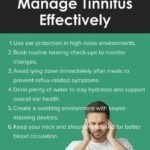
Aim for 6–8 glasses of water daily (more in hot weather).
-
Add hydrating foods: cucumbers, watermelon, oranges, broth-based soups.
-
Limit dehydrating drinks like alcohol and high-caffeine beverages.
Hydration isn’t just for your skin or energy—it’s a quiet hero for steady ear function.
4. Exposure to Sudden, Sharp Sounds
Even if you’re not regularly around loud environments, sudden sharp noises can trigger tinnitus episodes. Think of things like slamming doors, dropping metal objects, fireworks, or loud alerts on your phone.
Why Sudden Sounds Are Harmful
Your inner ear protects itself through tiny muscles that respond to noise. Sharp sounds overstimulate these muscles, leading to temporary ringing or buzzing.
Protection Tips
-
Lower notification volume on your phone.
-
Wear earplugs at concerts, events, or during travel.
-
Step away from noisy areas when possible.
-
Don’t stand close to speakers at gatherings.
Tiny preventive steps can help your ears stay calmer over the long term.
5. Ignoring Early Discomfort or Minor Buzzing
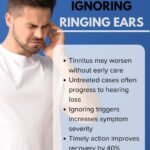
This is one of the easiest mistakes to make. Early ringing, faint static, or “pressure-like” sensations might seem too small to worry about—but these subtle signs can worsen with time if ignored.
Why Early Signs Matter
Your ears are signaling:
-
Fatigue
-
Stress
-
Noise sensitivity
-
Irritation or mild inflammation
Ignoring these cues often means symptoms linger longer than they need to.
Better Habits to Adopt
-
Take mini breaks from noise throughout the day.
-
Limit headphone volume to 60% or less.
-
Rest when you notice increased buzzing.
-
Track when symptoms appear—it helps identify personal triggers.
Listening to the early whispers protects you from the louder episodes later.
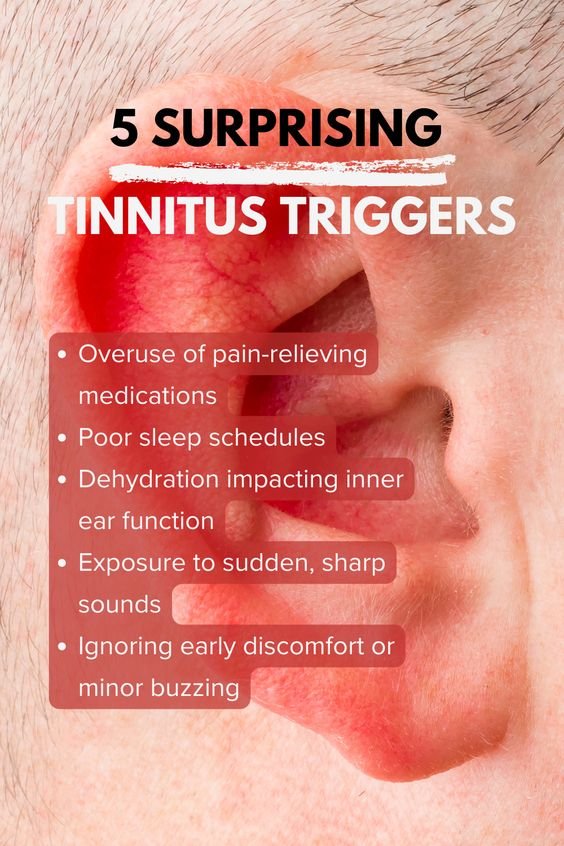
A Quick Summary You Can Pin or Save
Top 5 Tinnitus Triggers:
- Overuse of pain-relieving medications
- Poor sleep schedules
- Dehydration affecting inner ear function
- Sudden, sharp sounds
- Ignoring minor buzzing or discomfort
Once you know these triggers, avoiding flare-ups becomes easier and more empowering.
Final Thoughts
Tinnitus may feel unpredictable, but understanding what triggers it gives you a sense of control. By paying attention to hydration, sleep, medication habits, and noise exposure, you can create a calmer environment for your ears and your nervous system. Small changes add up—you just need to start with one.
Save this guide for future reference, and share it with someone who could use a little tinnitus support today.