If you’ve ever noticed your tinnitus ringing louder on stressful days, you’re not imagining it. Stress and tinnitus are closely connected — and when tension rises, that persistent buzz or hum often feels even more intrusive.
But why does this happen? And what can you do to calm both your mind and your ears? Let’s explore how stress worsens tinnitus and practical ways to manage it naturally.
1. Stress Raises Cortisol Levels, Amplifying Tinnitus
When your body is under stress, it releases cortisol, the “fight-or-flight” hormone. Elevated cortisol affects the blood flow and nerve activity in your inner ear, often making the ringing more noticeable.
High stress doesn’t create tinnitus, but it can intensify the perception of it. That’s why managing stress isn’t just about emotional health — it’s a key part of tinnitus care.
👉 Tip: Try deep breathing whenever you feel overwhelmed. Inhale for 4 seconds, hold for 4, exhale for 6. This simple reset lowers cortisol naturally.
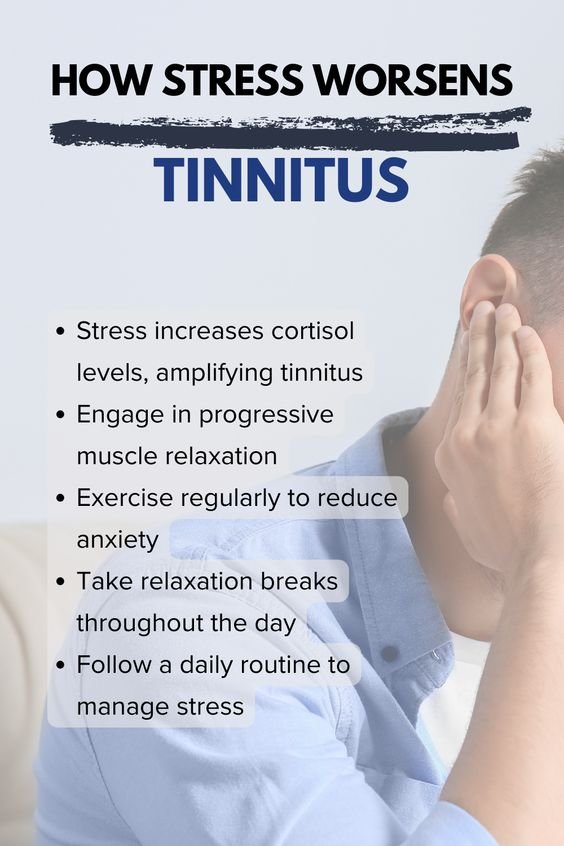
2. Engage in Progressive Muscle Relaxation
Progressive muscle relaxation is a powerful technique where you tense and release muscles one by one, helping your body let go of stored tension.
Start at your feet and work your way up to your shoulders and face. As you consciously relax, your body sends signals of safety to your brain — easing both stress and tinnitus perception.
You can practice this daily before bed or during work breaks. Apps or YouTube videos can guide you through short 5-minute sessions.
3. Exercise Regularly to Reduce Anxiety
Movement is medicine. Exercise increases circulation, improves mood, and lowers anxiety — all of which can lessen tinnitus distress.
You don’t need an intense workout routine. Even a 20-minute walk, gentle yoga, or stretching can release endorphins, helping your brain focus less on the ringing.
👉 Bonus: Outdoor activity also offers a natural soundscape (birds, wind, water) that subtly masks tinnitus while refreshing your mood.
4. Take Relaxation Breaks Throughout the Day
When your schedule is packed, stress quietly builds up. Small, intentional breaks can interrupt that cycle.
Try listening to calming music, stretching your shoulders, or stepping outside for a few deep breaths. These short resets lower the body’s tension and make tinnitus easier to handle.
If you work at a desk, set a reminder every 60–90 minutes to pause and reset. Consistency is key to keeping stress (and tinnitus) under control.
5. Follow a Daily Routine to Manage Stress
Structure brings calm. When your mind knows what to expect each day, anxiety naturally drops.
Plan a morning ritual that starts with quiet moments — maybe tea, journaling, or gratitude practice. Then, create a bedtime routine that signals rest, like dimming lights or using white noise.
Having a rhythm helps your nervous system feel safe, which can reduce tinnitus sensitivity over time.
Final Thoughts: Calming the Mind Calms the Ringing
You can’t always stop tinnitus completely, but you can change how much it affects you.
By managing stress through relaxation, exercise, and mindful routines, you’re giving your body the chance to heal and your mind the space to find quiet again.
Start small — one breathing exercise, one walk, one peaceful moment at a time. Over the weeks, you’ll notice both your stress and your tinnitus begin to soften. 💫
👉 Save this post for later or share it with someone who’s learning to live calmly with tinnitus.