Knee discomfort can show up in everyday moments—standing up from a chair, climbing stairs, or going for a walk. What surprises many people is that the issue isn’t always the knee itself. Did you know strengthening hips helps knee health by improving how your legs move and reducing unnecessary stress on the joints?
The hips play a major role in stability, balance, and movement control. When they’re strong, your knees are supported. When they’re weak, your knees often compensate. In this article, we’ll explore how hip strength affects knee health and what you can do to support both—safely and naturally.
Why Hip Strength Matters for Knee Health
Every lower-body movement starts at the hips. They guide how your thighs move and help control position, rotation, and load. If your hips aren’t doing their job, the knees often take more impact than they should.
Common contributors to weak hips include:
-
Long periods of sitting
-
Lack of strength-focused movement
-
Previous injuries
-
Poor posture or movement habits
Over time, this can affect how the knees track and function during daily activities.
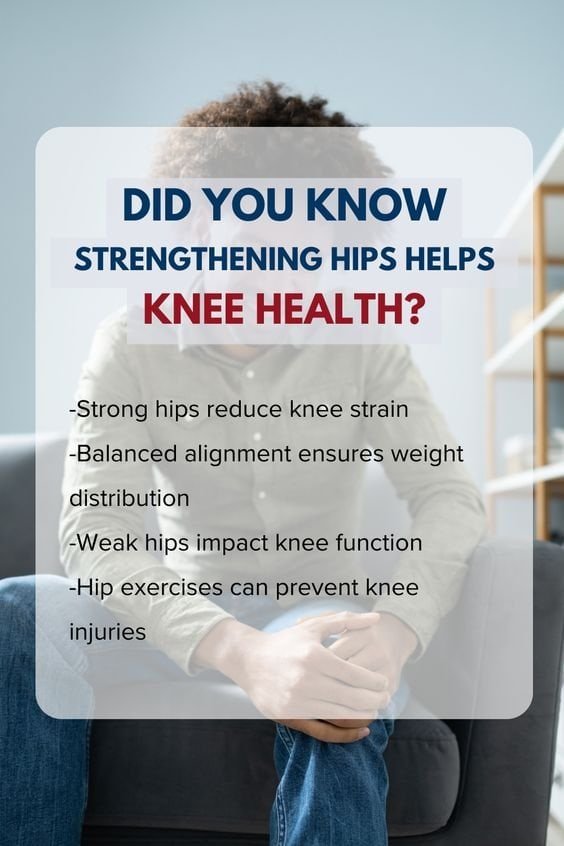
1. Strong Hips Reduce Knee Strain
Strong hip muscles—especially the glutes—help absorb force during walking, squatting, and lifting. This reduces the workload placed on the knees.
When hip strength is lacking:
-
Knees may absorb excess pressure
-
Movements feel less stable
-
Joint stress increases during activity
By strengthening the hips, you allow force to be shared properly across the lower body instead of concentrated in the knees.
2. Better Alignment Improves Weight Distribution
Hip stability plays a key role in proper alignment. When hips are balanced, the knees stay aligned over the feet, allowing weight to move evenly through the joints.
Weak hips can contribute to:
-
Knees collapsing inward
-
Uneven joint loading
-
Increased wear over time
Improving hip control helps maintain smoother, more efficient movement patterns, which supports long-term knee comfort.
3. Weak Hips Can Limit Knee Function
If your hips lack strength or control, your knees may struggle to move as intended. This can show up as:
-
Stiffness
-
Reduced balance
-
Discomfort during walking or exercise
Because the hips guide leg motion, weakness can disrupt coordination. Improving hip strength helps restore natural movement flow and improves how the knees respond to activity.
4. Hip Strengthening May Help Prevent Knee Injuries
Many knee issues develop when muscles surrounding the joint don’t provide enough support. Strengthening hips can help stabilize the leg and reduce risky movement patterns.
Building hip strength may:
-
Improve control during directional changes
-
Support safer movement mechanics
-
Reduce unnecessary knee stress
This is especially helpful for active individuals or those returning to movement after time off.
Simple Hip Exercises That Support Knee Health
You don’t need complex routines to get started. Consistent, controlled exercises can make a noticeable difference.
Simple options include:
-
Glute bridges
-
Side-lying leg raises
-
Clamshells
-
Supported squats focusing on hip engagement
Slow movements and proper form matter more than intensity.
How Often Should You Train Your Hips?
Most people benefit from hip strengthening 2–4 times per week. Short sessions are often enough when done regularly.
Helpful tips:
-
Start gently
-
Focus on control
-
Stop if pain increases instead of improving
Gradual progress supports joint safety and long-term results.
The Bigger Picture for Joint Health
Knee discomfort is often a signal—not the source. Addressing hip weakness can improve how your entire lower body moves and feels.
Strong hips support:
-
Better posture
-
More stable movement
-
Reduced strain on knees
This approach helps maintain joint health before minor issues become bigger limitations.
Final Thoughts
So yes, did you know strengthening hips helps knee health more than many people realize? By improving stability, alignment, and movement control at the hips, you give your knees the support they need to function efficiently.
If knee discomfort has been an ongoing concern, starting with hip strength could be a smart, practical step forward.
✅ Try adding one hip-focused exercise this week and see how your knees respond.
✅ Save this guide as a reminder to stay consistent and mindful of your joint health.