Knee pain can show up suddenly—after a long day on your feet, during exercise, or even from sitting too long. And when it hits, all you want is quick relief so you can move comfortably again. The good news is that a few simple, practical steps can calm the discomfort fast.
In this guide, we’ll expand on the tips you can use anytime your knee starts acting up. Whether it’s swelling, stiffness, or overuse, these gentle strategies can help you feel better naturally.
⭐ 1. Apply Ice to the Affected Area (Immediate Relief)
Ice is one of the quickest ways to calm sharp knee pain, especially when it’s caused by inflammation or minor injury.
Here’s how to do it safely:
-
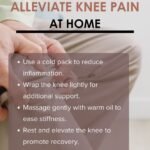
Use an ice pack or a bag of frozen peas wrapped in a thin towel.
-
Apply for 15–20 minutes, then remove for at least 1 hour.
-
Repeat 2–3 times a day during flare-ups.
-
Avoid placing ice directly on the skin.
Ice works by reducing blood flow to the area, lowering swelling, and numbing the discomfort. It’s especially helpful after walking long distances, exercising, or twisting the knee.
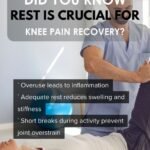
⭐ 2. Avoid Overusing the Joint to Prevent Worsening Pain
Sometimes knee pain feels worse simply because the joint has been doing too much. Overuse can irritate tendons, cartilage, and supporting muscles.
Try giving your knee a break by:
-
Pausing intense workouts like running or squats
-
Minimizing stairs when possible
-
Using a chair instead of kneeling
-
Taking short rest breaks during long standing periods
Think of this step as “reset time” for your knee. Rest allows irritated tissues to calm down so healing can begin.
⭐ 3. Use Knee Braces for Added Support and Stability
A supportive knee brace can make a big difference when your knee feels unstable, weak, or sore.
There are a few helpful types:
-
Compression sleeves: reduce swelling and improve circulation
-
Strap braces: help with patellar pain
-
Stabilizing braces: great for mild injuries or extra support during activity
A brace doesn’t fix the root issue, but it gives the joint gentle stability—helping you walk more comfortably while reducing strain.
⭐ 4. Elevate Your Leg to Reduce Swelling
Elevation is a simple but powerful way to stop knee pain fast. When you raise your leg above heart level, it helps drain fluid away from the knee.
Try this:
-
Lie on a couch or bed
-
Place pillows under your calf until your foot is higher than your chest
-
Relax in this position for 10–15 minutes
This technique is especially helpful after standing, walking, or when your knee looks visibly swollen.
⭐ 5. Engage in Light Stretching Exercises (Gentle Mobility)
While rest is important, complete inactivity can actually make knee pain worse. Light stretching helps loosen tight muscles around the knee—especially the quadriceps, hamstrings, and calves.
Here are a few beginner-friendly stretches:
✔ Quad Stretch
Stand near a wall, bend one knee, and gently pull your foot toward your glutes.
✔ Hamstring Stretch
Sit on the floor with one leg extended and reach toward your toes.
✔ Calf Stretch
Place your hands on the wall and step one leg behind you, keeping the heel down.
Always move slowly—these stretches should feel relieving, not painful.
🌿 Extra Fast Tips for Stopping Knee Pain at Home
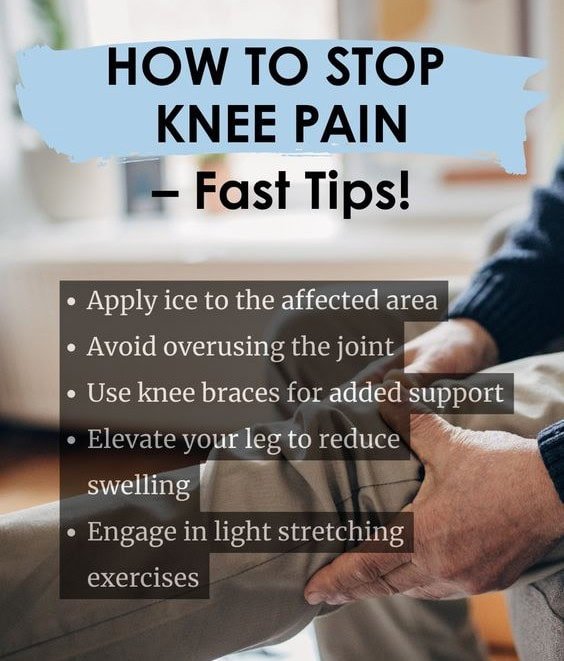
Here are a few bonus ideas that pair perfectly with the tips from the Pin:
✔ Warm Compress for Stiffness
Great for morning stiffness or chronic soreness.
✔ Anti-inflammatory Foods
Try berries, leafy greens, turmeric, and fatty fish.
✔ Proper Footwear
Good shoes reduce pressure on knees during walking.
✔ Strengthening Exercises (Later Stage)
Light strengthening—like leg raises or wall sits—can support long-term knee comfort.
✔ Check Your Posture
Weak hips or poor alignment can cause knee strain.
You don’t have to do everything at once. Even choosing one or two small changes can make a real difference.
⭐ Final Thoughts: Simple Steps Can Bring Fast Knee Pain Relief
Learning how to stop knee pain doesn’t have to feel complicated. With a combination of ice, rest, elevation, support, and gentle stretching, you give your knee exactly what it needs to calm down and recover. Try one or two of these steps today and notice which ones bring the quickest relief. And if this guide helped, save it for later so you always have these fast tips on hand.