Spending time outside is refreshing — but constant exposure to noise, wind, or extreme weather can quietly harm your hearing. From honking cars to strong winds, our ears face more stress than we realize. The good news? A few simple habits can make a big difference.
Here are five easy steps to protect your ears outdoors — whether you’re walking in the city, attending events, or simply enjoying nature.
1. Avoid Standing Near Honking Vehicles 🚗
City traffic can exceed 85 decibels, which is the threshold where long-term damage begins. If you find yourself stuck near buses or cars honking loudly, take a few steps back or move to a quieter spot. Even short bursts of loud noise can add up over time.
Tip: Keep a small pair of foam earplugs in your bag — you’ll be surprised how much they help during commutes.
2. Wear Earplugs During Outdoor Events 🎶
Concerts, parades, or sporting events often reach noise levels above 100 dB. Reusable silicone earplugs or musician-grade plugs lower sound intensity without muffling it.
They’re perfect for anyone who enjoys outdoor gatherings but still wants to protect hearing naturally. Think of them as sunglasses — but for your ears.
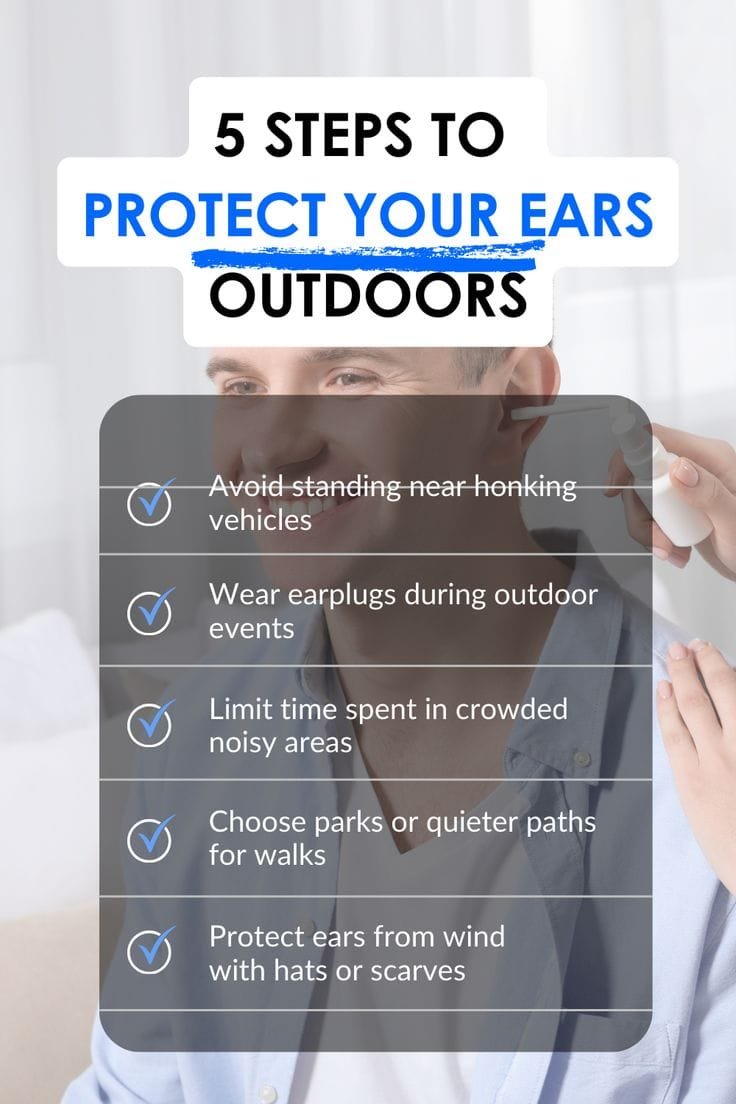
3. Limit Time Spent in Crowded Noisy Areas 🏙️
If your daily routine involves noisy surroundings like construction zones, public markets, or busy intersections, try to balance it with quiet breaks. Step into a park, take detours through calmer streets, or use noise-cancelling earbuds when walking long distances.
Your ears need rest periods just like your muscles do.
4. Choose Parks or Quieter Paths for Walks 🌳
Nature has its own calming rhythm — birds chirping, leaves rustling — and these gentle sounds are far better for your ears than city noise. If possible, plan your walks through green spaces or waterfront areas.
Not only does this protect your hearing, but it also lowers stress and improves mood.
5. Protect Ears from Wind with Hats or Scarves 🧣
Cold or strong wind can cause ear irritation, dryness, or even temporary hearing dullness. A cozy hat, headband, or scarf acts as a natural shield — especially during hiking, biking, or winter strolls.
Keep your ears warm and covered when temperatures drop or winds pick up.
Bonus Tip: Keep Your Ears Clean and Dry
Moisture, dust, or wax buildup can make your ears more sensitive outdoors. Clean gently with a soft towel after showers, and avoid inserting objects deep into the ear canal. For frequent irritation, talk to a healthcare provider before using over-the-counter drops.
Conclusion
Protecting your ears outdoors isn’t complicated — it’s about awareness and small habits. By avoiding loud zones, wearing earplugs, and staying mindful of wind and cold, you can enjoy outdoor life without compromising your hearing.
👉 Save this post to your “Wellness Tips” board for future reference — your ears will thank you later!