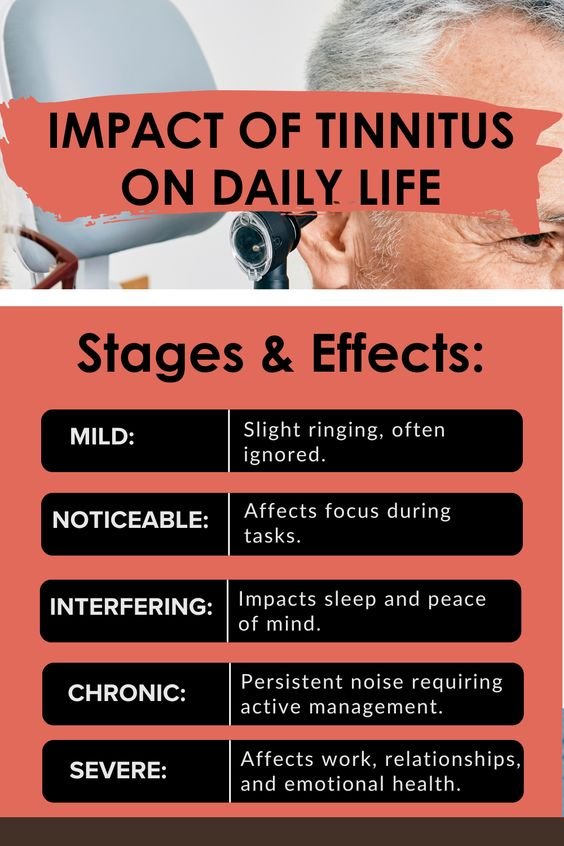
Tinnitus can feel like a mystery — a faint buzz one week, a constant ring the next. Many people don’t realize that tinnitus often develops in stages, each with its own signs, sensations, and challenges. Understanding where you are on that spectrum can help you manage symptoms better, reduce anxiety, and know when to seek professional support.
In this guide, we’ll walk through each stage of tinnitus — from occasional and mild, all the way to advanced and severe. You’ll learn how each stage unfolds and what small changes may help improve daily comfort.
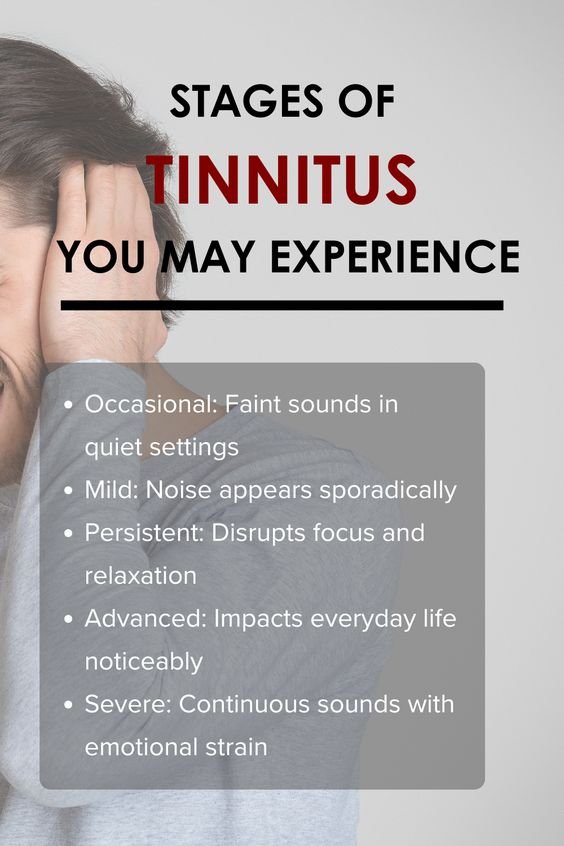
1. Occasional Tinnitus – The Faint Beginning
This is where many people first notice tinnitus. The sound may be soft and brief, often appearing only in quiet environments — like lying in bed, reading, or trying to sleep. It may feel like a distant ring, hum, hiss, or tone that fades as soon as daily noise returns.
Common signs of this stage:
-
Noise is subtle and easy to ignore
-
Most noticeable at night or during silence
-
Often linked to stress, caffeine, or lack of rest
If you’re here, think of this as your early signal. Hydration, sleep hygiene, and volume control can make a noticeable difference.
2. Mild Tinnitus – The Sound Appears More Often
At this point, tinnitus becomes more sporadic — appearing randomly throughout the day, but still not constant. You may catch yourself thinking, “There it is again,” especially when you’re tired or overstimulated.
Possible triggers include:
-
Loud music or headphone use
-
High stress or anxiety
-
Earwax buildup
-
Too much caffeine or alcohol
Moderation and mindfulness can help keep this stage manageable. Many people never progress further when they maintain ear and nervous system health.
3. Persistent Tinnitus – It Begins to Disrupt Focus
This is where tinnitus becomes harder to ignore. It may interfere with reading, working, or relaxing because the sound feels more present. People describe it as steady ringing, electric tones, or a continuous whistle.
What helps during this stage:
-
Soft background noise (rain sounds, fan, light music)
-
Breathing exercises to reduce tension
-
Avoiding complete silence at bedtime
-
Gentle neck and jaw stretches (helpful if tension-related)
Persistent tinnitus doesn’t always mean permanent — support and management techniques can significantly lower perceived intensity.
4. Advanced Tinnitus – Noticeable Impact on Daily Life
Here, tinnitus begins affecting routines, conversations, rest, productivity, and overall emotional well-being. Silence becomes difficult, concentration takes effort, and stress may amplify the perception of sound.
You may experience:
-
Irritability or fatigue from noise overload
-
Difficulty enjoying quiet time
-
Heightened awareness of ear sensations
Coping strategies are essential at this stage — sound therapy apps, hearing evaluations, and lifestyle adjustments can help reduce the impact and regain a sense of control.
5. Severe Tinnitus – Constant & Emotionally Straining
This is the most challenging stage, where the sound becomes continuous and emotionally heavy. The ringing may overshadow daily activities, making sleep, conversation, and mental peace difficult. Some people experience anxiety, hopelessness, or panic because the sound feels unescapable.
If you or someone you know is at this stage, help is available. Hearing specialists, cognitive-behavioral therapy, tinnitus retraining therapy, and guided relaxation have helped many regain balance and quality of life.
What Does This Mean for You?
Not everyone progresses through all five stages — many stay in the mild phase, and some improve over time. Tinnitus is deeply personal; what feels loud to one person may be barely noticeable to another. The goal is not perfection — it’s management, awareness, and calm, one day at a time.
Final Thoughts
Understanding the stages of tinnitus helps you make sense of your symptoms instead of feeling overwhelmed by them. Wherever you fall on this scale — occasional or persistent — gentle habits, stress regulation, and early care can make life feel quieter and more controlled. Save this guide as a reminder, and if you’re navigating tinnitus now, take it slowly. Healing isn’t linear, but progress is possible. 💛