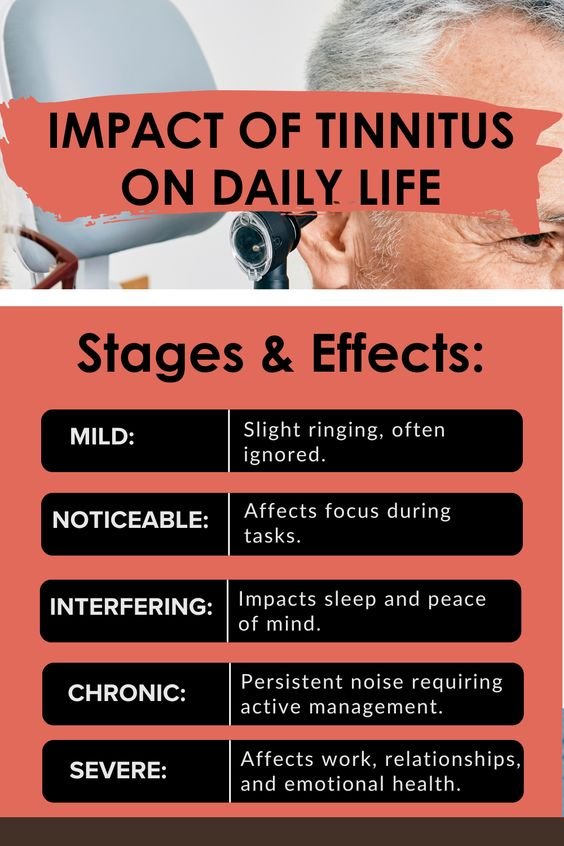
Tinnitus can feel like a soft whisper at first — a faint ringing, buzzing, or humming only noticeable in silence. For some, that sound fades away. For others, it grows louder over time and begins to interfere with work, sleep, and daily peace of mind. That’s why understanding how tinnitus progresses is so important. When you know where you are on the scale, you can respond sooner, reduce triggers, and protect your long-term hearing health.
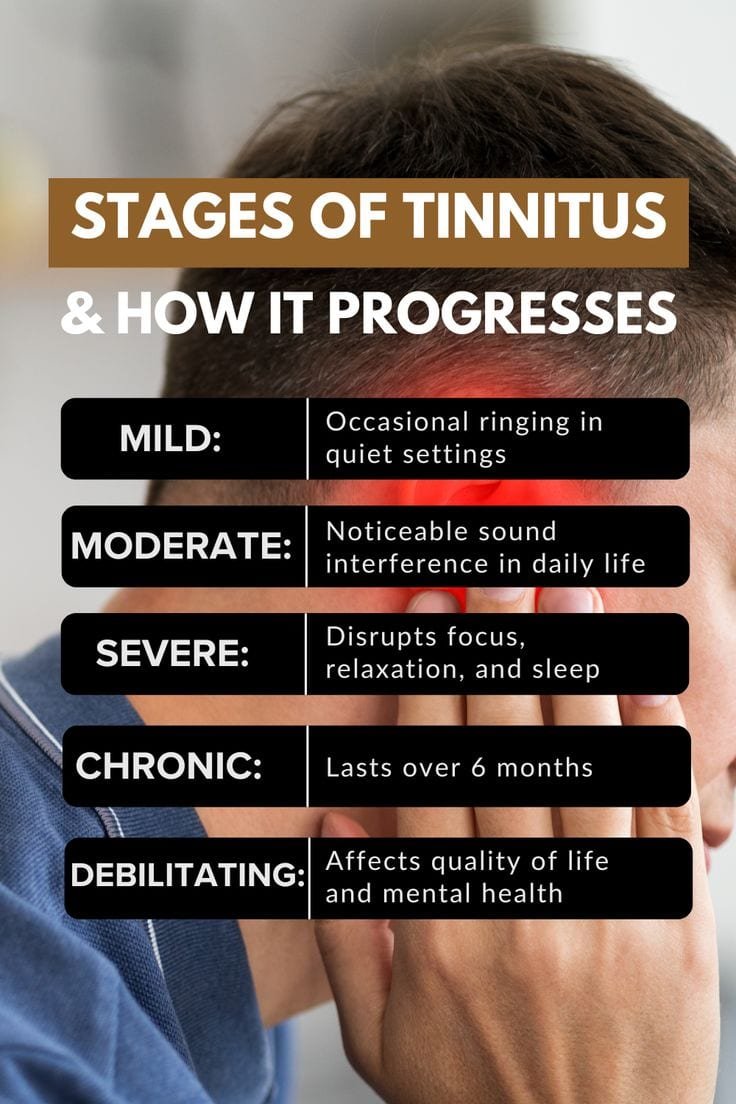
In this post, you’ll learn the five common stages of tinnitus — mild, moderate, severe, chronic, and debilitating — and what each one feels like, why progression happens, and natural strategies that may help you manage symptoms more confidently.
🟡 1. Mild Tinnitus
Occasional ringing in quiet settings
At this stage, tinnitus usually appears as a gentle buzz or ring during silence — like when you’re about to fall asleep or sitting in a quiet room. Sounds often fade into the background once daily noise picks up. Many people in the mild stage don’t seek help because it feels manageable, but early awareness truly matters.
Helpful habits at this stage:
-
Reduce exposure to loud music or noisy workplaces
-
Practice short relaxation exercises to calm the nervous system
-
Stay hydrated and avoid excessive caffeine
These small adjustments help prevent it from progressing further.
🟠 2. Moderate Tinnitus
Noticeable sound interference in daily life
At this point, tinnitus becomes harder to ignore. You may hear it even with background noise — while working, walking outside, or having conversations. Stress, fatigue, and stimulant foods like sugar or coffee might make the sound feel louder.
Ways to manage moderate tinnitus:
-
White-noise machines, soft music, or nature sounds for masking
-
Mindful breathing to reduce stress-related volume spikes
-
Balanced diet rich in magnesium & anti-inflammatory foods
The goal here isn’t to eliminate tinnitus but reduce how much it interferes with your routine.
🔴 3. Severe Tinnitus
Disrupts focus, relaxation, and sleep
At this stage, tinnitus begins to influence mental clarity and emotional well-being. Sleep may become difficult, focus wavers, and quiet moments may feel overwhelming. The brain starts interpreting sound as a threat, increasing stress — and stress unfortunately increases tinnitus intensity.
Support strategies worth exploring:
-
Guided sleep audio or brown-noise playlists
-
Cognitive Behavioral Therapy (CBT) for sound reprocessing
-
Ear-safe lifestyle: limited headphones, no sudden sound exposure
-
Regular sleep routine to reduce nervous-system overload
This is where structured management becomes crucial.
🔥 4. Chronic Tinnitus
Lasts over 6 months, persistent most of the day
Chronic tinnitus typically means the sound is constant — present in daylight, nighttime, and often even during conversations. While this doesn’t automatically mean hearing loss, it does signal long-term auditory stress.
Possible supportive approaches include:
-
Professional hearing evaluation to rule out underlying causes
-
Sound therapy or tinnitus retraining therapy (TRT)
-
Mind-body techniques: yoga, meditation, gentle stretching
Even though chronic tinnitus can persist, many people slowly regain control with awareness and long-term strategies.
⚫ 5. Debilitating Tinnitus
Affects quality of life and mental health
At this final stage, tinnitus dominates attention. It may cause frustration, anxiety, fear, irritability, or even depression. Silence becomes uncomfortable, and daily functioning feels exhausting.
If someone reaches this stage, seeking support is not a weakness — it’s a strong step toward relief and recovery.
Helpful next steps:
-
Contact a hearing specialist or neurologically focused audiologist
-
Explore specialized programs for tinnitus habituation
-
Join supportive communities for shared strategies and encouragement
Healing isn’t always linear, but progress is possible.
✨ Final Thoughts
Tinnitus doesn’t look the same for everyone — sometimes it stays mild, and other times it progresses over months or years. Understanding the stages of tinnitus empowers you to act early, reduce stress on your ears, and support your long-term well-being. Even if your symptoms feel overwhelming today, there are real tools and habits that can help you reclaim peace and quiet in your world.
If this helped you, save or share this guide so you can return to it anytime.