Ever heard a faint ringing, buzzing, or hissing sound when the world around you is completely quiet? That could be an early sign of tinnitus — a condition that affects millions of people globally. The good news? Catching it early can make a huge difference in how well it’s managed.
In this post, we’ll explore six early symptoms of tinnitus, what they mean, and what you can do if you notice them. Let’s dive in. 👇
1. Persistent Hissing, Buzzing, or Roaring Sounds
This is often the first and most common symptom of tinnitus. You might hear ringing, whooshing, or even a soft hum — especially in quiet rooms or before sleep.
👉 Why it happens: These sounds are internal, often caused by nerve sensitivity or exposure to loud noise.
👉 What to do: Try to track when the noise occurs — after concerts, using headphones, or during stress. Early awareness helps doctors find triggers faster.
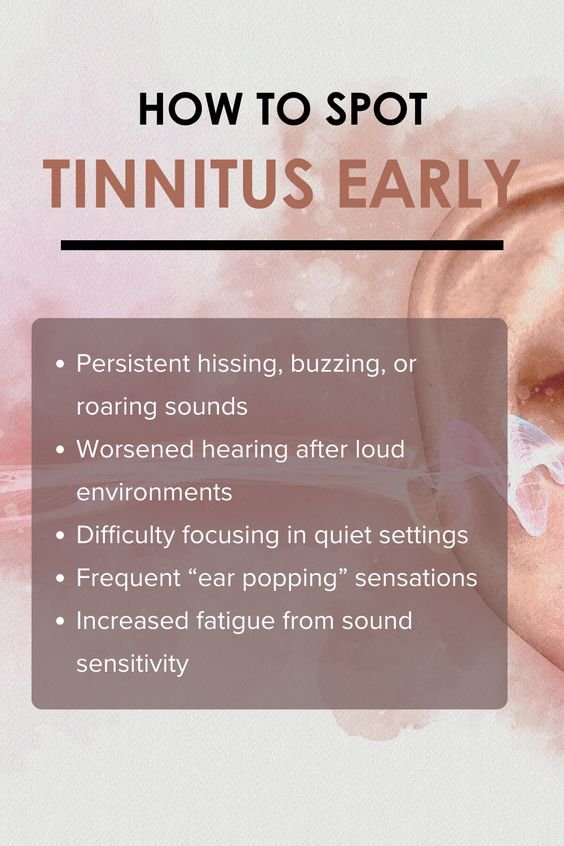
2. Worsened Hearing After Loud Environments
If your hearing feels muffled or if the ringing intensifies after attending an event, using earbuds, or working near machinery, it may signal noise-induced tinnitus.
👉 Why it happens: Loud noise can damage the delicate hair cells inside your inner ear, making them misfire and create phantom sounds.
👉 What to do: Protect your ears with noise-reducing earplugs and give your ears quiet recovery time afterward.
3. Difficulty Focusing in Quiet Settings
Some people with early tinnitus find silence uncomfortable — their focus drifts because they can’t “tune out” the internal sounds.
👉 Why it happens: The brain starts over-processing sound signals, creating awareness of background ringing.
👉 What to do: Use soft background noise like rainfall or instrumental music. This technique, called sound masking, can help retrain your brain to ignore the ringing.
4. Frequent “Ear Popping” or Pressure Sensations
If your ears pop often (like during airplane takeoffs) even when you’re not changing altitude, it could point to Eustachian tube dysfunction, which sometimes leads to tinnitus.
👉 Why it happens: Allergies, sinus issues, or jaw tension can cause blockages that alter inner ear pressure.
👉 What to do: Gentle yawning, swallowing, or using nasal saline sprays can help relieve pressure — but consult a doctor if it’s frequent or painful.
5. Increased Fatigue from Sound Sensitivity
Early tinnitus can make you unusually sensitive to certain sounds, leaving you mentally drained by the end of the day.
👉 Why it happens: The brain stays “on alert,” overreacting to normal sounds like traffic or chatter.
👉 What to do: Practice short mindfulness breaks and avoid overexposure to noisy environments. Managing stress is key — anxiety can make tinnitus worse.
6. Minor Hearing Changes or “Ear Fullness”
A subtle sense of fullness in the ears or mild hearing changes can sometimes accompany tinnitus onset.
👉 Why it happens: This may indicate fluid buildup, inflammation, or early hearing nerve irritation.
👉 What to do: Don’t ignore it. A simple hearing test can help detect any underlying ear issues before they worsen.
Early Action Can Prevent Long-Term Discomfort
Spotting tinnitus early means you have time to act. Here are small steps that make a big difference:
-
Limit prolonged headphone use.
-
Reduce caffeine and alcohol, which can heighten ringing.
-
Maintain healthy blood circulation with light exercise.
-
Manage stress with relaxation or breathing exercises.
-
Schedule a check-up with an ENT or audiologist if symptoms persist.
Final Thoughts: Listen to What Your Ears Are Telling You
The sooner you recognize the signs of tinnitus, the easier it is to manage. Remember, tinnitus is not always permanent — early awareness leads to better outcomes.
Stay mindful of your hearing health and give your ears the care they deserve. 🌿👂