Back pain rarely appears overnight. For most people, it builds slowly through daily habits—how we sit, walk, lift, and even relax. The good news is that improving your spine health doesn’t always require intense workouts or complicated routines. Sometimes, small changes for long-term back health can make the biggest difference.
If your back feels stiff after sitting too long or sore at the end of the day, these simple adjustments can help support better posture, reduce strain, and protect your spine over time. Let’s walk through six practical changes you can start today.
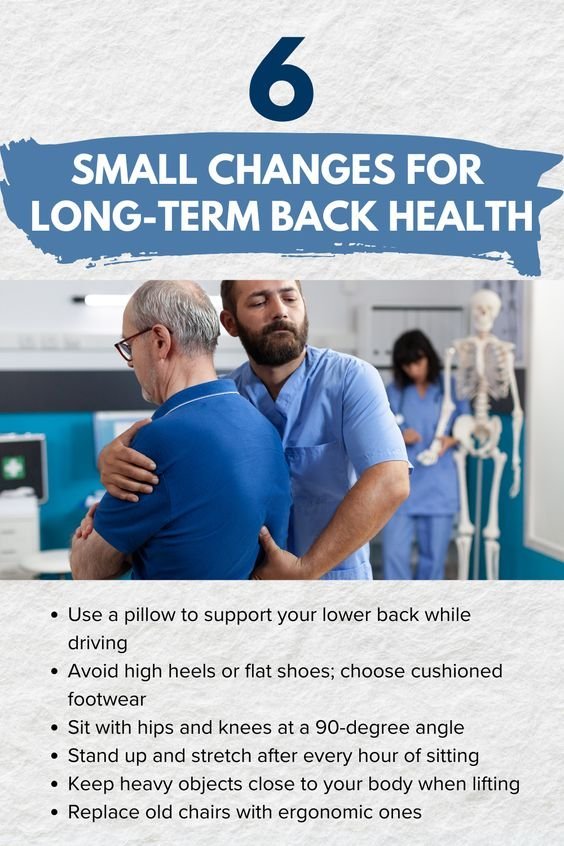
1. Support Your Lower Back While Driving
Long drives or daily commuting can quietly strain your lower back, especially if your seat lacks proper support. Adding a small pillow or lumbar cushion behind your lower spine helps maintain its natural curve.
This simple support:
-
Reduces pressure on the lower back
-
Improves sitting posture
-
Makes long periods of driving more comfortable
Even a rolled towel can work if you don’t have a lumbar cushion.
2. Choose Cushioned, Supportive Footwear
Shoes play a bigger role in back health than most people realize. High heels can push your posture forward, while completely flat shoes may lack shock absorption.
For better back support:
-
Choose shoes with cushioning and arch support
-
Avoid wearing high heels or thin-soled flats for long hours
-
Rotate footwear to reduce repetitive strain
Supportive shoes help align your posture from the ground up.
3. Sit with Hips and Knees at a 90-Degree Angle
Poor sitting posture is one of the most common causes of back discomfort. Ideally, your hips and knees should form a 90-degree angle when seated.
Helpful sitting tips:
-
Keep feet flat on the floor
-
Sit back fully in the chair
-
Avoid crossing legs for long periods
This position reduces pressure on your spine and encourages better alignment.
4. Stand Up and Stretch Every Hour
Sitting for extended periods tightens muscles and reduces blood flow, which can worsen stiffness and pain. Standing up once every hour—even briefly—helps reset your posture.
Simple movements include:
-
Gentle back stretches
-
Shoulder rolls
-
A short walk around the room
Think of movement as maintenance for your spine, not exercise.
5. Keep Heavy Objects Close When Lifting
Lifting incorrectly places unnecessary stress on your back. Holding heavy objects close to your body helps distribute weight more evenly and protects your spine.
Remember to:
-
Bend at the knees, not the waist
-
Keep the object close to your torso
-
Avoid twisting while lifting
Even light objects can cause strain if lifted repeatedly the wrong way.
6. Replace Old Chairs with Ergonomic Support
An unsupportive chair can quietly damage your posture over time. Ergonomic chairs are designed to support your spine’s natural shape and reduce muscle tension.
If replacing your chair isn’t an option:
-
Add a lumbar cushion
-
Adjust seat height so feet stay flat
-
Keep your screen at eye level
Your chair should support you—not work against you.
Why Small Changes Matter
Back health is built through consistency. These small changes for long-term back health may seem minor on their own, but together they help reduce strain, improve posture, and support daily comfort. Think of them as protective habits rather than quick fixes.
Final Thoughts
You don’t need drastic measures to support a healthier back. Small adjustments in how you sit, move, lift, and rest can quietly protect your spine over time. Start with one or two changes that feel manageable and build from there.
Your back supports you every day—these habits help return the favor.