Ear health is often overlooked—until discomfort, infections, or ringing begin to interfere with daily life. The truth is, protecting your ears doesn’t always require medication or complex routines. In many cases, small, consistent lifestyle changes play a meaningful role in keeping your ears healthy and comfortable.
This guide focuses on simple, realistic habits that support better ear health over time. These changes are easy to apply, gentle on the body, and suitable for most people as part of everyday life.
Let’s take a closer look.
Why Small Changes Make a Big Difference
Your ears rely on good circulation, a clean environment, and protection from excessive noise and irritation. When these basics are neglected, problems can slowly develop—even without obvious warning signs.
Small habits work because they:
-
Reduce daily strain on the ears
-
Support natural circulation
-
Protect sensitive structures
-
Promote long-term comfort
Consistency matters more than intensity.
1. Stay Hydrated for Better Circulation
Hydration supports almost every system in the body—including the ears.
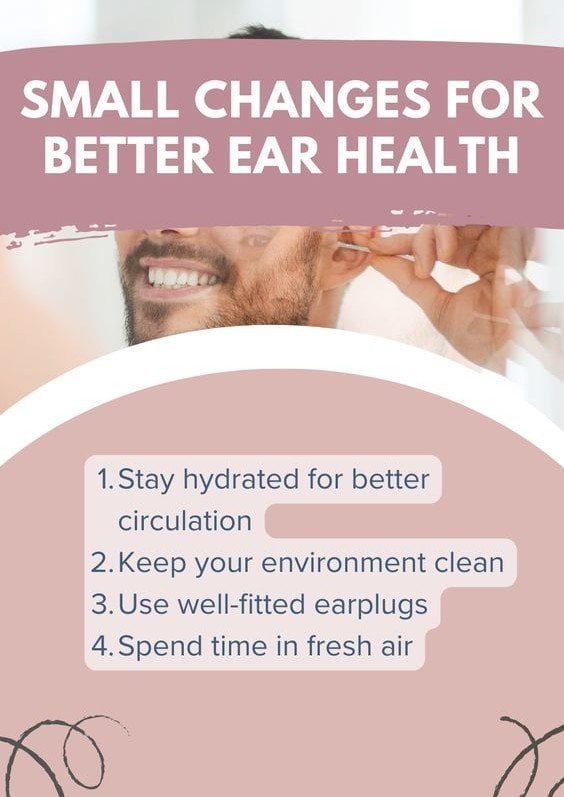
Staying hydrated helps by:
-
Supporting blood flow to the inner ear
-
Maintaining fluid balance
-
Reducing pressure-related discomfort
Dehydration can affect circulation, which may influence ear function and comfort.
Simple habit: Sip water regularly throughout the day instead of waiting until you feel thirsty.
2. Keep Your Environment Clean
A clean environment reduces exposure to dust, allergens, and irritants that can affect ear health.
This helps by:
-
Lowering the risk of ear irritation
-
Reducing allergy-related congestion
-
Supporting overall respiratory and ear comfort
Clean surroundings are especially important for people sensitive to allergens or prone to ear issues.
Helpful step: Regularly clean living spaces and avoid prolonged exposure to dusty or polluted areas when possible.
3. Use Well-Fitted Earplugs When Needed
Noise exposure is one of the most common contributors to ear problems.
Using well-fitted earplugs helps:
-
Protect hearing in loud environments
-
Reduce strain on the auditory system
-
Prevent long-term damage
Poorly fitted earplugs may be uncomfortable or ineffective, so proper fit matters.
When to use them: Concerts, noisy workplaces, traffic-heavy areas, or any environment where sound levels feel overwhelming.
4. Spend Time in Fresh Air
Fresh air supports circulation, relaxation, and overall well-being—all of which can benefit ear health.
Spending time outdoors may help:
-
Reduce stress levels
-
Improve oxygen flow
-
Support general ear and sinus comfort
Even short daily walks can make a difference.
Easy habit: Aim for a few minutes outside each day, especially away from heavy traffic or loud noise.
How These Habits Support Long-Term Ear Health
Together, these small changes:
-
Reduce daily stress on the ears
-
Support circulation and balance
-
Lower exposure to irritants
-
Encourage protective habits
They don’t promise instant results—but they build a strong foundation for long-term ear care.
Common Mistake to Avoid
A common mistake is waiting for symptoms before taking action. Ear health often declines gradually, making prevention far more effective than reaction.
It’s also important to avoid:
-
Overcleaning ears internally
-
Ignoring persistent discomfort
-
Exposure to loud noise without protection
Awareness is key.
When to Seek Professional Advice
While lifestyle habits help, they don’t replace medical care. If you experience:
-
Persistent ear pain
-
Ongoing ringing or hearing changes
-
Dizziness or balance issues
It’s best to consult a qualified healthcare professional.
Final Thoughts
Better ear health doesn’t come from one big change—it comes from small, thoughtful habits practiced consistently. Staying hydrated, keeping your environment clean, protecting your ears, and spending time in fresh air all support your ears in simple but meaningful ways.
These changes are easy to start today—and your ears will thank you over time.
👉 Save this guide and revisit it whenever you want to reset your ear care habits.