Most people don’t realize how much strain their ears experience during a typical workday. Whether you’re in an open office, a bustling customer service center, or simply glued to your headphones, the noise around you affects your hearing more than you think.
The great thing is that ear health doesn’t have to be complicated. With a few gentle shifts in your daily routine, you can protect your ears, prevent ringing, and stay focused with less stress.
In this guide, we’ll dive into simple steps to maintain ear health at work. These are small, doable habits that make a big difference over time. Let’s get into it.
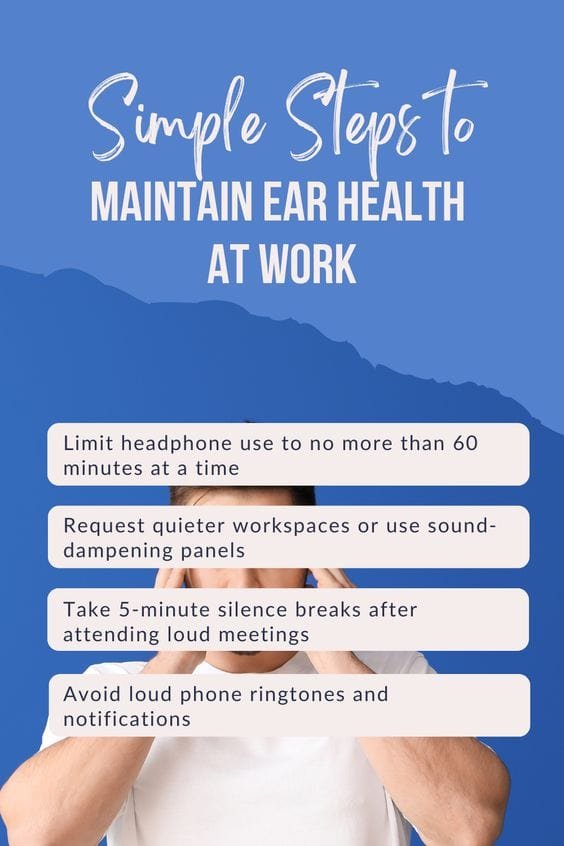
1. Limit Headphone Use to No More Than 60 Minutes at a Time
Headphones are a lifesaver at work—meetings, focus sessions, training videos, or just tuning out background noise. But long, uninterrupted listening sessions can add extra pressure to your inner ear and even contribute to fatigue or ringing.
Why the 60-Minute Rule Works
-
It gives your ear muscles a chance to relax
-
Prevents overexposure to volume
-
Reduces listening fatigue, especially during long virtual meetings
Even at moderate volumes, your ears benefit from short breaks.
How to Protect Your Ears While Using Headphones
-
Follow the 60/60 rule: no more than 60 minutes at 60% volume
-
Switch to over-ear headphones instead of earbuds for gentler sound delivery
-
Use noise-cancelling headphones to reduce the need to “turn it up”
Your ears need downtime just like your eyes and brain do.
2. Request Quieter Workspaces or Use Sound-Dampening Panels
Not every workspace gives you full control over noise levels—but you do have more options than you might think. Noise doesn’t have to be painfully loud to cause irritation, tension, or even early hearing changes.
Why Workplace Noise Matters
Constant exposure to small but persistent noise—printers, conversations, HVAC systems—can strain the ear over time. It may not feel harmful, but your nervous system notices.
Practical Solutions
-
Ask to be seated farther from loud equipment
-
Request soft partitions or sound-dampening wall panels
-
Use small desk dividers that reduce echo
-
Add plants around your workspace (they naturally absorb sound!)
If you’re working remotely, small acoustic panels behind your desk can make your home office more ear-friendly too.
3. Take 5-Minute Silence Breaks After Attending Loud Meetings
Meetings—especially online ones—often involve layered noise: multiple speakers, sudden volume spikes, echoes, or microphone feedback. Even short exposure can leave your ears feeling tired.
Why Silence Breaks Are So Helpful
-
They allow the auditory system to reset
-
They reduce ringing or buzzing that appears after loud conversations
-
They lower stress levels and calm the nervous system
Think of a silence break as a refresh button for your ears.
Easy Ways to Add Silence
-
Step into a quiet hallway
-
Sit at your desk with notifications off
-
Close your eyes and take a few slow breaths
-
Use “Do Not Disturb” mode for 5 minutes
These micro-breaks boost both ear health and mental clarity.
4. Avoid Loud Phone Ringtones and Notifications
Phone alerts are one of the most underestimated ear stressors at work. A sudden loud ringtone close to your ear can cause momentary ringing or discomfort.
The Hidden Problem
Most people set ringtones loud enough to hear over office noise, but these quick, sharp sounds can startle your ears—and over time, contribute to sensitivity.
Small Fixes That Help
-
Switch to softer tones or vibration
-
Reduce volume settings on ringtones and notification alerts
-
Keep your phone slightly farther away instead of right beside your ear
-
Use wearable devices for more gentle alerts
Your ears will thank you for eliminating those sudden, jarring sounds.
Additional Ear-Friendly Tips for Busy Workdays
Here are a few more healthy habits you can add to your routine:
-
Drink plenty of water—hydration supports inner ear function
-
Stretch your neck and shoulders to improve circulation around the ears
-
Schedule regular “no headphone” periods during your day
-
Step outdoors for fresh air and a break from background noise
-
Avoid sitting directly under loud air vents or equipment
Working environments aren’t always perfectly quiet, but small adjustments keep your ears more comfortable.
Final Thoughts
Protecting your hearing doesn’t require big lifestyle changes—it simply takes awareness and a few small habits you can weave into your workday. By limiting headphone use, requesting quieter spaces, taking brief silence breaks, and avoiding harsh ringtones, you create a calmer environment for both your ears and your mind. These simple steps to maintain ear health at work are practical, friendly, and easy to stick with.
Save this guide for later, and feel free to share it with coworkers who could use a gentle ear-health reminder!