Fat loss often feels complicated — too many diets, too many conflicting rules, and so many methods claiming to be “the fastest.” The truth is, weight loss doesn’t have to be extreme or stressful. Most people see progress when they follow a basic structure built around calorie control, protein intake, and whole-food nutrition.
This guide breaks fat loss into three simple steps you can start applying immediately. No crash dieting. No starving yourself. Just smart, sustainable habits.
Let’s take a closer look.
Step 1 — Find Your Calorie Deficit Target
Fat loss happens when your body uses more energy than it takes in. A calorie deficit doesn’t mean depriving yourself — it means eating just slightly less than you burn so that your body taps into stored fat over time.
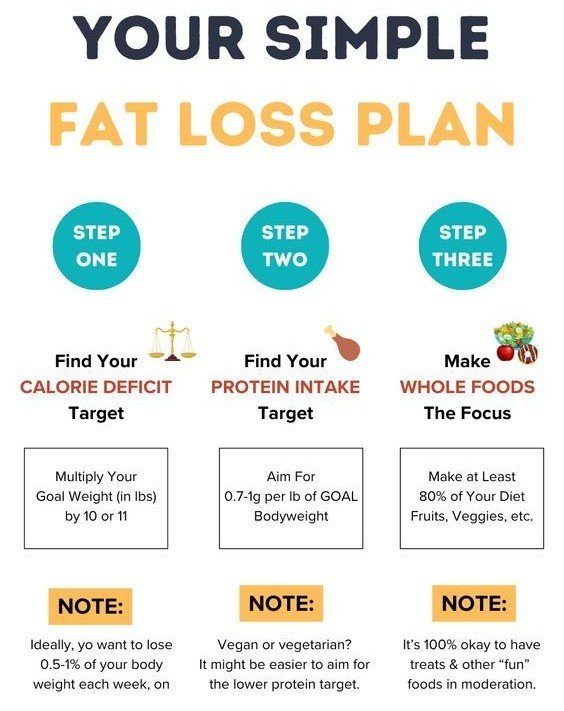
The guideline shown in the image provides a simple way to estimate your target intake:
Multiply your goal weight (in pounds) by 10–11.
Example:
If your target weight is 150 lbs, then:
150 × 10 = ~1500 calories per day (as a starting range)
This number isn’t absolute, but it offers a straightforward place to begin. You can adjust up or down based on energy levels, activity, and progress.
A healthy fat-loss pace:
Aim to lose 0.5–1% of your body weight per week.
Slow, steady loss is not only more comfortable — it is also more sustainable and less likely to result in regain later.
Step 2 — Calculate Your Protein Intake
Protein is crucial during fat loss. It keeps you full longer, helps maintain muscle mass, supports metabolism, and reduces cravings.
An effective protein target:
0.7–1 gram of protein per lb of goal bodyweight
Example:
Goal weight = 140 lbs
Protein target range = 98–140g daily
This creates satiety, stabilizes blood sugar, and supports lean mass retention — an important factor because muscle helps burn more calories even at rest.
Protein source ideas:
| Source | Approx. Grams |
|---|---|
| Chicken breast (100g) | ~30g |
| Eggs (2) | ~12g |
| Greek yogurt | 15–20g |
| Tofu (100g) | ~10g |
| Lentils (1 cup cooked) | ~15g |
| Protein shake | 20–30g |
If you are vegetarian or vegan, it’s perfectly fine to aim toward the lower end of the range. The goal is consistency — not perfection.
Step 3 — Make Whole Foods the Foundation
You don’t have to eliminate all treats to lose weight. You don’t have to eat bland meals or cut out carbs. Fat loss becomes much easier when most of your diet comes from whole, minimally processed foods.
Aim for:
At least 80% whole foods
-
Fruits
-
Vegetables
-
Lean proteins
-
Whole grains
-
Nuts, seeds
-
Legumes
-
Quality fats
The remaining 20% may include dessert, chips, takeout, or other enjoyable foods — without guilt. The balance approach prevents binge-restrict cycles and makes the plan workable long-term.
Why This Plan Works
This approach succeeds because it respects biology instead of trying to fight it.
Calorie deficit = triggers fat reduction
Protein intake = protects muscle & reduces hunger
Whole foods = naturally lower calorie density & higher nutrient quality
Instead of quick fixes or extreme dieting, this structure promotes a comfortable, livable rhythm — a lifestyle rather than a temporary challenge.
Benefits of this method:
✔ No food groups banned
✔ Easier hunger control
✔ Muscle supported instead of lost
✔ Slow progress that stays off long-term
Simplicity is powerful when applied consistently.
Final Thoughts
You don’t need a complicated diet to make real progress. This simple fat loss plan centers around three core habits:
- Create a calorie deficit that matches your goal.
- Eat enough protein every day.
- Build meals mostly from whole foods — with room for flexibility.
Small steps compound over weeks and months. A little consistency beats extreme effort every time.
If you ever feel overwhelmed, return to these three fundamentals — they’ll guide you back on track every time.