Tinnitus shows up differently for everyone, but one thing remains true—it can be unsettling when the noises don’t go away. Maybe it’s buzzing, maybe it’s fullness in your ears, or maybe conversations suddenly sound harder to follow than before. These signs can feel confusing, but they’re important signals your ears are trying to tell you something.
In this post, we’ll break down the main signs of tinnitus you shouldn’t ignore and what each one might mean for your overall ear health.
1. Persistent Buzzing or Humming
One of the most noticeable early signs of tinnitus is a sound that doesn’t match anything around you. It may show up as:
-
Buzzing
-
Humming
-
Ringing
-
Whistling
-
High-pitched tones
If it lasts more than a few days, it’s worth taking seriously. Persistent internal noise can signal changes in the auditory nerve, inner ear irritation, or even prolonged exposure to loud environments.
When to pay attention:
-
The sound gets louder at night
-
It appears after concerts or headphone use
-
It’s in one ear only
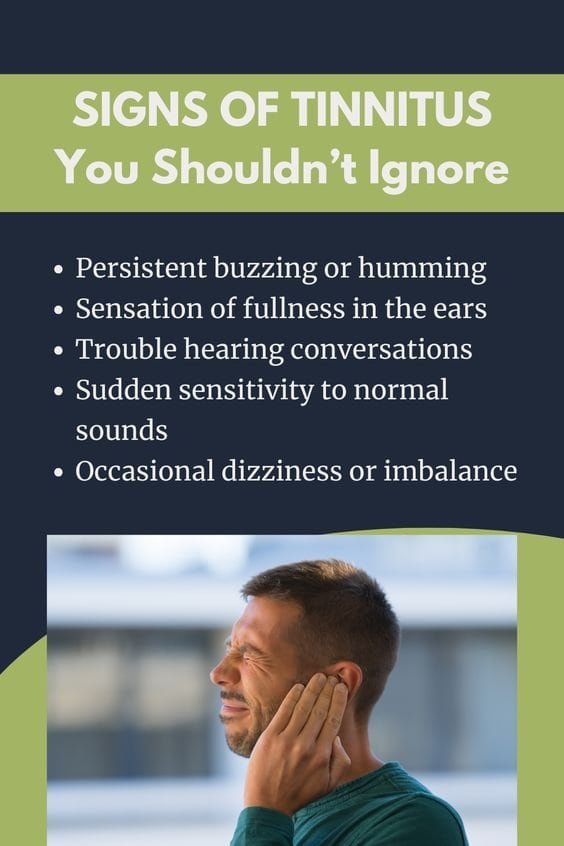
2. A Sensation of Fullness in the Ears
That “stuffed,” pressure-filled feeling can be frustrating, especially when it doesn’t go away with swallowing or yawning. While ear fullness can come from allergies or sinus issues, it’s also a common companion to tinnitus.
Why this happens:
-
Fluid buildup
-
Changes in middle-ear pressure
-
Blocked Eustachian tubes
-
Inner-ear inflammation
If it comes with buzzing or muffled hearing, your ears may be signaling early tinnitus-related changes.
3. Trouble Hearing Conversations
If you find yourself asking people to repeat themselves—or speech sounds slightly muffled—tinnitus may be interfering more than you realize. The brain naturally tries to “tune out” internal noise, which can make external sounds feel harder to process.
Possible causes:
-
Hidden hearing loss
-
Noise-induced damage
-
Aging-related changes
-
Earwax buildup
Even mild hearing changes deserve attention, especially when paired with ringing or buzzing.
4. Sudden Sensitivity to Normal Sounds
This sign often surprises people. Everyday noises—clinking dishes, running water, laughter—can suddenly feel too loud or even uncomfortable. This is known as sound sensitivity, and it’s commonly linked to tinnitus and changes in how your auditory nerves process sound.
What to notice:
-
Sounds feel “sharp” or painful
-
You start avoiding noisy places
-
You feel tense around normal background sounds
This usually doesn’t go away on its own, and early support can make a big difference.
5. Occasional Dizziness or Imbalance
Your ears aren’t just for hearing—they play a major role in balance. When tinnitus appears alongside dizziness or light imbalance, it may indicate an issue deeper within the inner ear.
This may show up as:
-
Feeling slightly unsteady
-
Brief spinning sensations
-
Slow waves of dizziness
Even mild imbalance is worth checking, especially if it’s new.
Final Thoughts
Tinnitus isn’t just about ringing—it’s a collection of subtle signs your ears may be overwhelmed, irritated, or in need of support. By paying attention to symptoms like buzzing, fullness, hearing difficulty, sound sensitivity, and dizziness, you can take early steps toward better ear health.
If any of these signs sound familiar, consider saving this guide, sharing it with someone who might need it, or checking in with a hearing professional for personalized advice.
Let your ears be heard—awareness is the first step toward relief.