Poor posture is often brushed off as a minor habit — something you’ll “fix later.” But the truth is, the way you sit, stand, and lean every day has a ripple effect throughout your entire body. The impacts of poor posture go far beyond back pain and can quietly affect your energy, focus, and overall well-being.
If you spend long hours sitting, working on a screen, or looking down at your phone, this is especially important. Let’s break down four surprising ways poor posture can affect your body — and why awareness matters more than perfection.
Why Posture Matters More Than You Think
Posture isn’t about standing stiff or holding yourself unnaturally straight. It’s about alignment — how your head, shoulders, spine, and hips work together to support movement and circulation.
When posture is off for long periods, the body has to compensate. Muscles overwork, nerves get compressed, and internal systems function less efficiently. Over time, these small stresses add up.
1. Poor Posture Leads to Chronic Muscle Fatigue
One of the most common yet overlooked impacts of poor posture is constant muscle fatigue. When your body isn’t aligned properly, certain muscles stay “on” all the time just to keep you upright.
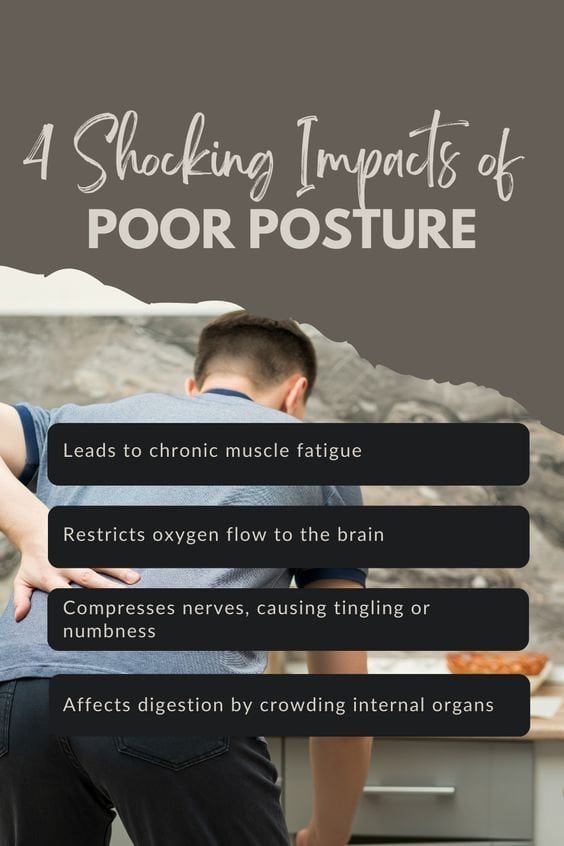
This often shows up as:
-
Tight neck and shoulders
-
Achy lower back
-
Soreness even after minimal activity
Instead of sharing the workload evenly, your muscles become overworked and exhausted — which explains why you may feel tired long before the day is over.
2. It Can Restrict Oxygen Flow to the Brain
Slouching compresses the chest and shortens the muscles around your neck and upper spine. This can interfere with efficient breathing and circulation.
When oxygen flow is reduced, you may notice:
-
Brain fog
-
Headaches
-
Reduced concentration
-
Feeling mentally drained
Over time, this can affect daily productivity and mood. Simply improving posture can sometimes make you feel more alert without changing anything else.
3. Poor Posture Can Compress Nerves
Another serious impact of poor posture is nerve compression. When the spine is misaligned, surrounding nerves can become irritated or compressed.
This may cause:
-
Tingling in the arms or hands
-
Numbness in the fingers
-
Radiating discomfort into the legs
These sensations are often mistaken for isolated nerve issues, when posture may be a contributing factor. Small daily alignment habits can play a big role in reducing this type of discomfort.
4. It Can Affect Digestion and Internal Organs
This one surprises many people. Slouching or collapsing the torso puts pressure on internal organs in the abdomen, including the stomach and intestines.
When organs are crowded:
-
Digestion may slow down
-
Bloating can increase
-
Discomfort after meals becomes more common
Sitting upright allows organs to function with more space and less compression — supporting smoother digestion.
How Poor Posture Sneaks Into Daily Life
Poor posture rarely starts intentionally. It often develops from:
-
Long hours at a desk
-
Using phones and laptops frequently
-
Weak core or back muscles
-
Fatigue toward the end of the day
Without awareness, it becomes the default position — even when standing or walking.
Simple Ways to Reduce the Impacts of Poor Posture
You don’t need perfect posture all day. Small adjustments add up.
Try:
-
Taking posture breaks every 30–60 minutes
-
Gently pulling shoulders back and down
-
Keeping screens at eye level when possible
-
Supporting your lower back when sitting
Consistency matters more than forcing yourself into rigid positions.
Final Thoughts
The impacts of poor posture extend far beyond appearance. From muscle fatigue and nerve compression to digestion and mental clarity, posture influences how your entire body functions.
The good news? Awareness alone can start creating change. Small, mindful adjustments throughout the day often make a noticeable difference over time.
Save this article for later or share it with someone who spends long hours sitting. And ask yourself — where do you notice posture slipping most during your day?