Ringing in the ears is often brushed off as stress, fatigue, or something that will “just go away.” But persistent ringing is rarely something to ignore. Understanding the risks of ignoring ringing ears is important because tinnitus is often a warning signal—not a standalone issue.
When left unaddressed, it can gradually affect hearing, concentration, emotional well-being, and daily life. The earlier ringing is taken seriously, the more options there are to manage it effectively. Let’s explore the four main risks of ignoring ringing ears and what they mean in real life.
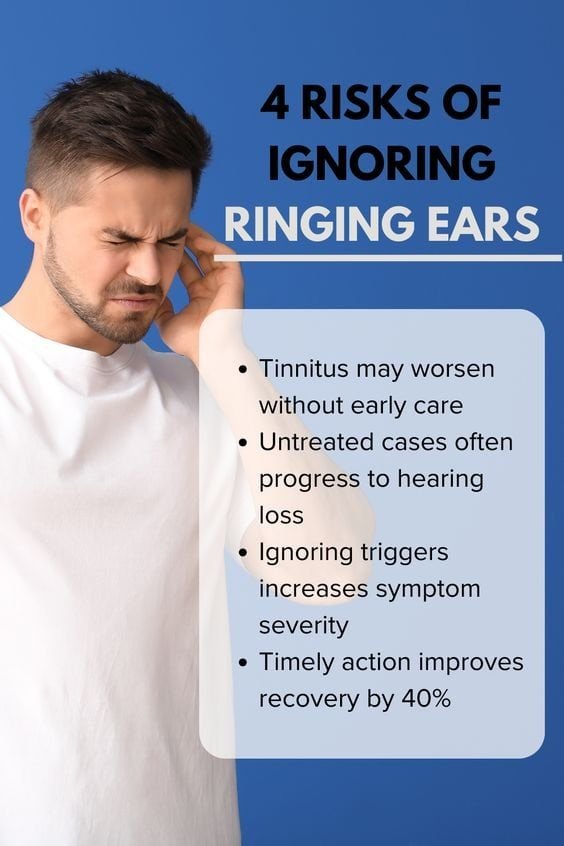
1. Tinnitus May Worsen Without Early Care
One of the biggest risks of ignoring ringing ears is symptom progression. Tinnitus doesn’t always stay at the same intensity.
Without early attention:
-
Ringing may become louder or more frequent
-
Episodes may last longer
-
The brain may become more sensitive to the sound
Over time, tinnitus can shift from an occasional annoyance into a constant background noise that’s harder to manage.
2. Untreated Ringing May Progress Toward Hearing Loss
Ringing ears often appear alongside early hearing changes—even before noticeable hearing loss occurs. Ignoring this sign may delay identifying underlying hearing damage.
Potential contributors include:
-
Noise exposure over time
-
Age-related hearing changes
-
Inner ear stress or injury
Catching hearing changes early can help slow progression and preserve long-term hearing clarity.
3. Ignoring Triggers Can Increase Symptom Severity
Tinnitus is often influenced by triggers such as loud noise, poor sleep, stress, caffeine, or long headphone use. When these triggers aren’t identified, symptoms may intensify unnecessarily.
Ignoring triggers can lead to:
-
More frequent flare-ups
-
Stronger ringing episodes
-
Reduced tolerance to everyday sounds
Awareness helps reduce avoidable aggravation and gives you more control over symptoms.
4. Delayed Action Can Reduce Recovery Potential
Early response matters. Studies consistently show that timely action improves tinnitus management outcomes. While tinnitus isn’t always reversible, early steps often make it easier to reduce impact and distress.
Early action may include:
-
Hearing evaluations
-
Noise protection strategies
-
Lifestyle adjustments
-
Stress and sleep support
Waiting too long can limit how responsive symptoms are to management strategies later.
How Ringing Ears Affect Daily Life Over Time
Ignoring ringing ears doesn’t just affect hearing—it can influence many areas of life.
Common long-term effects include:
-
Trouble concentrating
-
Disrupted sleep
-
Increased anxiety or frustration
-
Reduced quality of life
These impacts often build slowly, which is why they’re easy to underestimate early on.
Why “Waiting It Out” Often Backfires
Many people delay action because the ringing isn’t constant—or because medical advice seems intimidating. Unfortunately, waiting often means missing the most responsive window for symptom control.
Taking action early:
-
Reduces uncertainty
-
Prevents escalation
-
Builds coping strategies sooner
Early attention isn’t panic—it’s prevention.
When Ringing Ears Deserve Medical Attention
Consider professional guidance if:
-
Ringing lasts more than one to two weeks
-
Symptoms worsen over time
-
Ringing affects sleep or focus
-
You notice hearing changes alongside ringing
Seeking help doesn’t mean something severe is happening—it means you’re being proactive.
Simple Steps You Can Take Right Now
If you’re experiencing ringing ears, small steps can make a difference:
-
Protect ears in noisy environments
-
Reduce prolonged headphone use
-
Prioritize sleep and stress management
-
Track when symptoms worsen
These steps support ear health while you decide next actions.
Final Thoughts
The risks of ignoring ringing ears go far beyond temporary annoyance. From worsening tinnitus and potential hearing changes to increased symptom severity and reduced response to care, ringing ears deserve attention—not dismissal. Early awareness and simple actions often make symptoms easier to manage and less disruptive over time.
If ringing has been quietly hanging around, it may be time to listen to what your ears are telling you. Which of these risks feels most important for you to address right now?