Knee pain can creep up quietly, or it can develop suddenly after an injury — but most of the time, it connects back to daily habits, movement patterns, or long-term joint stress. Understanding what increases your risk is one of the most effective ways to protect your knees and reduce future pain. Whether you’re active, aging, recovering, or dealing with stress on your joints day-to-day, knowing the triggers can help you move smarter and feel better.
In this guide, you’ll learn the most common risk factors for knee pain and simple ways to manage or minimize them over time.
1. Excessive Weight Increases Pressure on Knee Joints
Carrying extra weight means your knees absorb more force with every step, stair climb, or squat. Even small increases in weight can noticeably strain the joint, especially over time.
Helpful ways to reduce knee stress:
-
Choose lower-impact exercises like cycling, swimming, or elliptical
-
Aim for gradual, realistic weight loss if needed
-
Include anti-inflammatory foods such as greens, berries, olive oil, and salmon
Think of weight relief as reducing the load your knees carry daily — even minor changes make a difference.
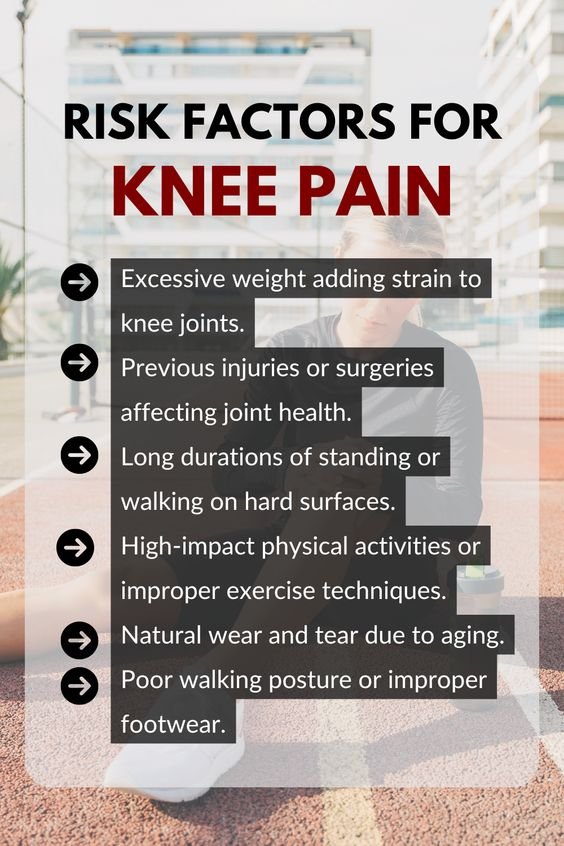
2. Previous Injuries or Surgeries Affect Joint Stability
Past damage doesn’t always disappear fully. Injuries like ligament tears, meniscus damage, fractures, or knee surgery can leave the joint more vulnerable or slightly weaker than before.
To protect and support recovery long-term:
-
Strengthen surrounding muscles: quads, hamstrings, glutes, calves
-
Consider physiotherapy or guided rehabilitation
-
Avoid sudden twisting or heavy loading without proper conditioning
Recovery isn’t just about healing — it’s about supporting the joint so it functions better going forward.
3. Long Periods of Standing or Walking on Hard Surfaces
Standing for hours or walking repeatedly on concrete or hard flooring can irritate cartilage and increase fatigue in the joint.
Daily changes that help:
-
Wear cushioned or orthopedic-support shoes
-
Take sitting or stretching breaks every 30–45 minutes
-
Add softer-surface walking when possible (grass, track, treadmill)
Movement is healthy — but the surface beneath you matters more than most people realize.
4. High-Impact Exercise or Poor Technique
Running, jumping, heavy squats, and sudden directional movement can strengthen the body — but they can also strain the knee if technique is off or intensity increases too quickly.
Protect your knees while staying active:
-
Warm up before workouts, cool down afterward
-
Learn proper lifting and landing form
-
Mix impact activities with low-impact days for balance
-
Increase intensity slowly instead of jumping levels at once
You don’t have to avoid exercise — just train smarter, not harder.
5. Natural Aging and Joint Wear
As we age, cartilage naturally thins, muscles can weaken, and recovery takes longer. This makes knees more sensitive to everyday activities that once felt effortless.
Support aging joints through:
-
Strength training 2–3 times weekly
-
Flexibility and mobility practices such as yoga or gentle stretching
-
Anti-inflammatory nutrition and hydration
Aging doesn’t stop movement — it just calls for more mindful care.
6. Poor Posture or Improper Footwear
Your foot alignment influences how force travels through the knee. Flat arches, worn-out shoes, or high heels change your walking pattern, leading to joint imbalance or pain over time.
Try these supportive habits:
-
Choose stable, well-cushioned footwear
-
Use orthotics if you have flat feet or overpronation
-
Pay attention to walking form and stride alignment
Good shoes are not just comfort — they are knee protection.
Final Thoughts
Knee pain often connects back to preventable or manageable risk factors. By recognizing what contributes to joint strain — whether it’s extra body weight, old injuries, posture, exercise habits, or simply natural aging — you can make smarter choices that improve comfort and mobility over time. You don’t have to change everything at once. Start with one small habit, one supportive adjustment, and build from there. Your knees carry you through life — caring for them is an investment in movement, independence, and long-term well-being.