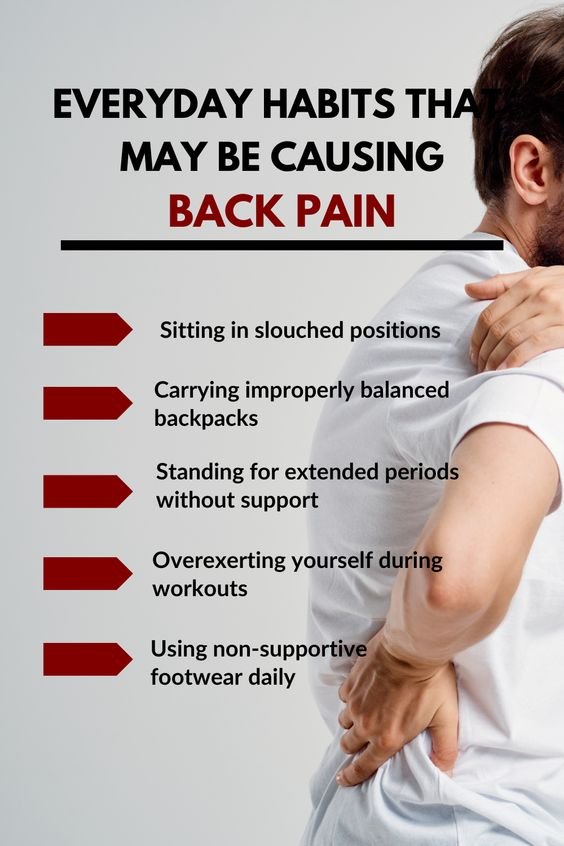
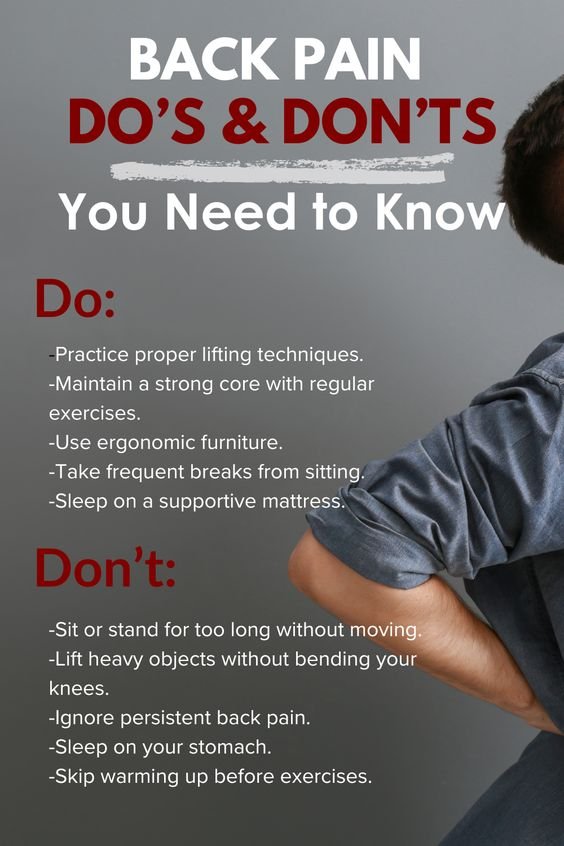
Back pain has a way of sneaking into daily life — during long desk hours, after a heavy backpack, or even from something as simple as the wrong pair of shoes. If you’ve ever felt that dull ache or sharp pull along your spine, you know how quickly it can interrupt your routine and mood.
The good news? You don’t always need complicated treatment to find relief. Small shifts in posture, movement, and daily habits can make a noticeable difference.
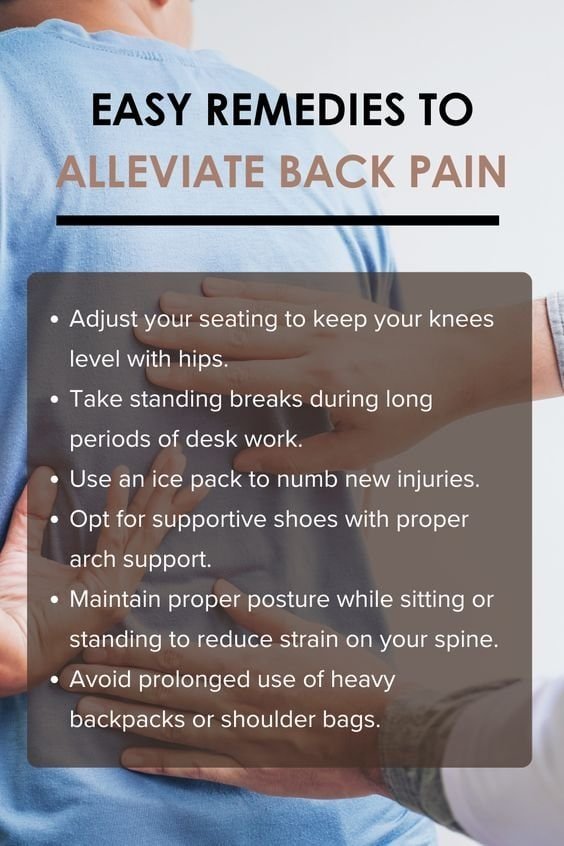
In this guide, we’ll break down simple, gentle remedies you can start using today to reduce back discomfort, improve mobility, and support a healthier spine — all inspired directly by the tips shown in the Pinterest image.
1. Adjust Your Seating — Your Hips and Knees Matter
Most people don’t realize how much posture influences pain. When sitting, your knees should stay level with your hips — not lifted, not dangling. This balanced alignment supports the lower spine and prevents uneven pressure on vertebrae.
Try these adjustments today:
-
Use a chair with back support, or add a small pillow behind your lower spine.
-
Keep feet flat on the ground instead of tucked under you.
-
Tilt your screen to eye level to avoid bending forward.
-
If you work at a desk, choose a chair height that matches your body (no slouching!).
Think of your chair as a foundation — steady posture reduces strain the same way proper building support prevents cracks.
2. Take Standing Breaks — Motion is Medicine
Back pain often worsens during long sitting sessions. Your spine loves movement, even small ones. Stand, stretch, and take slow walks throughout the day. It isn’t about intense exercise — it’s about not staying stuck in one position for too long.
A helpful rhythm to follow:
| Work Time | Break Time |
|---|---|
| 30–45 minutes sitting | 3–5 minutes standing/moving |
| 60–90 minutes sitting | Take a short walk or stretch |
Use reminders on your phone or laptop. Your future back will thank you.
3. Ice Packs for New or Sharp Pain
If your back pain is recent — perhaps from lifting something awkwardly or twisting suddenly — an ice pack may help calm inflammation. Ice numbs the area, slows swelling, and can ease sharp sensitivity.
How to ice safely:
-
Wrap ice in a cloth (never apply directly to skin).
-
Hold for 10–15 minutes.
-
Repeat 2–3 times daily during the first 48 hours of pain.
After inflammation decreases, some people feel even better alternating cold with a warm compress later in the week — always listen to your body.
4. Choose Shoes With Real Support
Surprising but true — your spine feels what your feet feel. Shoes with poor arch support can change your posture and place extra strain on your lower back.
Here’s what to look for:
✔ Firm arch support
✔ Soft heel cushioning
✔ Stable sole (not too flat or too flexible)
If you walk or stand often throughout the day, footwear isn’t just style — it’s spinal support.
5. Maintain Proper Posture at All Times
Whether you’re sitting or standing, posture plays a leading role in pain relief. A neutral spine position is ideal: shoulders relaxed, chest open, ears aligned above shoulders, and core gently engaged.
Try this mental checklist:
🔹 Are my shoulders lifted toward my ears? Relax them.
🔹 Is my neck leaning forward? Pull it back slowly.
🔹 Is my lower back collapsing? Lift the spine gently.
You might feel taller instantly — that’s your alignment waking up.
6. Lighten Your Load — Backpacks & Shoulder Bags Can Hinder Recovery
Heavy bags pull the spine unevenly, especially when carried on one shoulder. Over time, this leads to muscle tension and asymmetrical strain.
Consider small swaps:
-
Use a backpack with padded straps instead of a single-shoulder bag.
-
Alternate shoulders if you must carry one-sided.
-
Reduce unnecessary weight — laptops and water bottles add up quickly.
-
Choose cross-body bags when possible for better balance distribution.
Even a small weight reduction can make daily movement feel smoother and lighter.
Gentle Extras You Can Add for Even More Relief
Though not on the pin, these complementary routines often help:
✨ Light stretching, especially hip flexors and hamstrings
✨ Core-strengthening exercises to support the spine
✨ Magnesium-rich foods to ease muscle tension
✨ Warm baths to relax tight lower-back muscles
These aren’t cures — they’re kind, supportive habits your back will respond to over time.
Final Thoughts — Small Habits Make a Big Difference
The remedies in this post work because they’re simple, realistic, and designed for everyday life. By adjusting posture, taking breaks, wearing supportive shoes, and avoiding heavy bags, you give your back room to heal and breathe. Relief doesn’t always exist in big interventions — sometimes it’s found in tiny posture shifts, soft stretches, and mindful movement throughout the day.
Save this post for later, apply one or two changes today, and notice how your body responds. Your spine supports you every day — these gentle habits help you support it in return.