Feeling tired all the time can be incredibly frustrating—especially when you can’t figure out why. Maybe you’re dragging yourself out of bed, crashing in the afternoon, or losing motivation halfway through the day.
Many people struggle with low energy without realizing the hidden habits behind it. The good news? Most of these causes are simple to identify and easy to improve with a few small lifestyle changes.
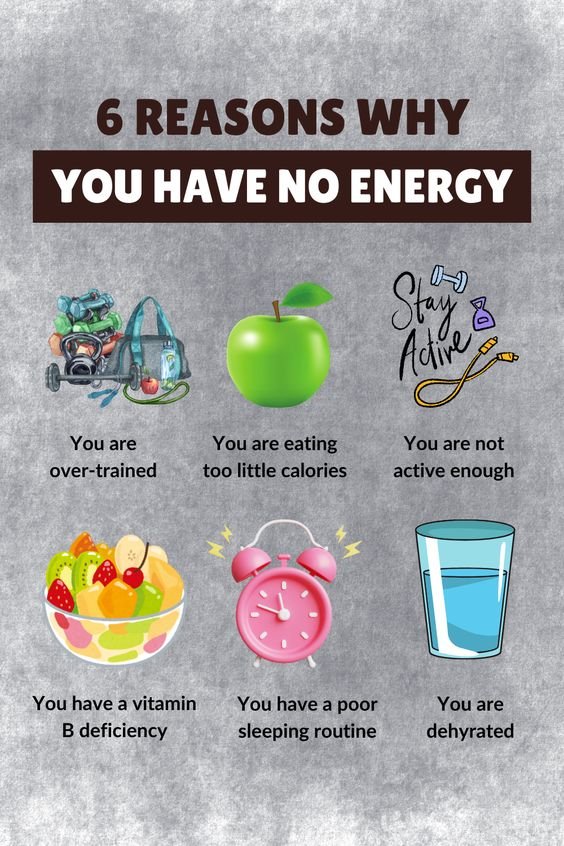
Let’s break down the six most common reasons your body may be running on empty—and what you can do to start feeling energized again.
1. You Are Overtrained
Exercise is great for your health, but too much of it can actually drain your energy instead of boosting it. Overtraining stresses your muscles, increases fatigue, and disrupts your sleep patterns.
Signs you may be overtraining:
-
Constant soreness
-
Feeling weaker instead of stronger
-
Difficulty sleeping
-
Low motivation
-
Excessive fatigue
What to do:
Add rest days to your schedule, include light activities like stretching or walking, and listen to your body’s signals. Recovery is just as important as the workout itself.
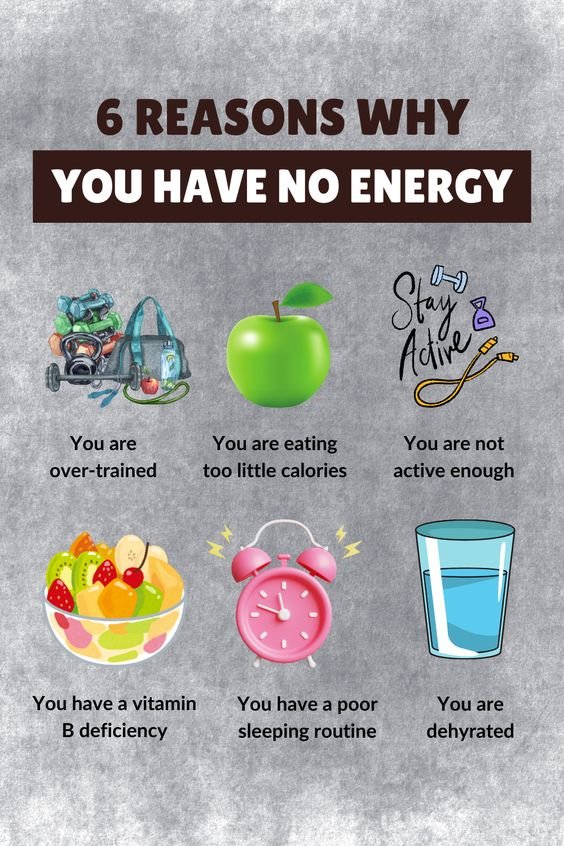
2. You Are Eating Too Few Calories
Under-eating is a major—and often overlooked—cause of low energy. When you don’t consume enough calories, your body slows down to conserve energy, which makes you feel tired and foggy.
Quick ways to fix this:
-
Eat balanced meals with protein, carbs, and healthy fats
-
Avoid skipping meals
-
Add snacks like nuts, fruit, yogurt, or smoothies
-
Pay attention to your hunger cues
Remember, food is fuel. Your body can’t operate at its best without it.
3. You’re Not Active Enough
Just like too much exercise can drain your energy, too little movement can do the same. Sitting for long periods reduces circulation and slows your metabolism, making your body feel heavy and slow.
How to boost your energy:
-
Take a 5-minute walk each hour
-
Stretch during breaks
-
Add light morning movement
-
Try activities you enjoy like dancing, biking, or walking
Small bursts of movement can reset your energy and improve your focus.
4. You Have a Vitamin B Deficiency
Vitamin B—especially B6 and B12—supports your body’s energy production. If you’re deficient, you may feel unusually tired, weak, or mentally foggy.
Symptoms of a deficiency:
-
Fatigue
-
Low mood
-
Difficulty concentrating
-
Tingling or numbness
Where to get vitamin B:
-
Eggs
-
Fish and meat
-
Dairy
-
Leafy greens
-
Beans and legumes
-
Fortified cereals
If you suspect a deficiency, consider speaking with your healthcare provider and getting a blood test.
5. You Have a Poor Sleeping Routine
Your sleep schedule plays a bigger role in energy levels than you might think. Irregular bedtimes, screen time at night, and poor sleep environments all contribute to feeling exhausted during the day.
Improve your sleep by:
-
Keeping a consistent sleep schedule
-
Avoiding screens at least 1 hour before bed
-
Creating a calming bedtime environment
-
Keeping your room cool and dark
-
Limiting caffeine and heavy meals late in the day
Better sleep = better energy, mood, and productivity.
6. You Are Dehydrated
Dehydration is one of the quickest ways to drain your energy. Even mild dehydration can cause headaches, dizziness, sluggishness, and trouble concentrating.
Easy hydration habits:
-
Drink a full glass of water first thing in the morning
-
Flavor your water with lemon or berries
-
Choose water-rich foods like oranges, cucumbers, and watermelon
-
Keep a reusable water bottle with you throughout the day
Hydration supports everything from brain function to digestion—and helps you feel more awake.
Final Thoughts
Low energy doesn’t have a single cause, and it doesn’t have to be your everyday normal. Whether the issue is overtraining, under-eating, inactivity, vitamin deficiencies, poor sleep, or dehydration, a few simple changes can make a big difference. Start with one habit, stay consistent, and give your body the support it needs to recharge naturally.