If you’ve been waking up tired, dragging through the day, or wondering why even simple tasks feel exhausting, you’re not alone. Low energy is incredibly common — and it can sneak into your life quietly. The good news is that the reasons behind your tiredness are often simple, fixable, and connected to everyday habits. Once you understand what’s draining your energy, you can start making small changes that bring your vitality back.
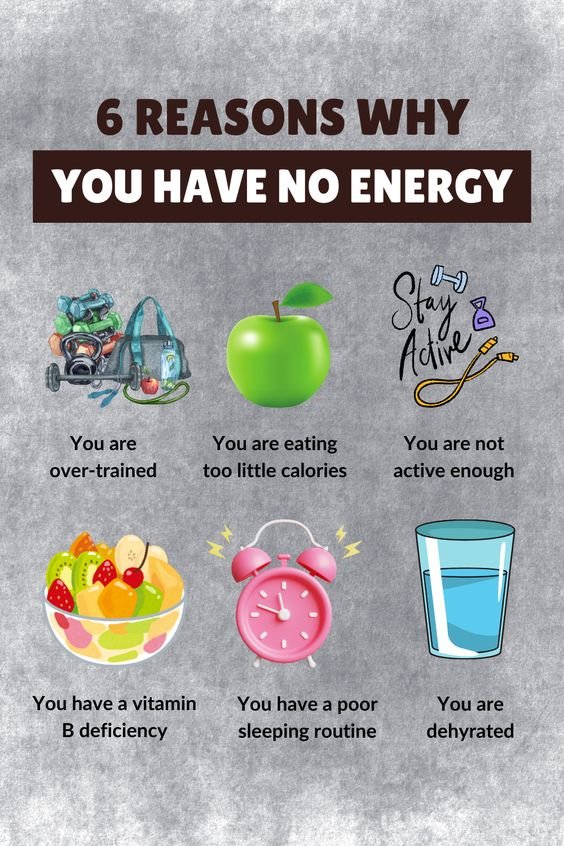
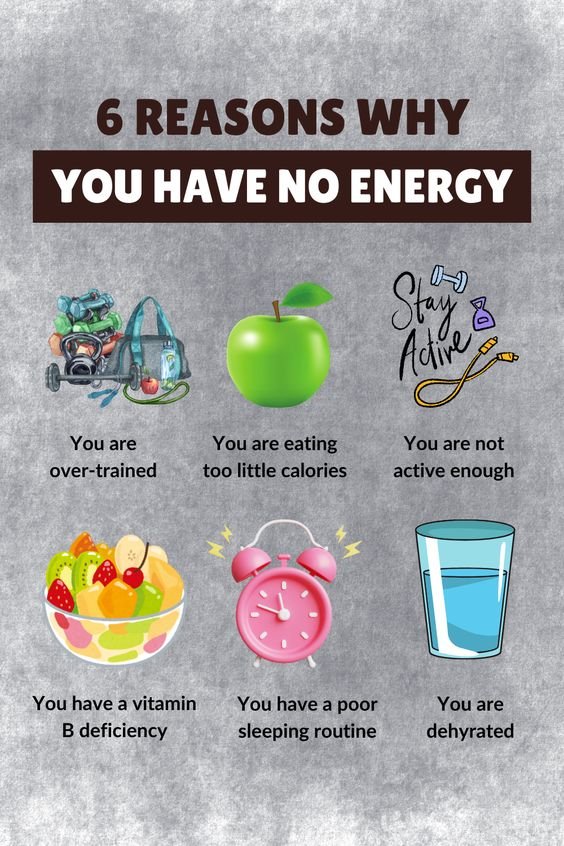
Let’s break down the six most common reasons why you have no energy, inspired by the visual cues in the image: overtraining, low calories, inactivity, nutrient gaps, poor sleep, and dehydration.
1. You Are Over-Trained
Too much exercise sounds healthy in theory… until your body hits a wall. Overtraining means you’re pushing harder than your body can recover, and instead of feeling energized, you feel drained.
Signs you’re over-training:
-
Heavy, tired muscles
-
Poor workout performance
-
Irritability or mood swings
-
Trouble sleeping
-
Constant fatigue
What to do:
-
Add 1–2 rest days per week
-
Switch high-intensity workouts with walking or yoga
-
Get more protein and electrolytes
-
Prioritize proper warm-ups and cool-downs
Your body gets stronger during rest — not during constant push.
2. You Are Eating Too Little Calories
If you’re barely eating or constantly restricting, your body simply doesn’t have enough fuel to function. Just like a car can’t run without gas, your body can’t maintain energy without adequate calories.
What eating too little does:
-
Slows your metabolism
-
Triggers fatigue and brain fog
-
Messes with hormones
-
Weakens digestion
How to fix it:
-
Add nutrient-dense foods like eggs, oats, nuts, and fruits
-
Don’t skip meals
-
Include a balance of carbs, fats, and protein
Your body needs real fuel—not “bare minimum” nutrition.
3. You Are Not Active Enough
Surprisingly, too little movement can make you just as tired as too much. When you’re inactive, circulation slows, your muscles weaken, and your body becomes sluggish.
Symptoms of low activity:
-
Stiffness
-
Low mood
-
Heavy feeling in the body
-
Afternoon crashes
Simple ways to boost movement:
-
10–15 minute morning walk
-
Stretching during breaks
-
Standing instead of sitting all day
-
Light strength training twice a week
Movement creates energy.
4. You Have a Vitamin B Deficiency
Vitamin B helps your body convert food into usable energy. When you don’t get enough, everything feels harder — thinking, moving, focusing, even waking up.
Common symptoms:
-
Weakness
-
Low motivation
-
Tingling hands or feet
-
Poor memory
-
Pale skin
Good sources of B vitamins:
-
Eggs
-
Leafy greens
-
Whole grains
-
Legumes
-
Greek yogurt
-
Nutritional yeast
If symptoms persist, consider a blood test to identify any specific deficiency.
5. You Have a Poor Sleeping Routine
Sleep isn’t just a nighttime habit — it’s the fuel that runs your entire day. A poor sleep routine can flatten your energy fast, even if you think you’re “used to it.”
Causes may include:
-
Irregular sleep times
-
Too much screen time before bed
-
Caffeine too late in the day
-
Stress or racing thoughts
Ways to improve sleep:
-
Aim for 7–9 hours nightly
-
Keep consistent sleep/wake times
-
Reduce screen time 1–2 hours before bed
-
Create a calm bedtime ritual: stretching, warm tea, journaling
Rest is not optional — it’s essential.
6. You Are Dehydrated
Sometimes the reason you feel drained is as simple as not drinking enough water. Dehydration reduces blood flow, slows metabolism, and creates that heavy, tired feeling.
Signs of dehydration:
-
Dry mouth
-
Headaches
-
Fatigue
-
Dark yellow urine
-
Sugar cravings
Hydration tips:
-
Drink a glass of water first thing in the morning
-
Keep a bottle near you throughout the day
-
Add lemon or mint for flavor
-
Eat hydrating foods: cucumber, oranges, watermelon
Your energy rises quickly when your body is properly hydrated.
Final Thoughts
Feeling tired all the time doesn’t automatically mean something serious is wrong — more often, it’s connected to daily habits like sleep, hydration, nutrition, or activity. By understanding these 6 reasons why you have no energy, you can start making small, supportive adjustments that bring your strength, clarity, and motivation back.
Try exploring one or two changes this week and notice how your body responds. Sometimes, the simplest shifts bring the biggest improvements.