Breakfast sets the tone for your entire day. What you eat in the morning influences energy levels, digestion, focus, and even food choices later on. That’s why many people choose fruit as part of their breakfast routine—it’s light, refreshing, and easy to digest.
Eating fruits for breakfast isn’t about extreme detox ideas or skipping other nutrients. When used thoughtfully and in balance, fruit can be a helpful way to wake up your body, support digestion, and provide natural energy without heaviness.
Let’s look at the real, practical reasons fruit works well in the morning.
Fruit Is Easy on the Digestive System
After a night of rest, your digestive system is just getting started.
Fruits:
-
Are mostly water and fiber
-
Digest more easily than heavy or greasy foods
-
Feel lighter on the stomach
This makes fruit a gentle option for people who don’t feel hungry for heavy meals early in the day.
Provides Natural Morning Energy
Fruits contain natural sugars along with fiber, which helps slow absorption.
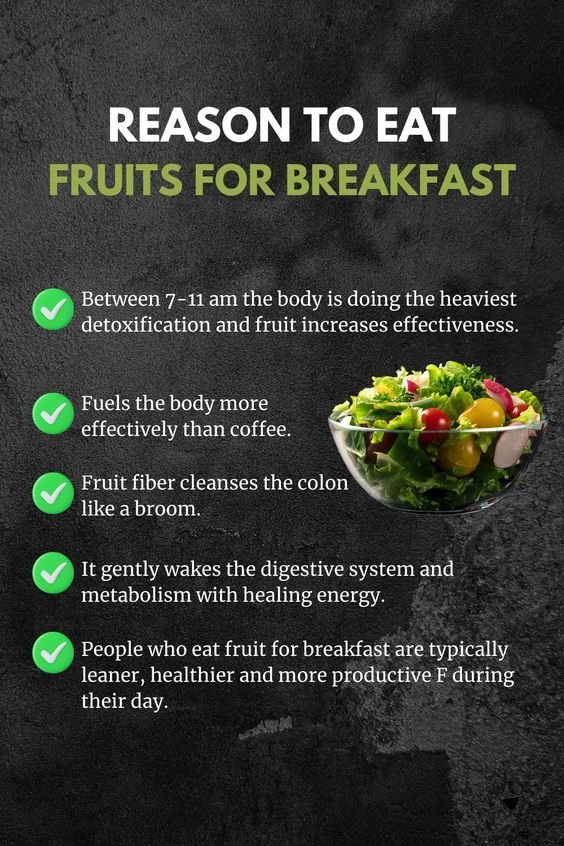
This combination can:
-
Provide steady energy
-
Reduce grogginess
-
Feel less harsh than caffeine for some people
While fruit doesn’t replace sleep or hydration, it can be a helpful natural energy source, especially when paired with protein or healthy fats.
Fiber Supports Regular Digestion
Fruit fiber supports gut movement and regularity—but it doesn’t “scrub” or cleanse organs.
What fiber does do:
-
Support healthy bowel movements
-
Feed beneficial gut bacteria
-
Help you feel fuller
Over time, consistent fiber intake contributes to better digestive comfort and routine.
Helps You Ease Into Metabolism Gently
Rather than shocking the system with very heavy foods, fruit helps the body transition smoothly into the day.
A lighter breakfast may:
-
Reduce sluggishness
-
Improve comfort
-
Encourage mindful eating
This can be especially useful for people who experience bloating or discomfort early in the morning.
Encourages Healthier Daily Food Choices
Starting the day with fruit often leads to:
-
Better hydration
-
More balanced meals later
-
Reduced cravings for processed foods
People who regularly include fruits and vegetables in the morning tend to maintain healthier eating patterns overall—not because fruit is magical, but because habits compound.
Does Fruit Replace a Full Breakfast?
Not always—and it doesn’t have to.
Fruit works best when:
-
Combined with protein (eggs, yogurt, nuts)
-
Paired with healthy fats
-
Used as part of a balanced meal
Fruit alone may not keep everyone full for long, especially if energy needs are high.
Common Misunderstandings About Fruit for Breakfast
A few important clarifications:
-
The body detoxifies all day through the liver and kidneys
-
No specific hour window “activates” detox
-
Fruit supports health, but doesn’t cleanse organs
Fruit is helpful because it’s nutrient-dense and easy to digest, not because it performs miracles.
Who Benefits Most From Fruit in the Morning
Eating fruit for breakfast may work well if you:
-
Prefer light morning meals
-
Experience early-day digestion issues
-
Want natural energy without heaviness
-
Struggle with hydration
Those with blood sugar concerns may benefit from pairing fruit with protein or fats.
Simple Ways to Eat Fruit for Breakfast
You can include fruit by:
-
Adding it to yogurt or oats
-
Pairing with eggs and nuts
-
Blending into smoothies
-
Eating whole fruit alongside breakfast
The goal is balance, not extremes.
Final Thoughts
Eating fruits for breakfast can be a simple, nourishing habit that supports digestion, energy, and overall dietary balance. While fruit doesn’t detox your body or guarantee weight loss, it does make mornings lighter, fresher, and often easier to manage.
When combined with protein, hydration, and consistency, fruit becomes part of a routine that works with your body—not against it.
👉 Save this guide if you’re rethinking your morning routine.