If you’ve ever searched for answers about tinnitus, you’ve probably come across a mix of facts, confusion, and well-meaning advice. That constant ringing, buzzing, or humming in the ear can feel mysterious, frustrating, and unpredictable — which is exactly why myths form so easily around it.
Today, we’re breaking down quick myths & realities about tinnitus, using simple explanations that help separate truth from misunderstanding. Whether you’re living with tinnitus or trying to support someone who is, clarity matters — and that’s what this post is here for.
Let’s untangle the most common misconceptions one by one.
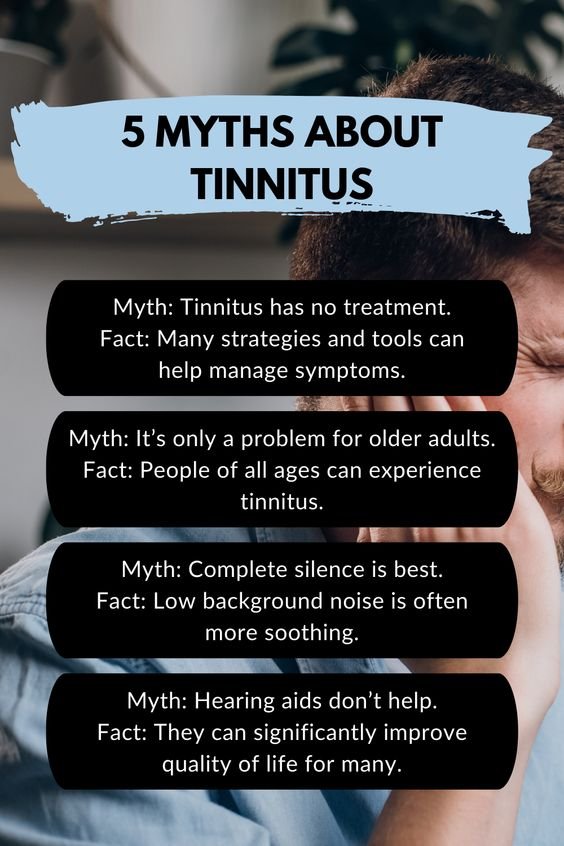
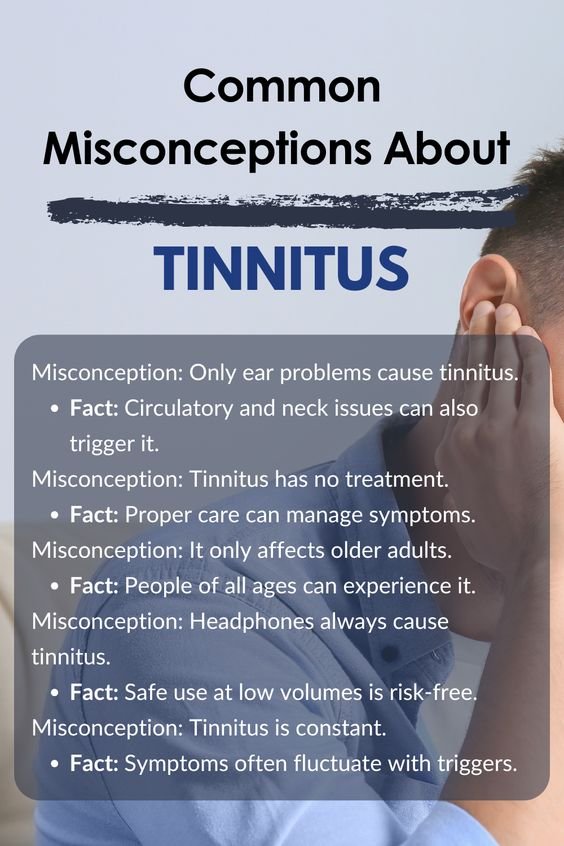
Myth 1 — “Tinnitus only happens to older adults.”
Reality: Tinnitus can affect people of all ages, including children, young adults, and seniors.
Yes, tinnitus does become more common with age, but it isn’t exclusive to older adults. Many younger individuals experience ringing in the ears due to reasons like:
-
Noise exposure (concerts, headphones, machinery)
-
Stress and tension
-
Ear infections
-
Jaw or neck muscle strain
-
Circulation-related issues
Tinnitus doesn’t check your birth date before showing up — and acknowledging that helps younger people take symptoms seriously instead of brushing them aside.
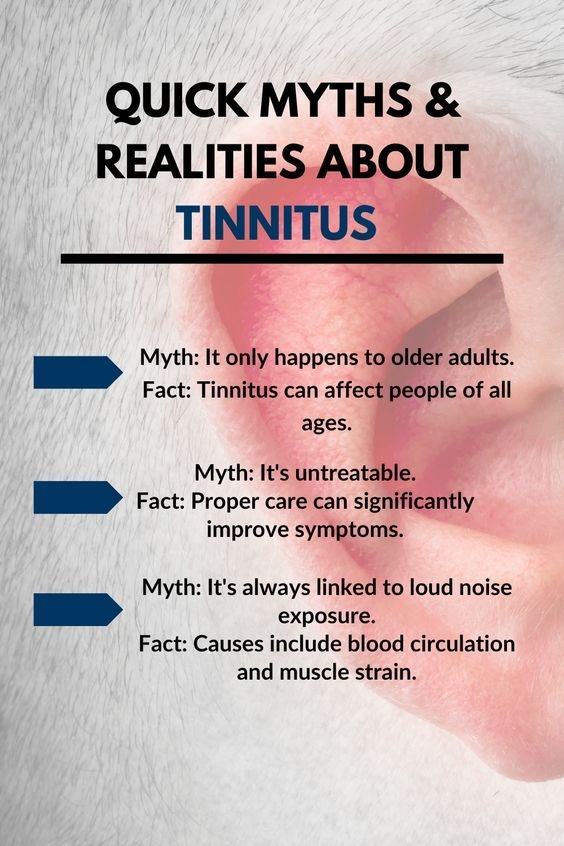
Myth 2 — “Tinnitus is untreatable — you just have to live with it.”
Reality: While tinnitus may not always disappear completely, proper care can significantly improve comfort and symptom management.
This is one of the biggest and most discouraging myths. Tinnitus relief isn’t always instant, but there are ways people manage their symptoms and reduce intensity over time. Treatment usually depends on the root cause, which makes professional evaluation important.
Helpful supportive approaches may include:
-
Hearing therapy or sound therapy
-
Stress reduction techniques
-
Neck and jaw muscle relaxation
-
Lifestyle adjustments such as hydration or improved circulation
-
Managing underlying conditions like TMJ or high blood pressure
Relief is possible — and many experience noticeable improvement through consistent care.
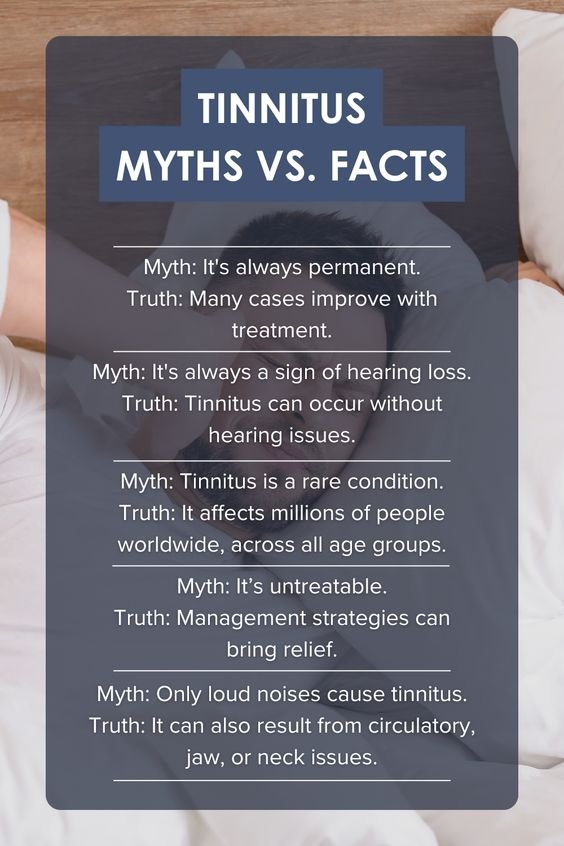
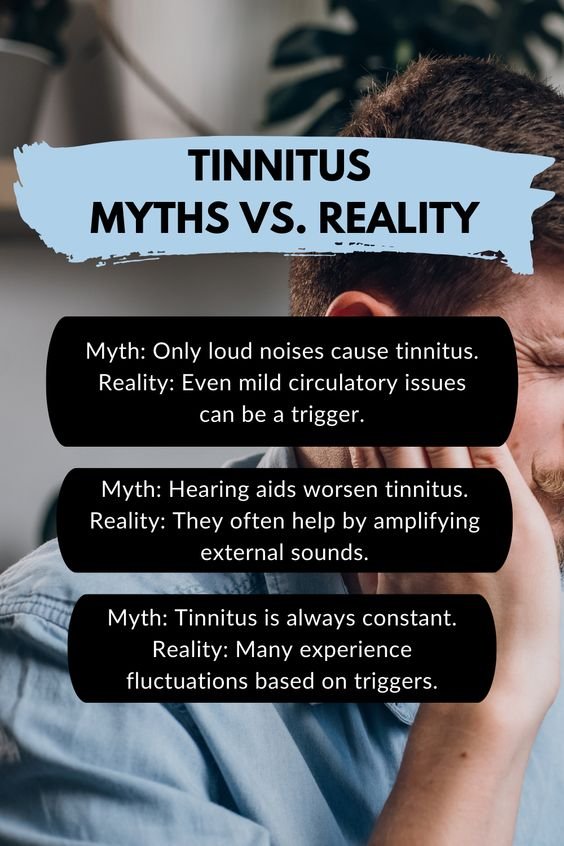
Myth 3 — “Tinnitus only comes from loud noise exposure.”
Reality: Noise is one cause, but not the only one. Tinnitus can also be linked to circulation, muscle tension, earwax, stress, or illness.
Noise-related hearing changes are a common trigger, but tinnitus has a wide range of potential origins. Sometimes the ringing isn’t coming from the ears alone — it may be related to how the body circulates blood or how the neck muscles hold tension.
Other potential contributors include:
-
High blood pressure
-
Neck and shoulder muscle strain
-
TMJ or jaw alignment issues
-
Earwax buildup
-
Certain medications
-
Seasonal allergies or sinus pressure
Understanding the source gives people a better chance at finding relief strategies that work for their body.
Why These Myths Matter
When something feels invisible and constant — like an ongoing sound no one else hears — misinformation can make it even more overwhelming. Believing that tinnitus is rare, untreatable, or caused by just one factor can lead people to lose hope or delay seeking help.
Knowing the realities about tinnitus empowers you to:
-
Explore management options
-
Notice symptom patterns
-
Communicate more clearly with professionals
-
Advocate for your comfort and well-being
Information doesn’t cure tinnitus, but it does give you direction — and direction brings relief.
When to Seek Professional Guidance
If tinnitus appears suddenly, worsens rapidly, or is accompanied by dizziness or hearing loss, a healthcare provider should evaluate it. A medical professional can help identify possible underlying causes and recommend a management plan tailored to your situation.
A few supportive questions you might ask:
-
What could be contributing to my tinnitus?
-
Are lifestyle changes worth trying?
-
Could sound therapy or relaxation techniques benefit me?
-
Are there any red-flag symptoms I should watch for?
Clarity starts with conversation.
Final Thoughts
Tinnitus is often misunderstood, but the more we separate myths and realities about tinnitus, the easier it becomes to navigate. It can affect people of any age, it’s not always permanent, and there are multiple possible contributors beyond noise exposure alone.
Save this post for later and share it with someone who may need reassurance. Knowledge won’t silence tinnitus — but it can make the journey feel lighter, clearer, and less confusing.