If you spend hours sitting at a desk, your workspace could be doing more harm than you realize. Many people focus on exercise or stretching but overlook one major factor: poor desk setup can worsen back pain over time. Even subtle issues—like screen height or chair position—can place constant strain on your spine, shoulders, and lower back.
The good news? Small ergonomic changes can dramatically reduce discomfort and prevent pain from becoming chronic. Let’s break down how desk setup affects back health and what you can fix today.
How Desk Setup Impacts Back Pain
Your body isn’t designed to sit for long periods—especially in awkward positions. When your desk, chair, or screen doesn’t support natural alignment, muscles stay tense and joints absorb extra stress.
Common consequences of poor desk setup include:
-
Rounded shoulders and slouched spine
-
Increased pressure on the lower back
-
Neck and upper back strain
-
Wrist and shoulder discomfort
Over time, these stresses add up and make back pain harder to ignore.
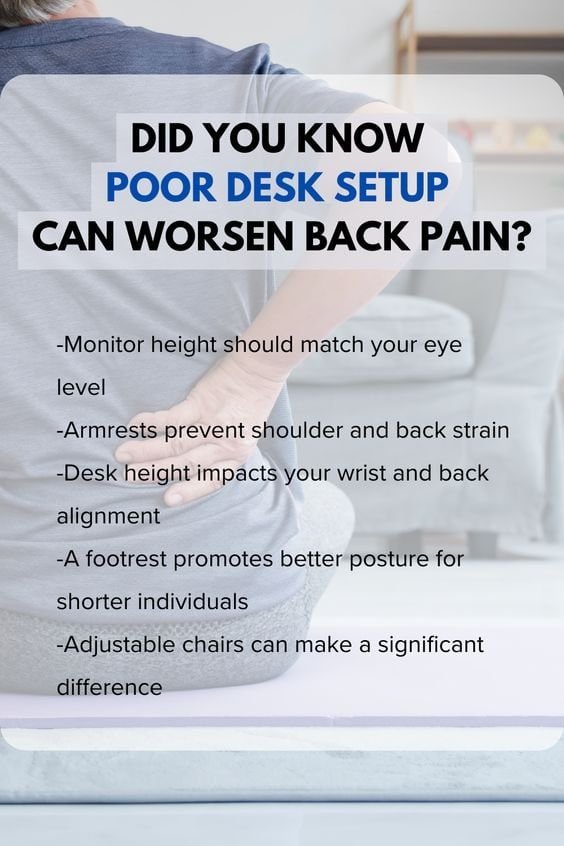
Monitor Height Should Match Eye Level
One of the most common desk mistakes is placing the monitor too low or too high. When your screen isn’t at eye level, your neck adjusts—and your spine follows.
A better setup:
-
Top of the screen at or just below eye level
-
Screen about an arm’s length away
-
Head facing forward, not tilted
Correct monitor height reduces forward head posture, which often contributes to both neck and lower back pain.
Armrests Reduce Shoulder and Back Strain
If your arms don’t have proper support, your shoulders and upper back bear the load. Over time, this creates tension that travels down the spine.
Armrests help by:
-
Supporting relaxed shoulders
-
Reducing upper back muscle tension
-
Improving overall sitting posture
Your elbows should rest comfortably at about a 90-degree angle without elevating your shoulders.
Desk Height Affects Wrist and Back Alignment
Desk height plays a bigger role than most people think. When it’s too high or too low, the body compensates—usually through the lower back.
Proper desk height allows:
-
Forearms to stay parallel to the floor
-
Wrists to remain neutral
-
Shoulders to stay relaxed
If you find yourself hunching or leaning forward, desk height may be the issue.
Footrests Improve Posture for Shorter Individuals
Not everyone’s feet naturally touch the floor with standard chairs. When feet dangle, posture collapses.
A footrest can:
-
Support proper lower-body alignment
-
Reduce pressure on the lower back
-
Encourage upright sitting
Feet should rest flat, with knees roughly at hip height or slightly lower.
Adjustable Chairs Make a Real Difference
A chair isn’t just something to sit on—it’s a support tool. Adjustable chairs allow you to adapt the workspace to your body, not the other way around.
Key chair features that help:
-
Adjustable seat height
-
Lumbar support that matches the curve of your back
-
Backrest recline for pressure relief
A well-adjusted chair supports natural spinal curves instead of fighting them.
Why Poor Desk Setup Makes Back Pain Worse Over Time
The issue isn’t one bad sitting session—it’s repetition. Sitting incorrectly for hours, day after day, trains your muscles and joints into stressed positions.
This can lead to:
-
Chronic lower back pain
-
Muscle imbalances
-
Decreased mobility
Correcting desk setup stops unnecessary strain before it becomes a long-term problem.
Simple Desk Setup Checklist for Back Pain Relief
Here’s a quick reference to improve your setup:
-
Screen at eye level
-
Elbows supported at 90 degrees
-
Feet flat or supported
-
Chair supporting lower back
-
Desk height aligned with forearms
These small adjustments often bring noticeable relief within days.
When to Combine Ergonomics With Movement
Even a perfect desk setup can’t replace movement. Pair ergonomic improvements with:
-
Short standing or walking breaks
-
Gentle desk stretches
-
Posture check-ins throughout the day
Movement keeps the spine flexible and prevents stiffness from building up.
Final Thoughts
Poor desk setup can worsen back pain, but the solution doesn’t require expensive equipment or a full office makeover. Simple adjustments—like monitor height, chair support, and desk alignment—can significantly reduce strain on your back. When your workspace supports your body instead of fighting it, sitting becomes less painful and more sustainable.
Take a few minutes today to review your desk setup. Which adjustment could make the biggest difference for your back right now?