We often hear that drinking more water is good for our health — and in many cases, it is. But here’s something that doesn’t get talked about enough: overhydration affects knee health more than most people realize.
If your knees feel stiff, weak, or slow to recover, hydration imbalance could be part of the picture. Let’s explore how drinking too much water (especially without proper nutrients) may impact your joints — and how to hydrate smarter for knee support.
Why Hydration Balance Matters for Knee Health
Your knees rely on a careful balance of fluids, electrolytes, and nutrients to move smoothly and stay resilient. Water lubricates joints, helps transport nutrients, and supports cartilage health.
The issue isn’t hydration itself — it’s imbalance. Too much water without minerals can disrupt how your joints function, just like too little water can cause stiffness.
Think of hydration as balance, not excess.
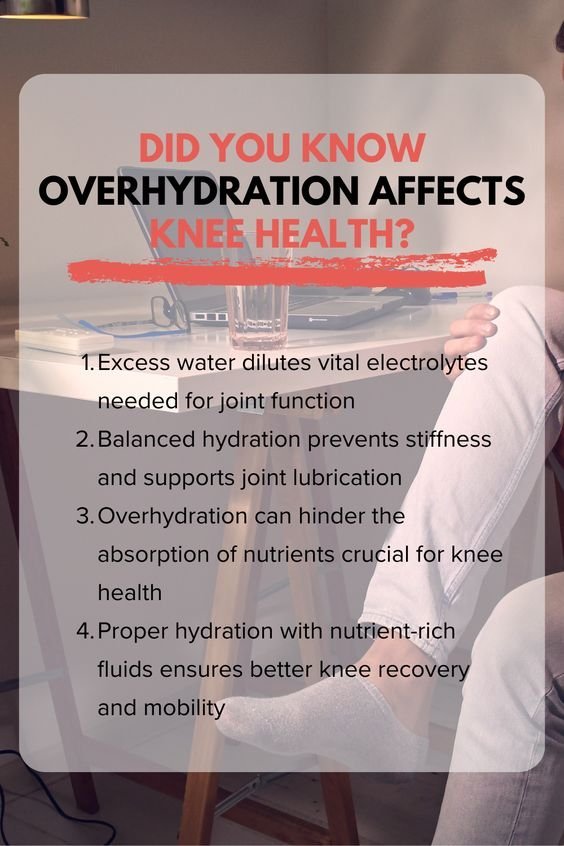
1. Excess Water Can Dilute Electrolytes Needed for Joint Function
One major way overhydration affects knee health is through electrolyte dilution. Electrolytes such as sodium, potassium, magnesium, and calcium are essential for muscle contractions and joint stability.
Consistently drinking excessive amounts of plain water may:
-
Lower electrolyte concentrations
-
Reduce muscle support around the knees
-
Affect joint coordination and strength
This can be especially noticeable in active individuals, older adults, or those who already experience knee discomfort.
2. Balanced Hydration Helps Reduce Knee Stiffness
Joint lubrication depends on synovial fluid, which allows your knees to bend, walk, and absorb impact smoothly. While water plays a role, balanced hydration matters more than volume alone.
Drinking excessively without nutrient support doesn’t necessarily improve lubrication and may even contribute to stiffness.
Balanced hydration supports:
-
Smoother knee movement
-
Less stiffness after sitting
-
Better comfort during daily activity
Listening to your body’s thirst cues is often more effective than forcing water intake.
3. Overhydration May Affect Nutrient Absorption
Another overlooked way overhydration affects knee health is nutrient absorption. Large amounts of water can interfere with how efficiently the body absorbs minerals and joint-supporting nutrients.
These include:
-
Magnesium for muscle relaxation
-
Calcium for bone strength
-
Nutrients that support cartilage and connective tissue
When these nutrients aren’t absorbed well, knee recovery and resilience may gradually decline.
4. Proper Hydration Supports Knee Recovery and Mobility
Knee recovery isn’t just about water — it’s about what comes with it. Fluids paired with balanced meals help deliver nutrients where they’re needed most.
Helpful hydration habits include:
-
Drinking steadily instead of constantly
-
Eating mineral-rich foods alongside fluids
-
Adjusting intake during heat or physical activity
-
Avoiding the habit of “force drinking” water
This approach supports mobility, circulation, and long-term joint comfort.
Signs You May Be Overhydrating
Overhydration doesn’t always feel obvious, but signs may include:
-
Constantly clear urine
-
Frequent urination without thirst
-
Bloating or fatigue
-
Muscle cramps despite high water intake
If these sound familiar, hydration balance may need adjustment.
Final Thoughts
Hydration is essential — but more isn’t always better. Understanding how overhydration affects knee health can help you support your joints more effectively and avoid common mistakes.
Balanced fluids, adequate nutrients, and mindful habits may contribute to better knee comfort, recovery, and movement over time.
If this helped clarify things, save it for later or share it with someone focused on joint health. And ask yourself — are you hydrating for balance, or just drinking more?