Tinnitus is often talked about as a minor ear issue—but the numbers tell a much bigger story. From how common ringing actually is to who’s affected most, statistics help us understand why tinnitus shouldn’t be ignored or brushed off. These must-know statistics on tinnitus highlight how widespread the condition is, what contributes to it, and why early care and prevention matter. While numbers don’t tell the whole story, they do offer valuable insight into patterns, risks, and realistic expectations.
Let’s break down what the data reveals—and what it means for you.
1. Around 30% of People Experience Short-Term Ringing
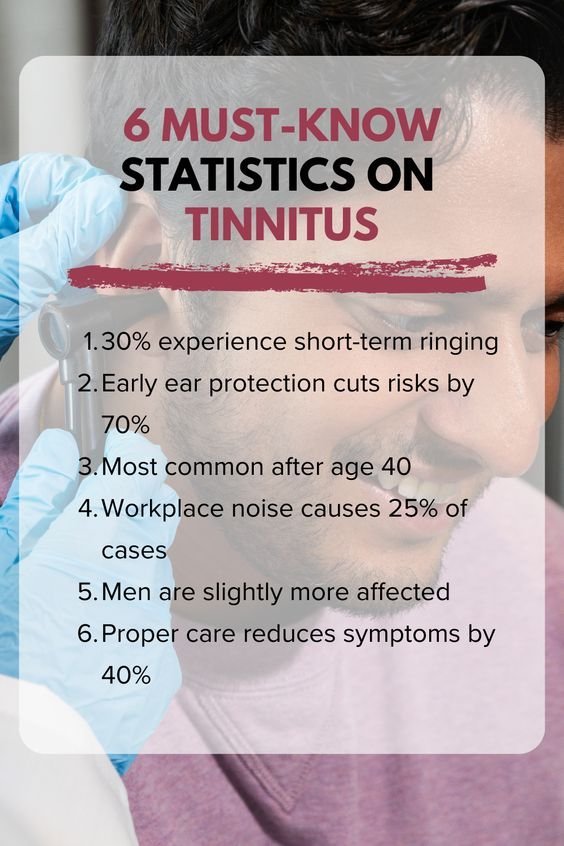
One of the most eye-opening tinnitus statistics is just how common it is. Research consistently shows that roughly 30% of people experience temporary ringing in the ears at some point in their lives.
This often happens after:
-
Loud concerts or events
-
Sudden noise exposure
-
Illness or ear infections
-
Stress or fatigue
Short-term ringing usually fades, but frequent or recurring episodes may signal underlying stress on the hearing system.
2. Early Ear Protection Can Reduce Risk Significantly
Studies suggest that using proper ear protection early can dramatically lower the risk of noise-related tinnitus. Some estimates indicate risk reduction by as much as 70% in high-noise environments when protection is used consistently.
This includes:
-
Earplugs at concerts or worksites
-
Noise-reducing headphones
-
Limiting daily volume exposure
Prevention plays a huge role in long-term hearing health—and tinnitus risk.
3. Tinnitus Is Most Common After Age 40
While younger people can experience tinnitus, statistics show it becomes much more common after age 40.
Possible reasons include:
-
Natural age-related hearing changes
-
Long-term noise exposure adding up
-
Circulation and nerve changes
This doesn’t mean tinnitus is inevitable with age—but it does mean awareness becomes more important over time.
4. Workplace Noise Accounts for About 25% of Cases
Occupational exposure is a major contributor. Data suggests that workplace noise may be responsible for up to 25% of tinnitus cases, especially in industries like:
-
Construction
-
Manufacturing
-
Aviation
-
Music and entertainment
Consistent noise exposure without protection places repeated stress on the auditory system, increasing the likelihood of long-term symptoms.
5. Men Are Slightly More Affected Than Women
Population studies often show that men report tinnitus slightly more frequently than women. This difference is thought to be related to higher rates of occupational noise exposure rather than biology alone.
However, tinnitus affects all genders, and individual risk depends far more on environment, habits, and health factors than gender itself.
6. Proper Care Can Help Reduce Symptoms Significantly
While tinnitus often isn’t curable, research shows that proper hearing care and management strategies can reduce symptom severity for many people. Some studies suggest perceived symptom reduction by around 40% with appropriate support.
Helpful approaches may include:
-
Hearing assessments
-
Sound management strategies
-
Stress and sleep optimization
-
Noise exposure reduction
Early care often leads to better long-term outcomes.
What These Tinnitus Statistics Really Tell Us
Taken together, these must-know statistics on tinnitus highlight some important truths:
-
Tinnitus is common, not rare
-
Risk builds gradually over time
-
Noise exposure is a major factor
-
Prevention and care make a difference
Most importantly, tinnitus isn’t something that should automatically be ignored or “powered through.”
Why Awareness Beats Waiting
Many people wait months—or years—before seeking advice about tinnitus. Statistics consistently show that earlier attention leads to easier management and less emotional impact over time.
Awareness helps you:
-
Protect hearing before damage accumulates
-
Recognize early warning signs
-
Take proactive steps instead of reactive ones
When to Take Tinnitus Seriously
Consider professional guidance if you notice:
-
Ringing lasting more than a few weeks
-
Worsening intensity or frequency
-
Tinnitus affecting sleep or focus
Early evaluation doesn’t mean something is “wrong”—it means you’re being proactive.
Final Thoughts
These 6 must-know statistics on tinnitus reveal just how widespread and influential this condition really is. From age trends and workplace risks to the proven value of early care, the numbers point to one message: tinnitus deserves attention, not dismissal. While statistics can’t predict individual outcomes, they highlight why prevention, awareness, and smart habits matter.
If even one of these statistics surprised you, it might be worth taking a closer look at your own hearing habits. Which one stood out to you the most—and why?