Knee pain rarely starts with one big injury. For most people, it builds slowly—through small, everyday habits that don’t seem harmful at first. A bit of discomfort on the stairs. Mild soreness after carrying groceries. Stiffness that fades once you start moving. These signs are easy to ignore, but over time, they can add up.
Understanding the small mistakes that lead to long-term knee pain can help you protect your joints before discomfort becomes a constant part of daily life. Let’s break down the most common habits and what you can do instead.
1. Carrying Heavy Items With Straight Arms
Carrying heavy bags or objects with straight, locked arms may feel natural, but it places unnecessary stress on your knees. When weight is held away from the body, your knees absorb extra force to stabilize your movement—especially when walking up or down stairs.
Over time, this added strain can contribute to joint wear and muscle imbalance around the knees.
A better approach:
-
Hold items close to your body
-
Slightly bend your arms and knees when lifting
-
Split heavy loads into smaller trips when possible
These small adjustments reduce pressure on your knees and improve overall body mechanics.
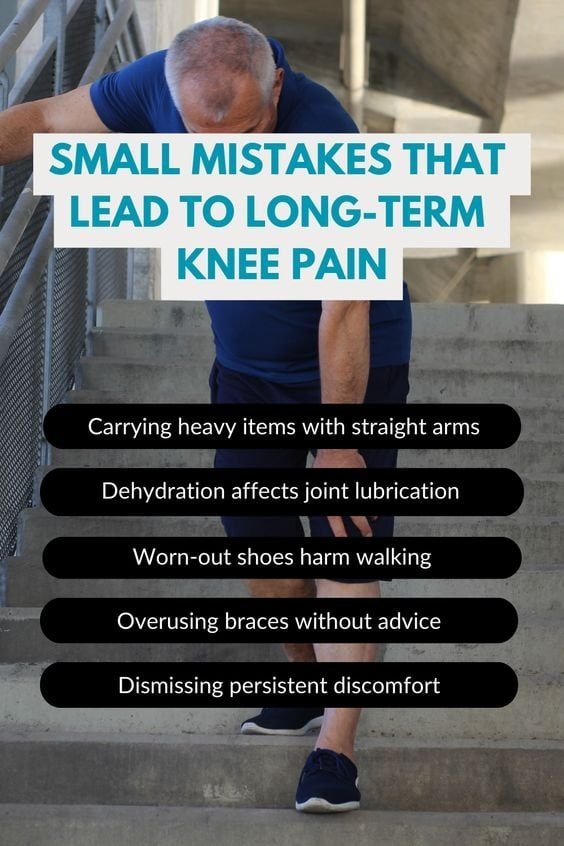
2. Not Drinking Enough Water (Dehydration)
Dehydration affects more than just energy levels—it also impacts joint health. Your knees rely on synovial fluid to stay lubricated and move smoothly. When you’re not drinking enough water, this lubrication can decrease, increasing friction inside the joint.
This doesn’t cause pain overnight, but over months or years, it may contribute to stiffness and discomfort.
Why hydration matters for knee health:
-
Supports joint lubrication
-
Helps cushion cartilage
-
Aids nutrient delivery to joint tissues
Consistent hydration is a simple habit that quietly supports long-term knee comfort.
3. Wearing Worn-Out Shoes
Shoes play a bigger role in knee pain than many people realize. Worn-out soles, poor cushioning, or uneven tread can change the way your foot hits the ground. This alters alignment through your ankles, knees, and hips.
Over time, improper walking mechanics can place uneven stress on the knee joint, especially during long walks or standing for extended periods.
Watch for these signs:
-
Uneven wear on the soles
-
Reduced shock absorption
-
Increased knee soreness after walking
Replacing shoes regularly and choosing supportive footwear can significantly reduce knee strain.
4. Overusing Knee Braces Without Advice
Knee braces can be helpful in certain situations, but relying on them without guidance may create new problems. Constant brace use can cause surrounding muscles to weaken, as the joint becomes dependent on external support instead of natural stability.
Weaker muscles around the knee can increase the risk of long-term pain and reduced mobility.
A more balanced approach:
-
Use braces only when necessary
-
Focus on strengthening leg muscles
-
Seek professional guidance for long-term use
Support should complement movement—not replace it.
5. Dismissing Persistent Knee Discomfort
One of the most common mistakes is simply ignoring ongoing knee discomfort. Many people push through pain, assuming it’s just part of aging or daily activity. Unfortunately, persistent discomfort is often a signal that something needs attention.
The longer discomfort is dismissed, the harder it can be to address later.
Pay attention if you notice:
-
Pain that lasts more than a few weeks
-
Stiffness that worsens over time
-
Discomfort during everyday movements
Early awareness can prevent minor issues from becoming long-term knee problems.
How Small Changes Can Make a Big Difference
The key takeaway is this: knee pain often develops quietly. It’s shaped by small habits repeated day after day. The good news is that these same habits can be adjusted just as gradually—and with meaningful results.
Simple changes like lifting smarter, staying hydrated, wearing proper shoes, using support wisely, and listening to early discomfort can help protect your knees for years to come.
Final Thoughts
If you’re dealing with occasional knee discomfort, it doesn’t mean serious damage has already occurred. Often, it’s your body’s early warning system. By addressing the small mistakes that lead to long-term knee pain, you give your joints a better chance to stay strong, mobile, and pain-free.
Save this post for later or share it with someone who spends long hours on their feet. Small awareness today can mean healthier knees tomorrow.