When it comes to fat loss, what you eat often matters more than eating less. Many people struggle not because they lack discipline, but because their meals don’t keep them full, satisfied, or consistent. The good news? You don’t need complicated recipes or restrictive plans.
Focusing on the right types of meals for fat loss can make a big difference. These meal styles naturally support portion control, reduce excess calories, and help you feel satisfied—without feeling deprived.
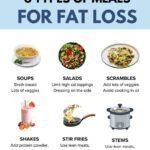
Below are six practical meal types that fit well into a fat-loss lifestyle and are easy to adapt to your preferences.
Why Meal Structure Matters for Fat Loss
Fat loss isn’t just about calories—it’s about:
-
Satiety (feeling full)
-
Nutrient density
-
Ease of preparation
-
Long-term consistency
Meals that are high in vegetables, lean protein, and volume—but moderate in calories—tend to work best over time.
Let’s break down the six meal types that support this approach.
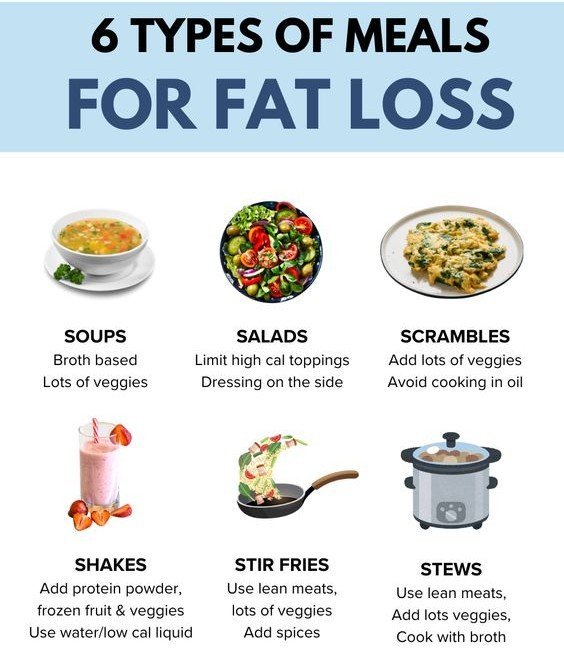
1. Soups (Broth-Based and Vegetable-Rich)
Soups are one of the most underrated meals for fat loss.
Broth-based soups with plenty of vegetables help by:
-
Adding volume without excess calories
-
Supporting hydration
-
Helping you feel full sooner
Vegetable-heavy soups slow down eating and make portion control easier.
Best tip: Choose clear or lightly thickened broths and avoid heavy cream-based soups.
2. Salads (With Smart Toppings)
Salads can support fat loss—but only when built thoughtfully.
A balanced salad helps by:
-
Providing fiber and micronutrients
-
Encouraging slower eating
-
Reducing calorie density
Key guidelines:
-
Limit high-calorie toppings
-
Keep dressing on the side
-
Add protein to stay full
The goal is nourishment, not just greens.
3. Scrambles (Vegetable-Heavy and Light on Oil)
Scrambles are flexible and satisfying meals, especially for breakfast or light dinners.
They support fat loss when you:
-
Add lots of vegetables
-
Use minimal cooking oil
-
Balance protein and fiber
Vegetable-loaded scrambles increase volume while keeping calories reasonable.
Helpful idea: Use non-stick cookware or water-based cooking to reduce added fats.
4. Shakes (Protein + Fruits and Vegetables)
Shakes can be useful for fat loss when they’re balanced—not sugar-heavy.
A good shake helps by:
-
Controlling portion size
-
Supporting protein intake
-
Making meals convenient
Best practices:
-
Add protein powder
-
Use frozen fruits and vegetables
-
Use water or low-calorie liquids
Shakes work best as meal replacements occasionally—not all day.
5. Stir-Fries (Lean Protein + Vegetables)
Stir-fries are ideal for fat loss because they’re customizable and filling.
They work well when you:
-
Use lean meats or plant proteins
-
Add lots of vegetables
-
Use spices instead of heavy sauces
Vegetables add bulk, while protein supports satiety.
Simple swap: Reduce oil and cook quickly over high heat to maintain flavor without excess fat.
6. Stews (Slow-Cooked and Balanced)
Stews are comforting, filling, and surprisingly fat-loss friendly.
They help by:
-
Combining protein and vegetables in one dish
-
Allowing flavors to develop without extra fat
-
Encouraging slower eating
Cooking with broth instead of oil keeps calories lower while enhancing taste.
How These Meals Support Fat Loss
These meal types naturally help by:
-
Lowering calorie density
-
Increasing fiber and protein intake
-
Improving fullness
-
Reducing overeating
They’re not “diet foods”—they’re smart food structures that work with your body.
How to Use These Meals in Real Life
You don’t need all six every day. A realistic approach might look like:
-
Soup or scramble for one meal
-
Salad or stir-fry for another
-
Shake occasionally when short on time
Consistency matters more than perfection.
Common Mistake to Avoid
A frequent mistake is overcomplicating fat loss meals. When meals become too restrictive or complex, sustainability drops.
Instead:
-
Keep meals simple
-
Focus on volume and balance
-
Use flavors from herbs and spices
Fat loss works best when meals feel normal—not punishing.
Final Thoughts
Fat loss doesn’t require extreme diets or cutting entire food groups. By choosing the right types of meals for fat loss, you make it easier to eat well, stay full, and remain consistent.
Soups, salads, scrambles, shakes, stir-fries, and stews all offer structure, flexibility, and satisfaction—key ingredients for long-term success.
👉 Save this guide and come back to it when planning your meals.