If you’ve ever tried to lose weight, you’ve probably been told to cut carbs, avoid eating at night, or stay away from fats and sweets. It sounds convincing—but here’s the truth: what really makes you gain fat is often much simpler than all those rules.
Fat gain isn’t caused by a single food group or eating after a certain time. It happens because of a consistent pattern that many people overlook. Once you understand that pattern, weight management becomes far less confusing—and far more flexible.
Let’s clear up the myths and get honest about what’s really going on.
What People Think Makes You Gain Fat
Many common beliefs around fat gain focus on specific foods or timing rather than overall patterns.
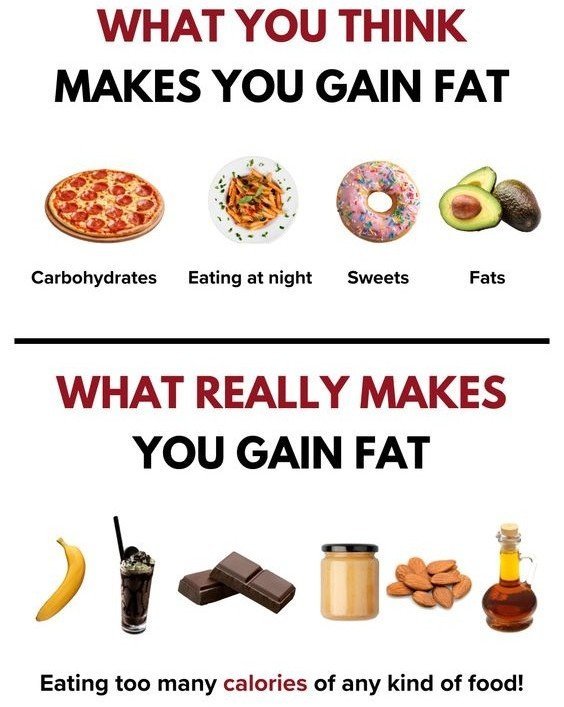
You’ve probably heard that these are the main culprits:
-
Carbohydrates like bread or pasta
-
Eating at night
-
Sweets and sugar
-
Dietary fats like oils or avocado
While these foods can contribute to fat gain in excess, none of them automatically cause weight gain on their own.
Carbs don’t magically turn into body fat. Eating at night doesn’t override your metabolism. And fats aren’t stored instantly just because you eat them.
So what actually matters more?
What Really Makes You Gain Fat
At its core, fat gain comes from consistently eating more calories than your body uses—regardless of where those calories come from.
That’s it.
When your energy intake regularly exceeds your energy needs, the extra energy is stored—mostly as body fat. This can happen with:
-
“Healthy” foods
-
Small portions eaten very often
-
Liquid calories
-
Snacks added on top of meals
Even nutritious foods like nuts, olive oil, chocolate, or smoothies can contribute to fat gain if total intake isn’t aligned with your needs.
Calories Matter More Than Food Labels
A banana, a handful of almonds, chocolate, or a glass of juice—each one contains calories. None are “bad,” but calories still count.
Fat gain doesn’t care whether calories come from:
-
Carbs or fats
-
Daytime or nighttime eating
-
Healthy or processed foods
Your body responds to total intake over time, not isolated choices.
That’s why people can gain fat while:
-
Eating mostly “clean” foods
-
Avoiding sugar completely
-
Cutting carbs but overeating fats
Why Some Foods Get Blamed More Than Others
Certain foods feel more “fattening” simply because they’re easy to overeat.
Examples include:
-
Sweets and desserts
-
High-fat snacks
-
Liquid calories like sodas and juices
They’re less filling per calorie, so it’s easier to consume large amounts without noticing. But they’re contributors—not causes—on their own.
It’s the pattern that adds up.
What Actually Helps Prevent Fat Gain
Instead of banning foods, focus on habits that naturally regulate calories without rigid rules.
Helpful strategies include:
-
Eating meals with protein and fiber
-
Being mindful of portion sizes
-
Avoiding constant grazing
-
Drinking enough water
-
Allowing flexibility instead of restriction
These habits reduce overeating without making food stressful.
Yes, You Can Eat Carbs, Fats, and Even Sweets
Weight management works best when it’s sustainable. That means:
-
Carbs can fit
-
Eating in the evening can fit
-
Treats can fit
As long as overall intake matches your body’s needs.
When people stop fearing specific foods, they’re often less likely to overeat them.
Why Consistency Beats Perfection
Fat gain doesn’t come from one meal, one dessert, or one late-night snack. It comes from repetition.
Likewise, fat loss doesn’t require perfection—just consistency.
Small daily adjustments add up faster than extreme plans that don’t last.
Final Thoughts
So if you’re wondering what really makes you gain fat, the answer isn’t carbs, sugar, or eating after 7 p.m. It’s consistently eating more calories than your body uses—no matter the source.
Understanding this removes guilt, confusion, and unnecessary food rules. It gives you flexibility and control instead of fear.
✅ Focus on patterns, not single foods
✅ Build habits you can repeat long-term
✅ Eat in a way that feels sustainable
When you stop fighting food and start understanding it, managing weight becomes far simpler—and far more realistic.