Your knees carry you through life — walking, running, climbing, even standing still. But many people unknowingly make small daily mistakes that slowly wear down these vital joints. Whether it’s your footwear, posture, or workout habits, these errors can lead to pain, stiffness, or long-term damage.
The good news? Once you know what’s harming your knees, you can start protecting them right away. Let’s uncover the most common knee-damaging mistakes and how to fix them before they cause lasting pain.
1. Wearing Uneven-Soled Shoes
Shoes with worn-out soles throw your body out of alignment, forcing your knees to compensate for uneven pressure. Over time, this imbalance can cause pain or even lead to conditions like patellar tracking disorder.
Fix it: Replace shoes regularly, especially if you walk or run often. Choose supportive, well-cushioned footwear that matches your activity and gait type.
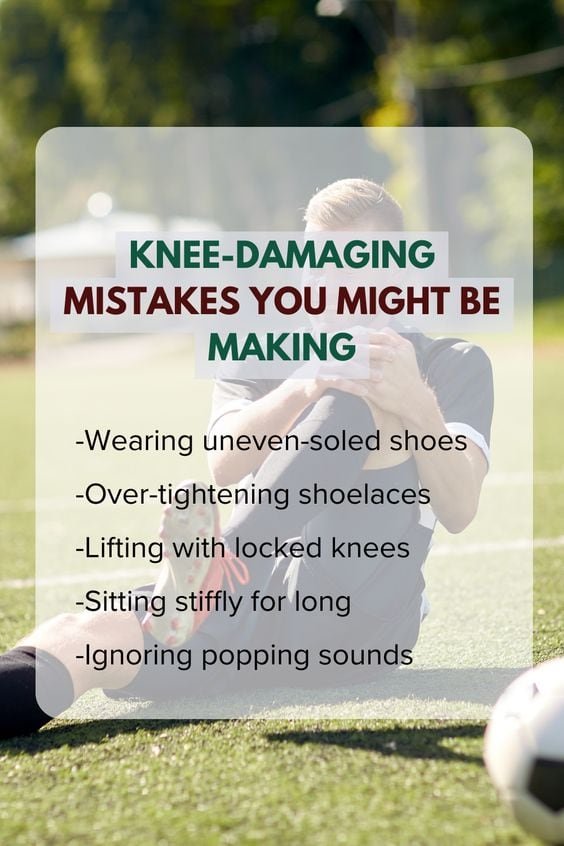
2. Over-Tightening Shoelaces
It might seem harmless, but cinching your shoelaces too tightly restricts blood flow and limits ankle flexibility. This lack of movement affects your knee’s natural alignment during walking or running.
Fix it: Lace your shoes snugly, not tightly. You should be able to slip one finger under the laces. Elastic or stretch laces can also reduce knee strain during workouts.
3. Lifting with Locked Knees
When you bend to lift something heavy with straight legs, your knees and lower back take the full load. This improper form increases the risk of strain and joint injury.
Fix it: Always bend your knees and keep your back straight when lifting. Think “legs do the work, not knees alone.” For heavier items, ask for help or use support equipment.
4. Sitting Stiffly for Too Long
Staying in one position for hours (especially at a desk) restricts blood flow and causes tightness in your leg muscles. This stiffness puts added pressure on your knees when you finally stand up.
Fix it: Take short breaks every 30–45 minutes. Stand, stretch, or walk around to loosen your joints. Even gentle movement helps lubricate your knee cartilage and reduce stiffness.
5. Ignoring Popping or Clicking Sounds
Occasional knee sounds can be normal, but persistent popping or clicking — especially with pain or swelling — is a red flag. It could indicate cartilage wear or ligament issues.
Fix it: Don’t brush it off. See a physiotherapist or doctor for evaluation. Early diagnosis can prevent minor joint stress from turning into chronic knee pain.
How to Keep Your Knees Strong and Pain-Free
-
Warm up and stretch before workouts to improve joint flexibility.
-
Maintain a healthy weight — excess pounds add pressure to your knees.
-
Strengthen supporting muscles like quadriceps and hamstrings.
-
Stay hydrated to keep your joints lubricated.
-
Listen to your body — rest when your knees feel sore or tight.
Final Thoughts
Your knees deserve care — not just when they hurt, but every day. By avoiding these simple mistakes, you’ll reduce strain, improve mobility, and keep your joints healthy for years to come.
If this post helped you spot a bad habit, save it for later or share it with a friend who needs a gentle reminder to go easy on their knees.