If your knees or joints feel stiff after a long walk, workout, or just daily activity, you’re not alone. As we age, our body’s natural cushioning — the cartilage between bones — starts to wear down. This can lead to discomfort, tightness, or limited mobility.
The good news? Certain joint supplements can help support your body’s repair process and promote long-term joint comfort. Let’s take a closer look at how they work and what to know before adding them to your routine.
1. Glucosamine Supports Cartilage Health
Glucosamine is one of the most well-known joint supplements — and for good reason. It’s a natural compound found in cartilage, the tissue that cushions your joints.
Regular glucosamine intake may help slow cartilage breakdown and support the repair of damaged tissue. Many people use it to manage stiffness in the knees, hips, and hands.
When choosing a supplement, look for glucosamine sulfate or glucosamine HCl, as these forms are most commonly studied and absorbed.
👉 Tip: Combine glucosamine with chondroitin sulfate for extra joint support — they often work better together.
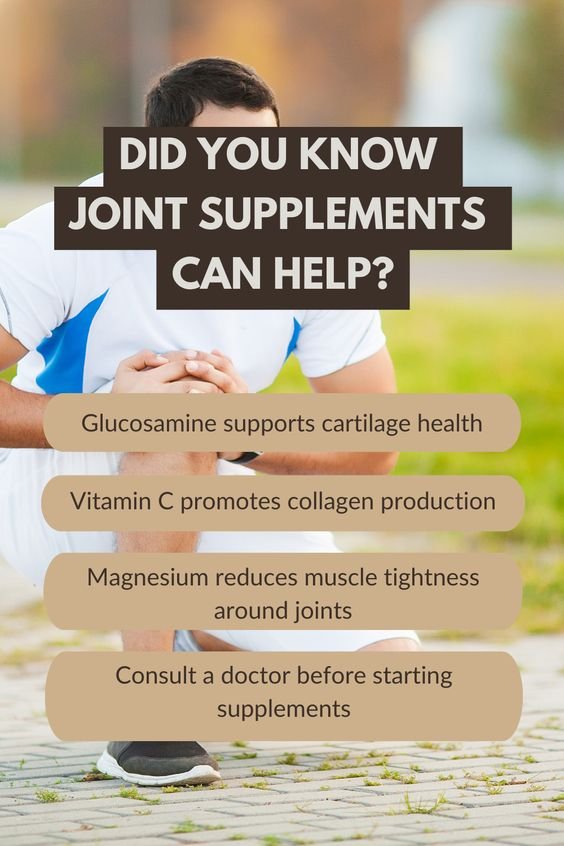
2. Vitamin C Promotes Collagen Production
We often think of Vitamin C for immunity, but it’s also vital for collagen synthesis — the protein that keeps your joints strong and flexible.
Collagen is the glue that holds your cartilage together. Without enough Vitamin C, your body can’t maintain healthy joint structures effectively.
Adding foods like kiwi, bell peppers, citrus fruits, and strawberries helps boost your Vitamin C intake naturally. You can also take a low-dose supplement if your diet needs a boost.
3. Magnesium Reduces Muscle Tightness Around Joints
Joint pain isn’t always just about the joints — sometimes tight muscles add pressure around them. That’s where magnesium comes in.
This mineral helps your muscles relax and release tension, easing the strain around your knees, shoulders, and back. It also supports nerve health and reduces inflammation.
You can get magnesium from leafy greens, almonds, avocados, or supplements like magnesium glycinate (known for being gentle on digestion).
4. Always Consult a Doctor Before Starting Supplements
While these supplements are generally safe, it’s smart to talk with your healthcare provider first — especially if you’re taking medications or have existing conditions.
Some supplements can interact with blood thinners or other prescriptions. Your doctor can help you choose the right dosage and combination for your specific needs.
Remember: Supplements are most effective when paired with a balanced diet, gentle exercise, and hydration.
Final Thoughts: Small Additions, Big Benefits
You don’t have to live with joint stiffness or discomfort. With the right nutrients, your body can support natural repair and flexibility.
Start small — add Vitamin C-rich foods, consider a glucosamine supplement, and don’t forget about magnesium for muscle relaxation.
Over time, these simple changes can make movement feel easier and life a little lighter.
👉 Save this post for later or share it with someone who needs joint relief tips today!