Do you ever feel overwhelmed by constant indoor noise — from appliances, street sounds, or even echoes bouncing off your walls? You’re not alone. Noise pollution inside your home can increase stress, disrupt sleep, and make it hard to focus.
The good news? You don’t need a full renovation to enjoy peace and quiet. Here are four simple indoor noise reduction tips to make your space calmer and more comfortable.
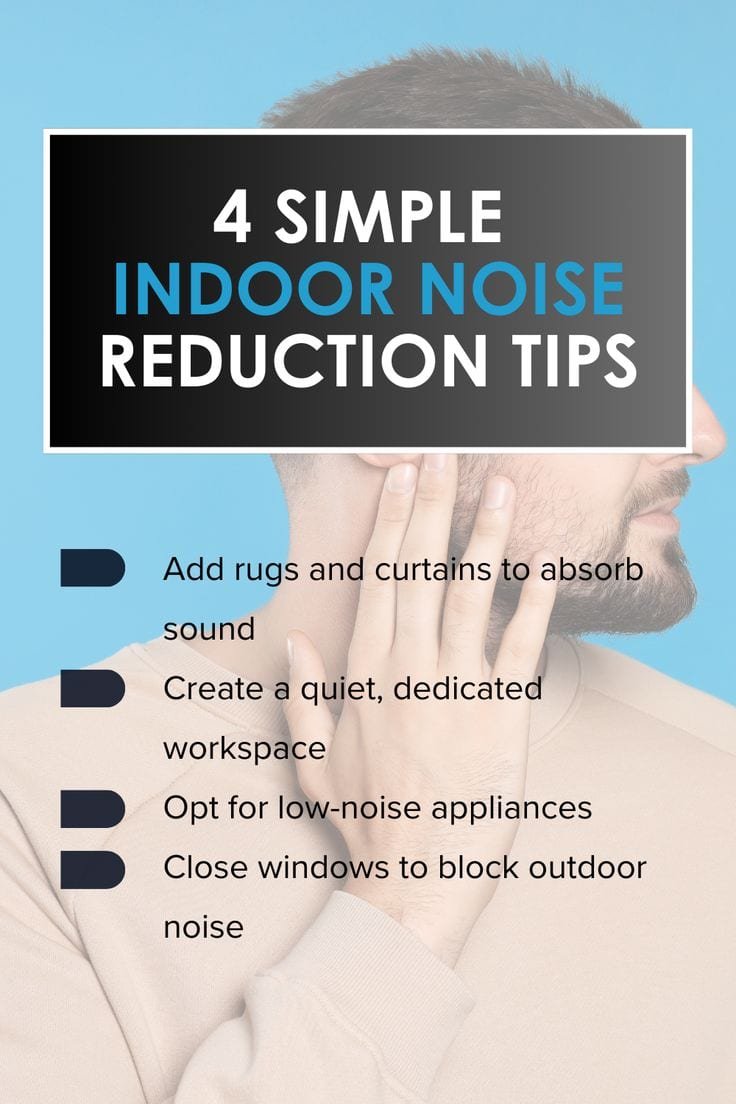
1. Add Rugs and Curtains to Absorb Sound 🪞
Hard surfaces like tile, wood, or bare walls reflect sound waves, amplifying noise. Soft materials, on the other hand, absorb them.
Place rugs in hallways, living rooms, and bedrooms to soften footsteps. Heavy curtains or fabric blinds can block outside noise while adding a cozy aesthetic. The thicker the fabric, the better the sound absorption.
Bonus Tip: Consider acoustic panels or tapestry-style wall hangings for an extra touch of quiet.
2. Create a Quiet, Dedicated Workspace 🧘♀️
If you work or study from home, noise can easily drain your focus. Setting up a dedicated workspace in a quieter corner can dramatically reduce distractions.
Use furniture and soft décor — like cushions, bookshelves, or room dividers — to act as natural sound barriers. Adding plants also helps absorb echoes while refreshing the air.
3. Opt for Low-Noise Appliances 🌀
That constant hum from your fridge or air conditioner might be louder than you think. When upgrading appliances, look for low-noise or energy-efficient models with a decibel rating under 50 dB.
Not only do they run more quietly, but they also save power — a win for your ears and your wallet. For older machines, place rubber mats underneath to reduce vibration noise.
4. Close Windows to Block Outdoor Noise 🚪
Street traffic, barking dogs, and construction sounds can easily sneak into your home through open or poorly sealed windows.
Try keeping windows closed during peak noise hours and use weatherstripping or acoustic sealants to close gaps. Double-glazed windows provide the best sound insulation if you’re looking for a long-term solution.
Extra Quiet-Home Tip: Rearrange for Silence
Sometimes, peace comes from layout changes. Move your bed or desk away from walls that face busy streets. Position heavier furniture like wardrobes or bookshelves along those walls to block sound naturally.
Conclusion
Creating a quiet home doesn’t require expensive renovations — just smart adjustments. From soft textures to better insulation, these indoor noise reduction tips can transform your space into a calm retreat.